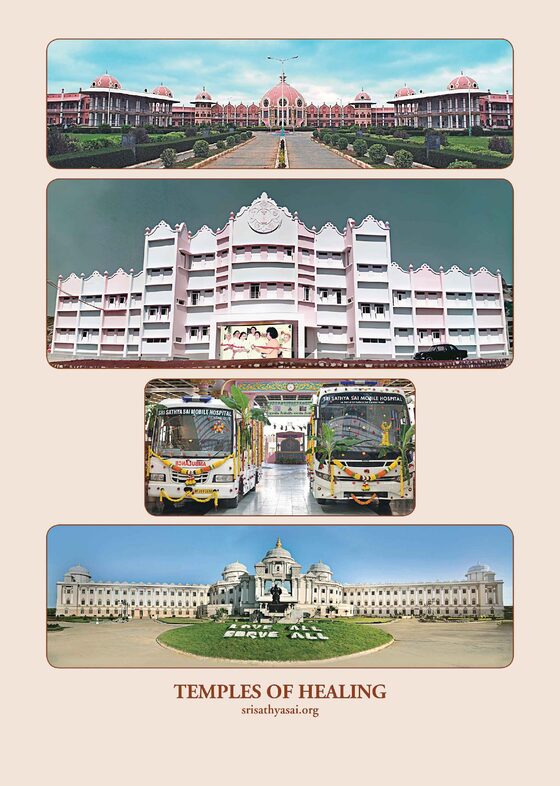
Proceedings · 100 Years of Sri Sathya Sai
Global Conference on Sri Sathya Sai Ideal Healthcare
Sai Kulwant Hall & Sai Hira Global Convention Centre
28–29-Jun-2025 · Prasanthi Nilayam, Puttaparthi
Scan to watch all talks
Open the YouTube playlist ↗
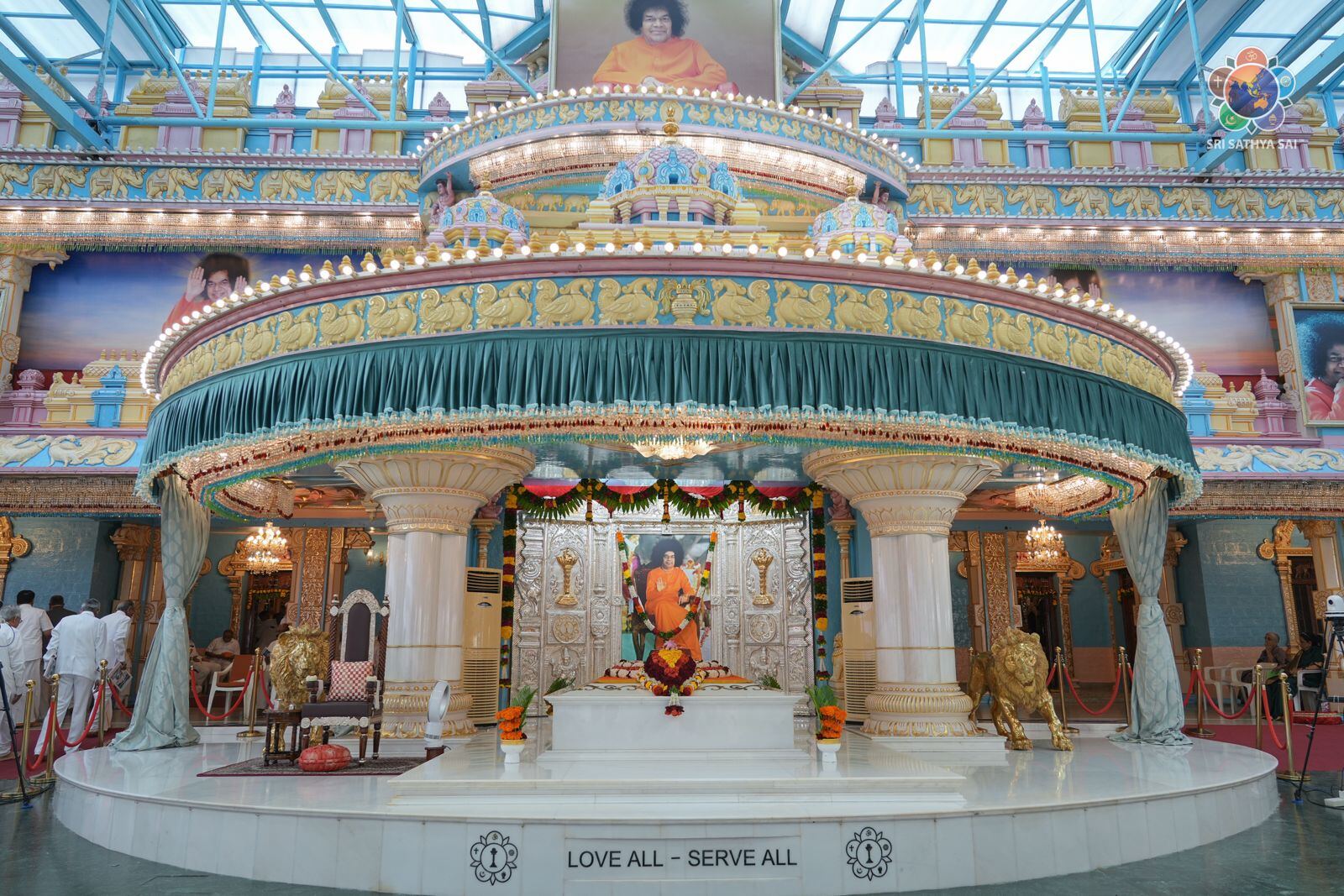
Sai Kulwant Hall
Saturday, 28-Jun-2025 · in the Divine presence
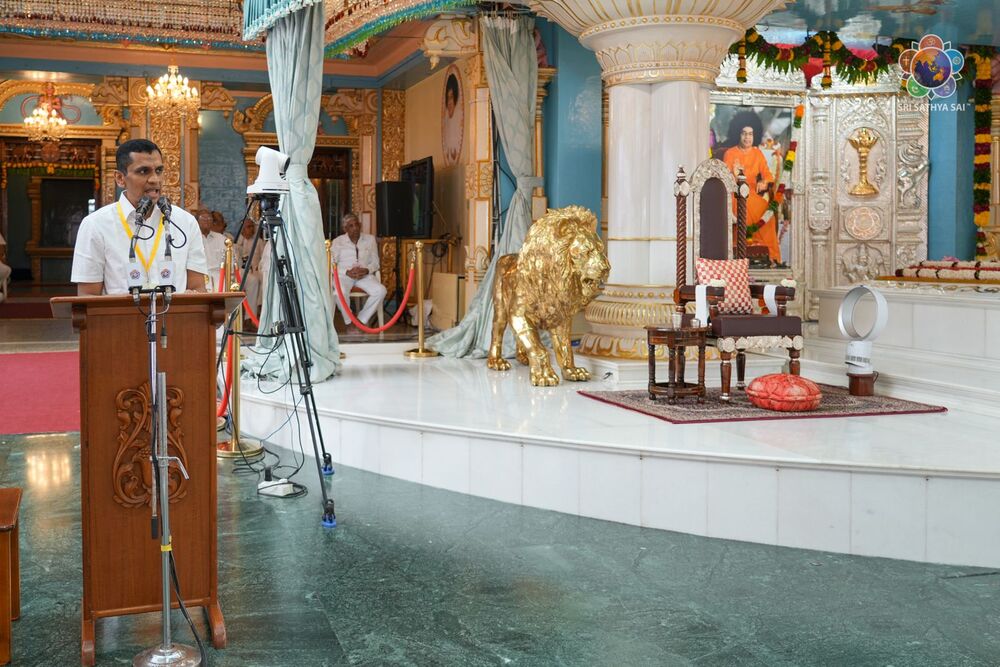
Introduction to the Inaugural Session
Sri Praveen Vemula, Sr. Manager
Read transcript 356 words
Om Shree Sairam. I offer my humble salutations at the Lotus Feet of our beloved Bhagwan. Respected trustees, dear elders, brothers and sisters, Sairam. In a poem written by Bhagwan in 1950 to a devotee, Swami asks: "If countless number of people pray, would it be an exaggeration? Whose leelas can be explained or limited? The happiness of experiencing them cannot be described in words. Whose nectarine words, even if listened to forever, never satisfy us? That Avatarapurusha is this little Sai, who has taken the name of Putta Pratisha. These words are possible to be believed—come near and know for yourself O devotees."
Bhagwan, as You have commanded, today doctors from across the globe have assembled at Your Lotus Feet to experience the Sri Sathya Sai Healthcare Mission as part of the 100 years of the Sri Sathya Sai Avatar. Bhagwan, beginning with Sage Bharadwaja who was cured of paralysis by the sprinkling of water from Your divine hands, You have cancelled multiple cancers with Your words and removed numerous tumors by creating surgical instruments out of thin air. The list of Your leelas in medicine is endless.
In answer to Mother Ishwaramba and to provide humanity an opportunity to serve You, You sowed the seed for the Sri Sathya Sai Healthcare Mission in the form of the Sri Sathya Sai General Hospital in 1954, providing medical treatment completely free of cost. What started as a single-doctor clinic has expanded into two major general hospitals, two super specialty hospitals, and multiple mobile hospitals across the country. The mission has spread worldwide, with medical camps and hospital treatments offered free of cost in many places.
With Your divine name, we begin the proceedings with the offering of the program card and conference brochure to Bhagwan by senior doctors of the hospital. The first speaker today is Dr. Sundaresh, Director of the Sri Sathya Sai Institute of Higher Medical Sciences, Whitefield, a senior orthopedic surgeon. Dr. Sundaresh's association with Bhagwan spans over seven decades, and he is fortunate to have witnessed the healthcare mission grow from its earliest days. I now request Dr. Sundaresh to address us.
Welcome Address
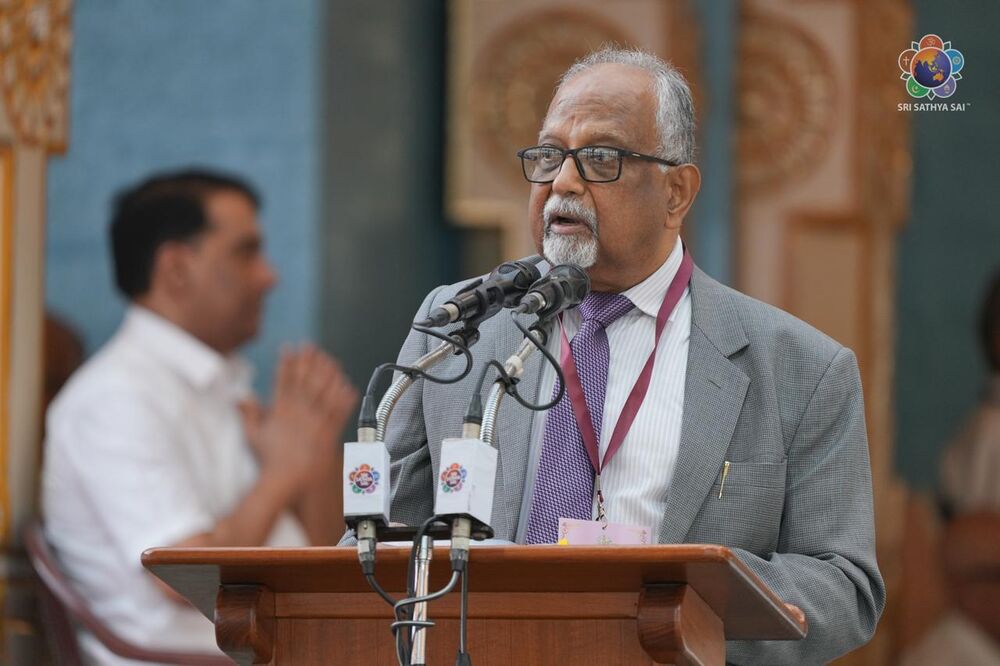
Dr. Sundaresh DC, Director, SSSIHMS, Whitefield
Read transcript 890 words
I offer my humble salutations at the Divine Lotus Feet of our dear Lord, Bhagwan Sri Sathya Sai Baba. Respected trustees of the Sri Sathya Sai Central Trust, invited guests, revered elders, dear Sai brothers and sisters, it is my privilege to welcome you to this global conference on the Sathya Sai Ideal Health Care Mission. I am happy to note that the response from doctors all over India and from overseas has been overwhelming. We have over 800 registered delegates. I warmly welcome all who have joined us.
This conference is being organized to rededicate ourselves to the Sathya Sai Health Care Mission and as part of the centenary celebrations of Bhagwan Baba's advent. The fact that this health care model has flourished for seven decades now proves its robustness and the overflowing grace of Bhagwan. The work being done here is reflected in the faces of millions who have benefited. Our goal is to spread this message of love through health care delivery, to encourage more people to participate in this mission, and to emulate it in their own environments.
The Sri Sathya Sai General Hospital at Prashantinilayam, established at Mother Eshwaramba's request, began in 1956 as a small hospital with eight beds. Today, it has grown to a 120-bed multi-speciality hospital, serving more than 500,000 people within a 12-kilometre radius, across over 300 villages. Following this, the Sathya Sai General Hospital at Whitefield was established as a mother and child hospital to meet the needs of the local population. At that time, Whitefield was outside Bangalore city limits. The General Hospital, now located at the premises of the Sri Sathya Sai Institute of Higher Medical Sciences at Whitefield, has served countless patients through the years. Today, the hospital has an outpatient strength of over 500 per day and performs 12 to 15 major surgeries daily in its four operating rooms.
Importantly, all services are free, yet there is no compromise in the quality of care, manpower, or equipment. Volunteer doctors of all specialties come from across India and the world to serve patients here. This general specialty hospital covers all fields: general surgery, medicine, orthopedics, ENT, ophthalmology, urology, and obstetrics and gynecology. The hallmark since inception has been the number of volunteer doctors who contribute regularly and on a scheduled basis, ensuring patients receive expert help when they need it.
During the 65th birthday celebrations in 1990, Bhagwan Baba announced the establishment of a super specialty hospital for cardiac patients at Puttaparthi—a surprise for many, given the rural setting. Yet, a palatial building of 350,000 square feet was ready within a year, and the first operation took place in 1991. The hospital was inaugurated on November 22, 1991. This became the third unit of the Sathyasai Ideal Health Care Mission, gradually expanding to include specialties such as urology, ophthalmology, orthopedics, plastic surgery, and gastroenterology.
A similar announcement led to the Super Speciality Hospital at Whitefield in 2000. A year later, in 2001, a new building of almost 325,000 square feet was constructed—primarily for cardiac and neurosciences. Both specialties were led by senior doctors and equipped with state-of-the-art equipment for complex surgeries. The hospital boasts 12 fully equipped operating rooms and the latest diagnostic technology.
Not satisfied with merely stationary hospitals, Baba initiated the Mobile Hospital in 2006, providing holistic health care to over 500,000 people in 300 villages around Puttaparthi. This unique model will be further discussed over the next two days. The unique selling proposition of all these hospitals is what we call the ideal health care mission of Baba: universal, free, comprehensive, compassionate, and preventive. All of this is done with the best technology and equipment, with no compromise on quality.
Our outpatient department is entirely paperless and fully digital, reducing our carbon footprint. The high-quality, free services attract patients from all over the country, resulting in large numbers, but we have managed this effectively through a robust appointment system—patients are seen on the same day as their appointment, without having to wait outside. Volunteerism is the hallmark of the mission, with doctors and healthcare professionals supported by Sevadars from the Sathya Sai organization, who perform all kinds of tasks to support service delivery.
The Sathya Sai Central Trust provides constant support, with costs exceeding 1,000 crores—100 crores each year—and likely more in the future. The funds come from unsolicited donations from Baba's devotees, with hospital expenditures funded through interest generated on a corpus fund. This model is possible, sustainable, and replicable, as proven by its existence for over 70 years. Bhagwan Baba's infinite love for humanity and desire to alleviate suffering is at the heart of this mission. Anyone inspired by this feeling can continue the work—there is no dearth of money, only a need for love for fellow human beings.
We now have memoranda of understanding with two leading universities: Tokyo Science University in Japan and the University of Chicago Medicine Department in the United States. This collaboration will facilitate exchange of skills and research across these institutions. In the coming two days at the Sathya Sai Heera Convention Center, we will deliberate on these aspects in greater detail. I pray to Bhagwan to bless us all, and I urge medical professionals to join this voyage under the direct guidance of Bhagwan Sathya Sai Baba and make their lives truly meaningful. Jai Sairam.
Address by Trustee
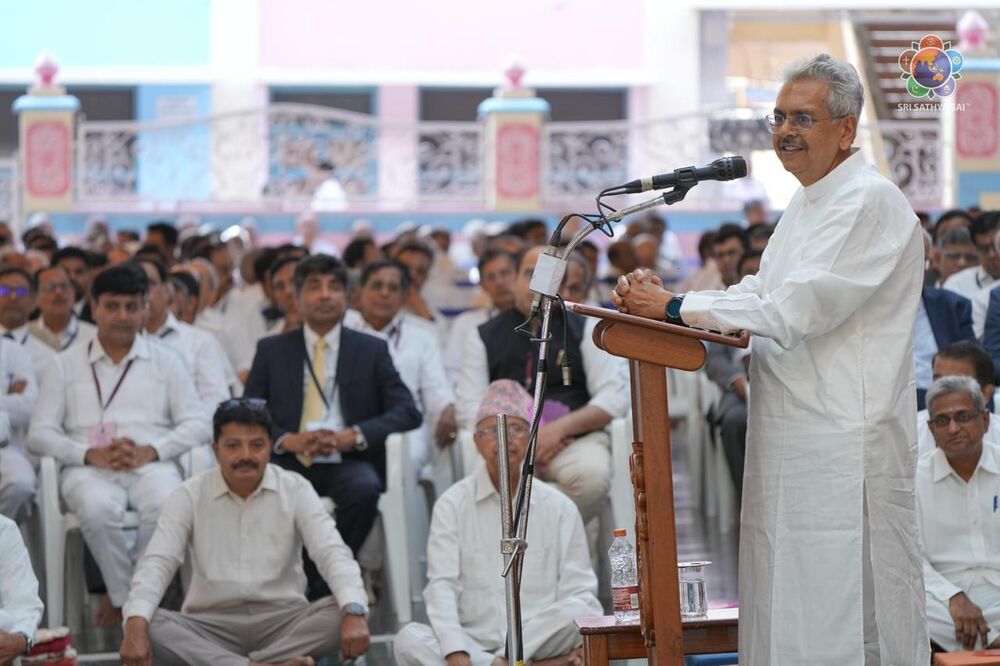
Sri SS Naganand, Trustee, Sri Sathya Sai Central Trust
Read transcript 667 words
Om Shree Sairam. Most revered Bhagwan, professionals from the medical fraternity from all over the world, my fellow trustees, devotees of Bhagwan assembled here, and the multitudes watching live across the world through Radio Sai and Sai Media Center—I bring you hearty greetings on this lovely Saturday morning. The sun is shining, clouds are hovering, and Puttaparthi is not as hot as usual.
I've been asked to say a few words. I recall a dilemma from 1999, when Bhagwan invited me for an interview in Brindavan, Whitefield, for several consecutive days. On the last day, he said he had an assignment for me: to be a trustee in the Sri Sathya Sai Medical Trust. Although I am not a doctor, but a legal professional with no connection to medicine other than devotion to Bhagwan, I accepted this role because Bhagwan assured me, "I will do everything." Thus, I was inducted as a trustee just before the construction of the Whitefield Hospital in 2001.
There were no regular trustee meetings or agendas—just the single, ongoing commitment to attend Swami's darshan. Every rupee spent in the hospital was under Swami's signature. The financial heads had to explain each month's expenditure and budget to him directly, covering details like staffing, medical supplies, and electricity. Only if he was satisfied would he authorize a cheque for hospital operations.
On the medical side, Swami was always attentive to doctors' needs, resolving issues directly. I recall meeting Dr. Varshaban Shah, who served at Rajkot's Swami hospital, and told me that just seeing Swami's photo gave her the solutions she needed during difficult surgeries. On her first visit for darshan, Swami approached her personally, praising her devotion, and told her that with devotion, a doctor can solve any patient's problems.
Swami always emphasized helping others: "Help ever, hurt never." He urged us not to think only of ourselves but to lead lives for the welfare of others. All of Swami's institutions aim to help others. The appointment system, recently mentioned by Dr. Sundaresh, is an achievement: patients now call, receive a time and date, and are seen on the same day, greatly improving care and reducing waiting times.
Swami often quoted: "Paropakaraya, punyaya, papaya, parapidanam." Helping others earns merit; harming others results in demerit. Acharya Shankaracharya asked, "What is truth?" and answered, "Do something good for all living beings." Swami taught that expansion is life—compassion and love should keep expanding. From humble beginnings in the 1950s, the medical facilities have now expanded across India and the world. During festival seasons, doctors run medical camps far and wide, inspired by Swami’s mission.
Swami always said to take service to the needy—not ask them to come to us. That's why we now have mobile hospitals in Puttaparthi, Delhi, Chennai, and other places, equipped with modern facilities and treating many ailments. Our aim is to help everyone and keep all beings happy, as we say, "Sarve janah sukhino bhavantu." Bhagwan said, "The flower of compassion to all living beings is Sarvabhuta Dayapushpam." Compassion is dear to God. Every person contains the seed of divinity, and recognizing this truth, being compassionate to all, is what God expects of us.
God loves the flower of forbearance, Shama, the highest human quality. We should not harbor narrow ideas; instead, see all as one. This is the message Bhagwan gave to the medical fraternity and all devotees. Seva Dal volunteers come from all walks of life, ready to do any task as service to God. Many doctors from around the world take time off to serve here—not because we lack doctors, but because there is such a demand to contribute. This mission, recognized by international organizations, is unique, and we must thank Bhagwan for the opportunity to serve and ensure the mission continues.
I wish everyone a wonderful conference with illuminating discussions among the doctors, aiming to improve healthcare in Swami’s institutions. Welcome to Puttaparthi, and I wish you a happy, pleasant stay and a safe return. Thank you, Jai Sairam.
Book Release
Read transcript 85 words
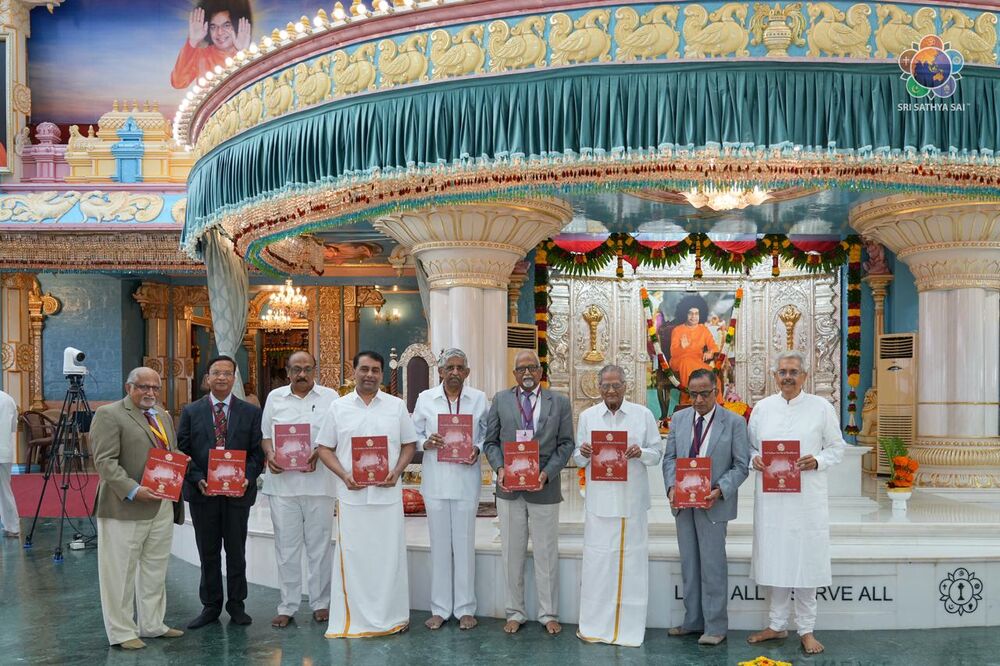
Bhagwan is Purushotama. Sai Bhagavatam is complete with stories where Bhagwan has played the role of doctor, surgeon, pharmacist, and dietician. His discourses on health and health care contain prescriptions for the ills affecting both health care and life today. We now request the trustees and senior doctors to release a book titled "Sri Sathya Sai Ideal Health Care" to commemorate 70 years of this mission. The book is a compilation of divine discourses and the work done under the Sri Sathya Sai Healthcare mission.
Offering of MoU to Bhagawan
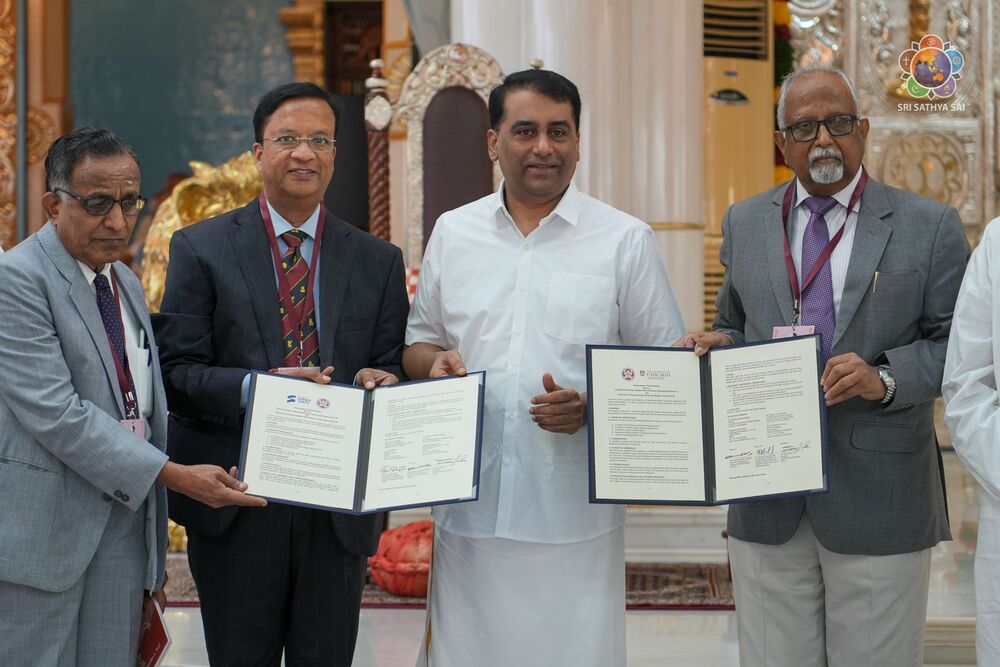
No video link for this segment in the proceedings document.
Read transcript 71 words
With Bhagwan’s blessings, we are pleased to announce a landmark development in our pursuit of excellence in medicine and education: on July 20, 2025, in Tokyo, Japan, Dr. Sundaresh DC signed two separate MOUs with the Institute of Science, Tokyo Cardiovascular Surgery, Japan, and the University of Chicago Medicine, Heart and Vascular Center, USA. These MOUs mark a significant milestone, paving the way for deeper collaboration and advancement in medical sciences.
Documentary on Sri Sathya Sai Ideal Healthcare Mission
Sai Hira Global Convention Centre
28–29-Jun-2025 · Conference sessions
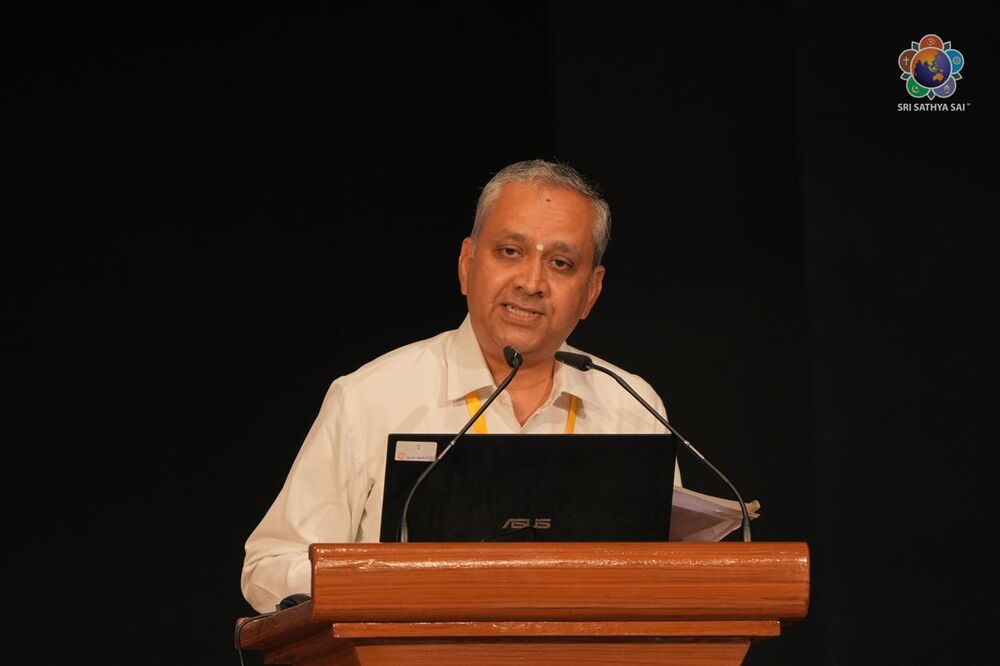
Introduction to the Conference
Sri DV Chandrasekhar-MC
Read transcript 673 words
This is not merely a medical conference; it is a celebration of a Divine mission, a journey of healing that goes beyond the body and touches the soul. Here, service to humanity is service to the Divine, and love is the highest form of care.
Today, hundreds of healthcare professionals from around the world have gathered—stalwarts, pioneers, volunteers, and seekers—united not only by the science of medicine but also by the spirit of selflessness and compassion that forms the very heart of the Sri Sathya Sai healthcare mission.
Over the next two days, we will reflect on and explore this unique value-based model of holistic healthcare that is universal, comprehensive, loving, and preventive, offered unconditionally and free of cost.
This conference also serves as an opportunity to foster collaborations, share best practices, and envision the next frontier of care—whether through technology, education, or community outreach—all in alignment with Bhagwan's teachings.
To all our speakers, guests, and delegates, your presence not only honors this noble mission, it strengthens it.
One might ask: What is ideal about this mission?
Everything.
To begin with its origin, this mission was born of the Divine will of Bhagawan Sri Sathya Sai Baba, who embodied the ideal in every sphere of human endeavor.
Nothing less than perfect can emerge from the embodiment of perfection. This mission is ideal in its purpose, spirit, execution, means, and outcomes in every dimension and at every level.
To be specific—the vision of the founder, the benevolence of the donors, the commitment of the trustees, the dedication of the staff, the professionalism of the doctors, the care of the nurses, the skill of the technicians, the sacrifice of the sevadal, the constructive engagement with government, academia, industry, and the community, and the reciprocating love of our patients—all of this is expressed in thought, word, and deed, driven by the purest intentions and executed with the noblest attitudes.
There is no precedent for such a model. In the history of humankind, na bhuto na bhavishyati, we are truly blessed to be part of this story.
And the idealness doesn't stop here.
The venue and timing of this conference are divinely aligned.
Vaidyo Narayano Harihi, an ancient adage, proclaims that the healer is none other than the divine. Yet in today’s commercialized and fragmented world, this seems more a forgotten cliché than a living reality. But Bhagwan has shown otherwise, proving that such an ideal is possible—and has done so through each one of you, the gems of his mission.
Seated here today are Sai's gems, inspired representatives in action, heroes who continue to carry forward the torch of His ideal healthcare.
How perfectly timed this gathering is: just yesterday, the famous Jagannath Rath Yatra commenced.
The divine chariot is symbolic of the Lord's mission—Himalayan in scale, majestic in form, pulled by ordinary devotees, and above all, unstoppable. In fact, the English word "juggernaut" finds its origin in the word "Jagannath."
There is but one difference: in the Puri Rath Yatra, the Lord is seated as a passenger; in this mission, our Lord is in the driver’s seat, guiding, protecting, and leading every step of the way.
It is our privilege to introduce our keynote speaker, a towering figure in healthcare, medical education, and national service.
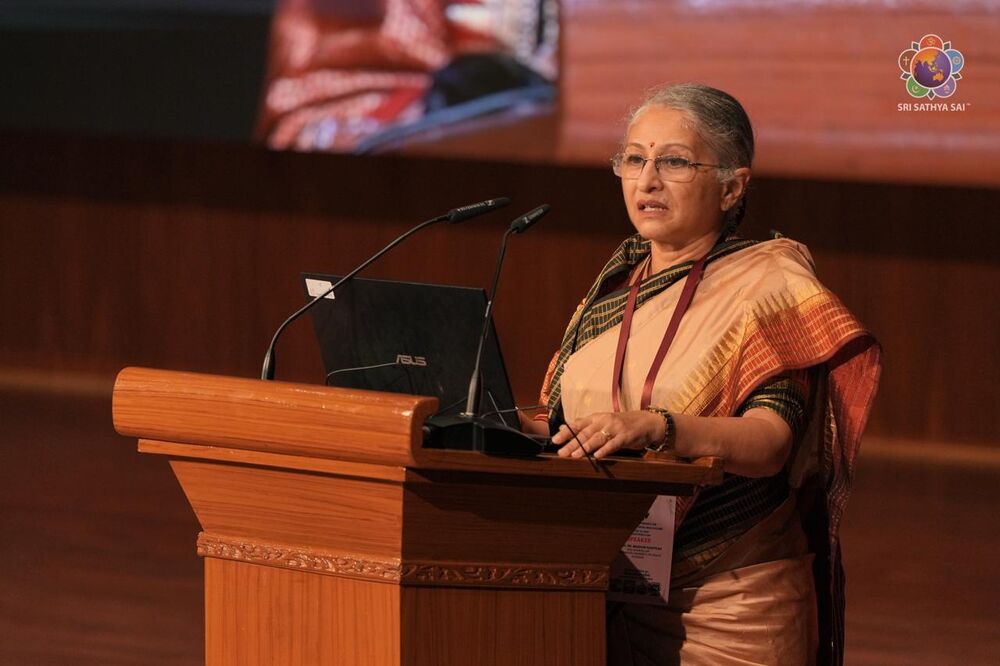
Lieutenant General Dr. Madhuri Kanitkar currently serves as Vice Chancellor of the Maharashtra University of Health Sciences and is a member of the Prime Minister's Science, Technology, and Innovation Advisory Council. With a distinguished career in the Indian Armed Forces Medical Services, she has held several key leadership roles, including Dean of AFMC, Pune, and has been conferred with multiple honors for her contributions to military medicine, pediatrics, and public health—including the Vishisht Seva Medal, Ati Vishisht Seva Medal, and Param Vishisht Seva Medal.
Beyond her credentials and accolades, what makes her presence truly special is her resonance with the values that define this conference: service before self, clinical excellence anchored in compassion, and the use of science as a tool for healing—not commerce. We are honored to have her.
Keynote Address
Lieutenant General Dr. Madhuri Kanitkar
Read transcript 1,040 words
Honored colleagues, seniors, and everyone who serves with love and compassion,
It is a privilege to stand before you today. When I was called to this gathering, I trusted that Bhagwan would guide my way here, as He always does when we are chosen to serve. The topic I have chosen—care with compassion for community—is deeply relevant in our times. Allow me to share my reflections on the realities facing medicine today, the path forward, and personal experiences that have shaped my journey.
We are fortunate to follow in the footsteps of stalwarts in service, such as Dr. B.C. Roy, Dr. Shanta, Prakash Amte, Abhay Bang, and of course, those who uphold the ethos of Sri Sathya Sai’s mission. Yet, the future presents significant challenges. Not everyone can reach our hospitals, nor can we reach every doorstep. To truly serve all, we must become force multipliers.
Today, medicine itself is ailing. Public health is not improving as it should, faith in medical care is waning, and out-of-pocket expenses are rising. Doctors face increasing pressures—patients are dissatisfied, and trust in the profession is eroding. We are confronting what I would call a multi-system failure. To address this, we must reform medical education, align our research with public health needs, and rekindle the passion to serve.
It is time to move from illness to wellness. Illness is “I”-centered, but wellness is achieved when we work together, using innovation and technology to ensure affordable public healthcare. We must ask ourselves: are we doing enough to form true healers? A relentless pursuit of degrees without wisdom or values leaves a void. As Baba says, do we learn only to earn? Who will instill values and sanskara into our students if we do not?
Medical education, patient care, and research are often ‘siloed’ - colleges, public hospitals, and research labs operate independently, rarely collaborating. We must align these pillars, infusing each with a local flavor and community relevance. A college is more than buildings and infrastructure; it must nurture community and culture. Drawing from models like the Armed Forces Medical College and the Sai service, we can create institutions that prioritize nation and service above all.
Values must be instilled early. My journey began with Balvikas, where I learned the importance of compassion and service. Not everyone is so fortunate, but we can bridge this gap by reaching out to the young—especially those on the threshold of medical education. Medicine is not just about exams and qualifications; it requires aptitude, attitude, altruism, temperament, and soft skills. These qualities are rarely assessed, yet they are essential.
To address this, we have launched initiatives such as the Summer Internship Project, bringing together students from diverse fields—medicine, dentistry, physiotherapy—to learn and serve together. Interdisciplinary integration and public outreach, especially in tribal and underserved communities, are crucial. Our research must be rooted in real-world problems, and our efforts must encourage innovation and entrepreneurship.
Digital technology offers new opportunities for outreach and education. Through digital libraries and telehealth, we can extend the reach of our best educators and care providers to thousands of students and patients. Beautification and sustainability initiatives, such as green campuses and sensory gardens, further enrich the learning environment.
We have also established Section 8 companies like CHAKRA—Company for Health, Applied Knowledge and Research with Autonomy—to drive research and community health forward, drawing strength from both ancient wisdom and modern science.
Ultimately, each of us has found our purpose, our “ikigai,” in this hall. Now, our challenge is to help thousands of others find theirs. We must take ownership of our nation’s health and scale compassionate care as a model for the world. The next generation needs good mentors, attitude, and passion that goes beyond what any digital map can provide.
Let us move forward together, guided by the mantra: “Work is worship, duty is devotion.” May we serve with wisdom, humility, and love.
Om Saha nāvavatu, Saha nau bhunaktu, Saha vīryam karavāvahai, Tejasvināvadhītamastu mā vidviṣāvahai, Om Śāntiḥ Śāntiḥ Śāntiḥ॥
Thank you for the honor and for your patient listening. Sairam.
Session Introduction:
The organizing committee, comprising all the medical institutions under the Sri Sathya Sai Central Trust and led by Dr. Sundaresh, first sat down to draft the conference schedule. They were acutely aware of the challenge before them: the scope of the Sri Sathya Sai healthcare mission is so vast, its dimensions so diverse, and its depth so profound that capturing it all within two days felt nearly impossible—much like trying to fill an ocean into a cup. Each topic here is worthy of a conference of its own, and each speaker brings decades of experience, wisdom, and insight—far more than can be conveyed in the brief time allotted.
For want of a better alternative, the conference has been structured to touch upon as many facets of the divine mission as possible, even if just as a glimpse. We offer sincere apologies to all the speakers in advance for the constraint of time, not the value of their message.
The conference is thoughtfully organized into four thematic sessions, each focusing on a distinct dimension of the Sai ideal healthcare model. Day one, session one—currently underway—is titled "The Divine Heartbeat of the Temples of Healing." As we begin this thematic session, we turn our attention to the heart of the mission: its origin, its structure, and the service models. This session traces the journey of how Bhagwan Sri Sathya Sai Baba's divine mission manifested in physical healing spaces, from primary hospitals to state-of-the-art tertiary hospitals, all offered entirely free of cost, yet delivered with love, dignity, and grace.
We will also witness how this divine heartbeat continues to pulse through the hands and hearts of doctors, nurses, support staff, and volunteers, all serving with sacred reverence.
Just as every space mission has a Mission Control, the Sri Sathya Sai Central Trust stands as the Mission Control center of the Divine Healthcare Expedition. With Bhagwan at its radiant core, the mission navigates the vast healthcare cosmos, propelled and sustained by divine inspiration and moving gracefully beyond worldly constraints.
Let us now explore the four key dimensions of this system—primary care, secondary care, tertiary care, and outreach care—presented by those who live and breathe this mission every day.
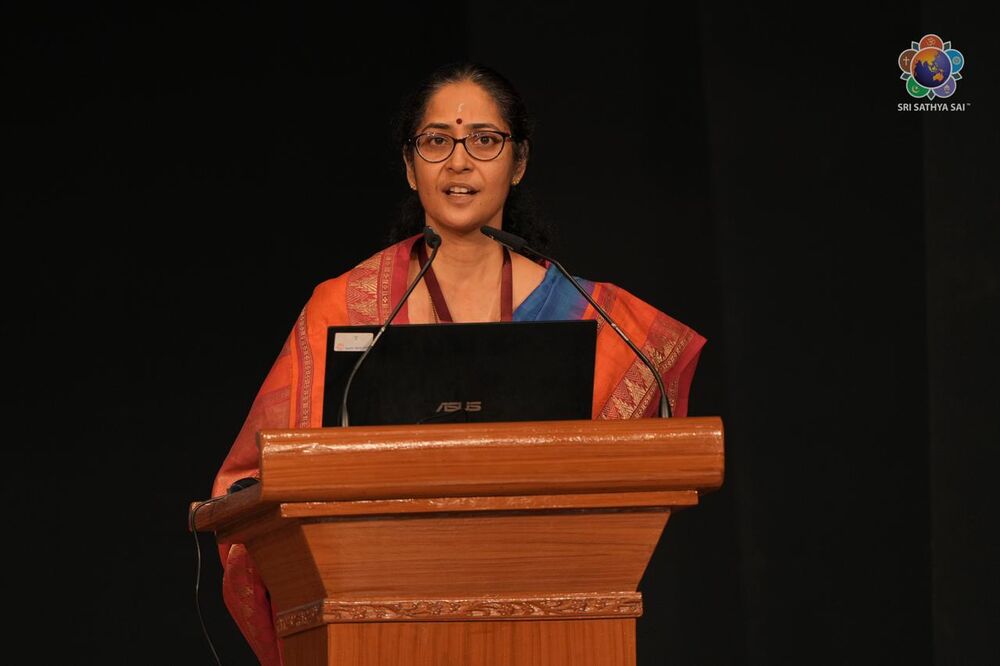
Primary Healthcare “The Lift -Off”
Dr. Uppuluri Uma, Jr. Consultant, General Medicine, SSSGH-PSN
Read transcript 1,004 words
My humble salutations at the Lotus Feet of Bhagwan Baba, esteemed trustees, respected elders, and my dear colleagues. We are all gathered here today to commemorate 100 years of the Sai Avatar and 70 years of selfless medical service to humanity. It is my pleasant duty to guide you through the genesis and remarkable journey of this medical mission, which began with the foundation of the Sri Sathya Sai General Hospital in 1954.
The hospital’s inception was rooted in the fulfillment of a promise made by Bhagwan Baba to Mother Eshwaramma—to establish a small hospital in the village of Puttaparthi. In the 1950s, Puttaparthi was a rustic and remote hamlet, yet the Avatar chose this humble setting to demonstrate two core principles of Sanatana Dharma: that the mother and motherland are holier than heaven itself, and that education (Vidya) and healthcare (Vaidya) should not be commercialized.
Allow me to guide you through a pictorial journey of the General Hospital’s milestones. The foundation was laid by the Divine hands on November 23rd, 1954. The original one-storey building was constructed entirely by devoted volunteers. Dr. Sitaramaiah Garu was the first Medical Superintendent, and this early period was so dear to Bhagwan that he personally took photographs of the hospital staff.
On October 4th, 1956, Swami inaugurated the hospital. Over the years, the hospital grew organically, evolving alongside the organization. In the 1960s, mobile medical services were launched, reaching nearby villages. By the 1970s, as more people flocked to Puttaparthi, hospital doctors began holding medical camps in the Poornachandra Auditorium—a practice that continues today in both India and abroad through the Sri Sathya Sai Organizations.
In 1984, the main hospital building, which now houses the operation theatre complex and maternity wing, was constructed. In 1990, the extension block and the Super Specialty Hospital with the NICU were established. The latest expansion in 2015 now houses the Emergency and General Medicine departments.
What began as an 8-bed hospital has grown into a 120-bed facility. The number of patients served is a testament to the hospital’s impact: we see nearly 1,000 patients daily in the OPD—amounting to around 300,000 visits annually—and admit approximately 16,000 patients each year.
Let me provide an overview of the hospital’s extensive services. The Obstetrics and Gynecology Department is truly the bedrock of this institution—it would not be an exaggeration to say that nearly every person born in the last 50 years in Puttaparthi and the surrounding villages was delivered in our labor rooms. Annually, we record 1,400 deliveries (about four per day) and 1,000 pediatric patient visits. Our Level 2 B NICU supports this care, and the Pediatrics Department sees 120 children daily. We provide end-to-end care for type 1 diabetes, including insulin, glucometers, lancets, and sick day management.
The Department of General Medicine is the backbone of the hospital, treating nearly 500 patients every day. We manage chronic diseases—such as diabetes, hypertension, COPD, bronchial asthma, and coronary artery disease—providing comprehensive care from cradle to grave. The Emergency Department operates 24 hours a day and sees about 70 patients daily, comparable to some smaller medical college hospitals. We are a referral center for snake bites in the district, managing 300–400 cases per year and administering more than 3,000 vials of anti-snake venom. Notably, we are the only facility in the region with immunoglobulin for rabies.
Support services include dietary, laboratory, and pharmacy. The Dental Department serves 22,000 patients annually and provides orthodontic treatments for children associated with the Sri Sathya Sai organizations. We also offer General Surgery, Anesthesia, Ophthalmology, ENT, Audiology, and several ancillary specialties. The Yoga and Lifestyle Disease Clinic focuses on health education and preventive care.
Our hospital is accredited for 2 DNB Family Medicine seats, a program begun in 2008 with a 100% pass rate. Our students attest to receiving excellent clinical training, enriched by both inpatient and outpatient care, all within a spiritual atmosphere that fosters competent, confident, and compassionate doctors.
The financial impact of the hospital is immense. The market value of our services exceeds ₹24,00,00,000—a conservative estimate that only covers some expenses. This has substantially reduced out-of-pocket healthcare costs for the community, saving countless families from debt and poverty, improving financial stability, and leading to better health outcomes.
A recent survey by the students of Sri Sathya Sai Institute of Higher Learning assessed patient satisfaction across categories such as accessibility, convenience, time with the doctor, interpersonal manner, and technical quality. The hospital scored between 4.7 and 4.9 out of 5 in every category. Importantly, the intangible spiritual impact is profound: many patients attend not only because services are free or convenient but because of the hospital’s reputation and their faith in Bhagwan Baba. As Swami has said, patients who come to this aarogya nilaya leave restored in both health and spirit, equipped with faith to guard them against future illness.
Some unique aspects of the hospital include its distinction as the very first hospital under the direct guidance of the Avatar. We enjoyed close proximity to Bhagwan Baba, who at times personally consulted patients and dispensed medicine. Our dedicated doctors and nurses consider Seva not just an act of service but a way of life; many have served for decades, quietly and without remuneration, motivated by devotion and love. The work environment here is truly unique—free of competition and comparison, and, as our students say, a place with zero toxicity.
Our visiting doctors, renowned internationally, come from diverse specialties such as dermatology, ophthalmology, endocrinology, and psychiatry, enriching patient care and sharing their expertise. The Seva Dals—the silent army of Swami—come every fortnight from all over India, handling the hospital’s entire housekeeping needs.
In conclusion, the impact of Seva on those who serve here is even greater than the service itself. For us, this workplace is a sanctuary—a space where maladies born of Maya are cured by the Divine Doctor, and where spirituality and medicine meet. On behalf of the entire General Hospital family, I express deep gratitude to the Lord for the opportunity to serve in His hospital.
Secondary Healthcare - The Cruise
Dr. Geethanjali Tulapurkar, HOD, Anaesthesia, SSSIHMS-WFD
Read transcript 905 words
I think there might be a little repetition, because we have to take Swami’s name now and then; only then does our faith grow. I thank Swami for giving me this opportunity to speak about His tremendous work.
Let me begin with a story. There was a village with two friends—Gopala, a wealthy businessman, and Krishna, a poor farmer. Both were ardent devotees of Pandharinath of Pandharpur. Gopala could not visit Pandharpur due to his work, so he gave ₹100 to Krishna and asked him to offer it to Swami whenever he went. Krishna used to walk to Pandharpur during the Wari pilgrimage. On his way, at the outskirts of a village, he encountered an old man and felt compassion. He gave ₹5 from Gopala’s offering to the old man for food. The old man was very happy and blessed Krishna.
Further along, Krishna met a poor mother with her sick child. Moved again, he gave more money from Gopala’s offering, thinking, “Swami, I am not using this for myself, but giving to those in need.” This happened several times. By the time he reached Pandharpur, only ₹2 remained, which he offered to Swami.
After Krishna returned, Gopala asked if he had given the money to Swami. Krishna replied that he had. That night, Pandharinath appeared in Gopala’s dream and said, “I received your ₹98. Where are the remaining ₹2?” Gopala was upset, feeling his friend hadn’t fulfilled his request. The next day, he confronted Krishna, who shared the whole story. “Service to humanity is service to God’—isn’t that our Swami’s motto?
As you know, repetition is inevitable, but because of Swami’s mother, He began the second healthcare mission and established the hospital in Puttaparthi in 1954. Later, on August 19, 1976, he started the General Hospital in Whitefield, just four or five kilometers from Brindavan Ashram. It was mainly for mothers and children. The Whitefield Hospital began as a small outpatient department (OPD). I have worked in the General Hospital; it feels like a family working together. Even then, it was just a small OPD with a few beds. As the villagers’ needs grew, so did the hospital’s popularity and infrastructure.
It started with one doctor. Then, in the early 1980s, Dr. Savitri joined, dedicating her life to Swami and serving until the end. Gradually, the General Hospital added more departments—pediatrics, general medicine, surgical branches like orthopedics, ENT, general surgery, and urology. Swami inspired so much devotion that people were willing to give everything to him—money, devotion, instruments, and most importantly, their time. Doctors would work in private clinics in the mornings and come to serve in the afternoons, performing surgeries and OPD work.
That’s how the hospital grew. Dolly Sister, a Parsi nurse who left everything to serve under Swami, used to recall how Swami would visit the General Hospital often, talking to everyone and being close to each person. Blessed were the doctors—Swami would watch surgeries through a window in the operating theater. Every person, bed, ward, and instrument was blessed by Swami. Whenever Swami visited the Brindavan Ashram, Dr. Savitri would call him for even the smallest inaugurations, and Swami would come happily.
Later, Dr. Balasubramanian was appointed as the Medical Superintendent. With Swami’s blessings, the hospital expanded to a full-fledged institution with its own lab, physiotherapy, radiology units, and OPDs. Doctors not only from Bangalore but also from Singapore, the UK, and the USA would come regularly, often dedicating one day a week to Swami’s service. This pattern continues even today in the multispeciality unit in Whitefield, where doctors still keep their committed days for service.
Sometimes, when we don’t have a case scheduled for visiting doctors, they call us to ask why—they are so dedicated, having given 30 to 35 years of service. Swami has provided us with state-of-the-art equipment: the best anesthesia workstation, microscope, laparoscopic tower, arthroscope, endoscope. Visiting doctors often remark that even their own workplaces don’t have such advanced tools.
Statistics may not show drastic changes, but some departments have closed while new ones have opened. The point is, patients have changed: they have more comorbidities and higher expectations, sometimes growing impatient if their appointment is scheduled months ahead. But our doctors, Seva Dals, and nurses manage to calm them and increase their faith in Swami.
It is touching to see patients travel over 1,500 kilometers for minor surgeries, simply because someone told them about Swami’s hospital. It’s overwhelming to witness their gratitude. One patient, after surgery, traveled for three days from Bengal just to bring us mishti doi—by the time he arrived, it had spoiled, but we felt the love behind the gesture. A thyroid patient, relieved after a major operation, had her husband, a weaver, create sarees to offer to Swami.
A 15-year-old Muslim boy from Bardhaman district with scoliosis was operated on. Before induction, I asked what he wanted to become. He replied, “I want to be a doctor like you and serve at Swami’s institute.” I told him it was difficult, but he insisted, “If I get better, I’ll definitely do it.” He recovered, went back, passed the NEET exam, and is now studying medicine at Kolkata Medical College.
What do we learn from all this? “KarmanyeVadhikaraste Ma Phaleshu Kadachana”—we should keep doing our work without concern for the outcome. That is what I have learned from working in this hospital. I hope Swami blesses us all. Sai Ram to you all.
Tertiary Healthcare - Hearts' Leap
Dr.Anil Kumar Mulpur- Jt.Director, SSSIHMS-PG and HOD, CTVS, SSSIHMS-PG
Read transcript 1,168 words
Welcome to Prasanthi Nilayam, the abode of supreme peace. The hospitals people describe here exist due to the benevolence of Bhagwan Sri Sathya Sai Baba. We could spend forever reflecting on the magnitude of service these hospitals have provided and continue to provide.
At the entrance of the Sri Sathya Sai Institute of Higher Medical Sciences, Prasanthi Nilayam, you are greeted by a grand idol of Lord Ganesha. At its base is inscribed: “Paropakarartham idam shariram” — the body is given to serve others and nothing else; there is no other mission. Another verse recites, “Na Kaviat Rajyam, na Swargam, na punarbhavam, Kamaye dukhat apnasham prani naam aarti nashanam” — I do not desire kingdoms, heaven, or even rebirth; all I wish is to alleviate the suffering of my fellow beings.
Many doctors hold such lofty ideals, and many patients require such loving care. But where is the platform that brings them together? I have not seen any place like the Sri Sathya Sai Institute of Higher Medical Sciences.
Looking up, you will see a unique Sarvadharma symbol, drawn by Bhagwan himself. I have never come across another place in the world where people from all religions come, preach, and are welcomed. What does this have to do with tertiary care? You will soon know. The teaching, “All religions are one,” is lived here. The sayings “Love All, Serve All” and “Help Ever, Hurt Never” are at the heart of our work. We may spend a lifetime striving to fulfill these two principles. “Hands in society, head in the forest” — you do not need special spiritual time; simply do your work with your hands and maintain detachment and awareness of the higher reason. That is practical spirituality.
All treatments provided in these hospitals are rendered entirely free, regardless of caste, color, creed, nationality, or religion. Show me another hospital in the world whose doors are open to all, without concern for religious practice or belief in Sai Baba. You simply come, receive treatment, and leave. Nowhere else have I seen this.
You are sitting in a grand auditorium. We could have opted for smaller spaces to save money.The Sri Sathya Sai Institute of Higher Medical Sciences, Prasanthi Nilayam, spans 104 acres. The one in Whitefield covers 55 acres — the land value is beyond estimation. Swami wanted the poorest of the poor to experience the comfort of Buckingham Palace, and that's exactly what was manifested.
The departments of cardiology and cardiothoracic surgery are unique, as they are the only ones duplicated in both hospitals to manage the high patient load. In 2003, we calculated that the last patient entered into the system would have to wait 200 years for their turn — a figure I presented at IIM Ahmedabad about 25 years ago. Now, thanks to our efforts and government support, we offer real-time treatment: you come in, receive care, and leave. That 200-year wait has vanished.
We offer DNB training in cardiology and cardiothoracic surgery, and both hospitals provide the full range of cardiology services: diagnostics, PTCA stenting, treatment of chronic total occlusions, and valvuloplasties. At one time, Whitefield Hospital performed an average of 100 PTMCs (balloon dilatations) every month, possibly the highest number in the world. Now, with evolving practices, we have shifted towards device closures and minimally invasive interventions where appropriate. Electrophysiology, radiofrequency ablations, peripheral vascular disease management, angioplasty and stenting, endovascular grafts, and hybrid procedures — all these are performed here.
In cardiothoracic surgery, we handle the entire spectrum, from congenital heart procedures (ASD, VSD, PDA, AP window, and more) to both curative and palliative surgeries. We have one of the world’s largest experiences with cardiac tumors and ruptured sinus of Valsalva, published in international journals. We perform coronary artery surgeries (off-pump and on-pump), aortic aneurysm surgeries, hybrid procedures, mediastinal and lung surgeries — both primary and redo operations. The only procedure not yet performed is transplantation. However, as recently as 2001, Swami declared that transplantation would happen here, and just a week ago, we signed MOUs with the University of Chicago and the Institute of Science in Tokyo. I am confident that transplantation will soon take place in our hospitals.
I cannot estimate the monetary value this represents, as the numbers resemble Aadhaar card numbers: 140,000 cardiac procedures performed, about 60,000 open-heart surgeries across the two hospitals. International visitors are always struck by the scale and sophistication of our cath labs and ICUs; our facilities rival the best in the world. In other cities, hospitals may focus on revenue per square foot, but here, our expansive spaces are designed for care, not profit.
Whitefield has four operation theaters and an advanced cath lab, while Puttaparthi has three operation theaters. We work six days a week — the concept of a five-day week is foreign to us. The cardiac care units are state of the art.
We have patients from all over the world: Pakistan, Russia, and recently, a boy from Malawi. With his mother’s permission, I share the story of Prince — a three-year-old, nine-kilogram child with four complex heart defects (tetralogy of Fallot). He was flown in, with all expenses covered: travel, stay, and accommodation for his mother. Prince received princely care and is now back in Malawi, healthy and happy. This case exemplifies our doctors’ and nurses’ spirit — they serve selflessly, not motivated by money, but by service.
Specialists here are granted unique freedom: they choose cases and plan treatments independently, without interference from the Central Trust. There is no manipulation of waiting lists. National and international collaborators visit at their own expense, and we host them, promoting awareness and opportunities for all specialists. Our MOUs with Chicago and Tokyo aim to advance services both here and abroad.
When asked how long Sai Baba’s hospitals will serve, Swami once replied at Hillview Stadium, “At least for the next 1,000 years.” This is possible due to the benevolence of Bhagwan Sri Sathya Sai Baba, ongoing support from the Central Trust, participation of the Global Council (now in 180 countries), dedicated doctors, and Seva organizations. Swami himself said, “If there are no Seva organizations, there is no hospital,” for these volunteers and donors are its backbone.
We have never enrolled in or sought reimbursement from any government scheme. Our goal is not to eradicate the world’s suffering, but to serve as a role model. Anyone can refer patients for free treatment; the doors are open to healthcare professionals wishing to serve. The true purpose of these hospitals is to inspire others, and they have indeed done so, as similar institutions now emerge worldwide.
Ultimately, it is not wealth, people, or position that matters, but sacrifice — “tyaga.” You may not have a Sri Sathya Sai Institute of Medical Sciences nearby, but Swami encouraged everyone to dedicate at least one day a week to serving the needy, wherever you are. If we have inspired you to take up such an activity, the purpose of this conference is fulfilled. Thank you. Sai Ram.
Tertiary Healthcare - "Head"ing Beyond
Dr. Sumit Takar Sr.Consultant, Neurosurgery, SSSIHMS-WFD
Read transcript 1,141 words
Sai Ram.
I am honored to share an overview of the journey and contributions of the Department of Neurosurgery at the Super Specialty Hospital in Whitefield over the last two decades. The department has grown steadily in both scale and scope of services throughout the years.
Clinical milestones include circulatory arrest for complex aneurysms as early as 2002, base endoscopy in 2014, high-flow bypass in 2019, and the establishment of a structured stroke service in 2022. These advances have enabled us to treat more patients with conditions that were once considered difficult to manage.
To date, over 34,000 surgeries have been performed. Each day, the department undertakes 6 to 8 procedures and manages around 50 to 70 outpatient visits, all delivered by a patient-centered team working with utmost dedication. The department manages a wide spectrum of cases, including brain tumors, arteriovenous malformations, aneurysms, spine disorders, and congenital anomalies. Both adults and children are cared for through well-defined treatment protocols grounded in current best practices.
As seen from our records, cranial tumor surgeries account for the largest share at around 40%, followed by spinal degenerative cases. The department has four fully equipped operation theatres and a 20-bed ICU. Among the high-end equipment are four operating microscopes, including two recently acquired Leica OHX units—one with tumor fluorescence and the other with vascular fluorescence. Our advanced infrastructure also includes the Medtronic neuronavigation system, a GPS-like tool for the brain, which was installed in 2001 and was among the earliest in Southeast Asia. Regularly updated, it remains an essential tool in planning and performing complex neurosurgical procedures with precision.
We also have intraoperative neurophysiological monitoring, neuro- and skull-base endoscopy, and a Siemens biplane angio suite. The department regularly performs awake craniotomies, endoscopic skull-base resections, minimally invasive spine procedures, and complex vascular procedures.
Thanks to the inspiration and support of our director, Dr. Sundaresh, a dedicated neuro-rehabilitation center is being established at the hospital. It will be equipped with advanced systems such as virtual rehab devices, robotic-assisted cycles, limb trainers, and reflex-based training tools. The center will primarily serve outpatients recovering from stroke, spinal cord tumors, injuries, and brain tumors. To offer a complete package, the center will also provide neuropsychological support, which is a vital component of any neural rehabilitation service.
We are grateful to Dr. Jayashankar Reddy, an ardent devotee of Baba and Dean of the School of Social Sciences at Christ University, Bangalore, for his help with this project. The department today stands on the foundation laid by Baba’s vision and blessings, and the structure built by Professor A S Hegde, who translated that vision into clinical, academic, and ethical practice. Over his career, Professor Hegde performed more than 17,000 surgeries and trained a generation of neurosurgeons, whose influence continues to shape our work.
The department continues to follow the vision set forth by Baba and Professor Hegde, focusing on ethical, academic, and compassionate neurosurgical care. Successive heads of department and consultants, trained at premier institutions across India, have brought together diverse perspectives. We are deeply grateful to our visiting consultants and mentors, whose spirit of service has greatly supported the department’s growth. I would especially like to acknowledge Dr. Anil Nanda, Chair of Neurosurgery at Rutgers, New Jersey Medical School, USA, who has been particularly generous in strengthening the department through academic mentorship and assistance in sourcing equipment and other resources. We also acknowledge the continued support of other senior faculty from India and abroad, who have enriched our clinical teaching and academic programs.
Now, I would like to share a few representative cases that highlight how timely interventions and multidisciplinary care have led to excellent outcomes for our patients. A 4-year-old child with cyanotic heart disease presented with a large brain abscess; emergency neurosurgical aspiration was performed, and she later returned for successful corrective heart surgery, addressing the root cause of her brain abscess—a strong example of staged and coordinated multidisciplinary care.
A 46-year-old farmer, the only breadwinner in his family, was brought in unconscious with a ruptured aneurysm. He underwent emergency surgical clipping and then required close to 10 intra-arterial nimodipine infusions in the cath lab to manage severe vasospasm that had caused leg weakness. He made a full recovery and was back to work within three months. A photo with his family serves as a moving reminder of how timely intervention and coordinated care can enhance outcomes.
A 22-year-old man presented with progressive quadriparesis—weakness in all four limbs—due to a tumor spanning almost the entire length of his spinal cord. He underwent a single-stage resection of the tumor over 10 hours. Postoperatively, he required prolonged ventilation for over two months, followed by extensive rehabilitation. He eventually regained the ability to walk independently after six months—a remarkable example of restorative care made possible by surgical expertise and sustained rehabilitative effort.
In addition to stroke management, the department also offers endovascular interventions for conditions such as aneurysms and arteriovenous malformations of both the brain and spine. These techniques offer safe alternatives in select cases, with quicker recovery and reduced hospital stays.
Academically, our department runs a robust DNB residency program, admitting one candidate every year into a structured six-year course. To date, 14 residents have graduated and five are currently in training. The program emphasizes clinical and academic excellence, and our alumni have consistently excelled at leading centers both in India and abroad.
The department hosts regular CMEs and multidisciplinary meetings. A recent Stroke Symposium led to the setting up of a stroke unit in the hospital, an important step in enhancing time-sensitive care and multidisciplinary coordination.
The department has received multiple awards, including Center of Excellence status for Glioma Research from the Government of India. It has also received several other honors, such as Best Paper and Young Neurosurgeon awards at various national and international forums. With over 200 publications in indexed journals, the department has consistently led DNB centers in India in publication metrics and academic output. We have collaborated with premier national institutions such as the Indian Institute of Science and CSIR on multiple research projects.
Recently, the department published two significant articles in reputed international journals, showcasing the Sai Healthcare model and its distinctive principles in action. Both articles were well received, cited multiple times, and have drawn global attention to Baba’s approach to value-based care. One publication in the New England Journal of Medicine received international attention and was featured in several prominent media outlets such as the Daily Mail, India Today, and Times Now.
The department is a team—faculty, residents, nurses, and support staff—working together seamlessly. Every surgical outcome is the result of this committed and well-coordinated collective effort. It has indeed been a blessing to serve in a department shaped by Baba’s values of compassion, service, and excellence. We look forward to growing together through shared learning and continued collaboration.
Thank you. Sai Ram.
Outreach Care - Mobile Hospitals-A Documentary
Read transcript 1,163 words
This festive time in the village is filled with joy, celebration, and excitement. The villagers could not be happier—for the divine is coming. They eagerly await to welcome this blessing. Bhagwan has arrived in the form of the Shree Sathya Sai Mobile Hospital.
Yes, it is a mobile hospital, not merely a van or mobile clinic. It is equipped with sophisticated facilities such as X-ray, ultrasound, ECG, numerous lab tests, and other diagnostic services. This medical bus is truly a life-giving panacea for the poor villagers of Marala. For them, it is as if God himself is gliding into their hamlet.
The innocent jubilation of these villagers, living 30 kilometers from Puttaparthi, knows no bounds. The mobile hospital changes the quality of their lives, providing care without any cost—not even a single rupee is spent by the villagers, and they are free from worry. Filled with gratitude, they express their thanks with joy and devotion.
What’s remarkable is that, unlike typical hospitals where people carry reports, wait in long lines, pay fees, and run around for tests, when people come to this hospital, they bring flowers, incense, and smiles.
Bhagwan initiated this medical outreach seva in 2006. Even though Puttaparthi has both a general hospital and super speciality medical facilities—and many needy rural folk find hope and cure at these hospitals—there are still hundreds and thousands who cannot make the journey. For them, Baba said, the hospital should go to where the people are. That is precisely what this hospital on wheels does.
For the last 17 years, a team of voluntary doctors has been caring for 300 to 350 villages within a 50-kilometer radius of Puttaparthi, working tirelessly to uplift the health of these rural communities. The curative services, or patient care, offered by the mobile hospital are of high quality, thanks to the on-site availability of multiple specialists, the Sanjeevani diagnostic bus, regular service, a reliable approach, a good pharmacy with uninterrupted medicine supply, and a solid backup for follow-up care. All of these have led to tangible and visible improvements in both the health and spiritual lives of the people served. The program also reminds everyone that prayer, meditation, and positive thoughts are as crucial for mental health as medical care is for physical health.
Three hundred volunteer doctors, representing 12 specialties from various districts of Andhra Pradesh and Telangana, join the roster every month, eagerly awaiting their chance to serve in this moving mission. For young doctors, it is a revelation—they feel blessed to participate in the Shree Sathya Sai Mobile Hospital. The most powerful thing is witnessing the villagers' heartfelt reaction to Swami’s hospital and the love that comes from Puttaparthi. The way they greet and appreciate the team is both inspiring and moving. Doctors have the opportunity to guide and interact with the local community, which they see as a true blessing.
Many have been part of the mobile hospital for over 13 years, regularly visiting Prashanti Nilayam, which they consider their spiritual home. They feel that working alongside veterans in the mobile hospital is a continual learning experience, recharging their spirits every time they serve.
With 40,000 X-rays, 50,000 scans, 200,000 blood tests performed, and over 1,000,000 rural people treated, the mobile hospital now functions with great precision, speed, and efficiency. It is fully IT-enabled, with 5,200 dedicated volunteers managing logistics, setup, and all the medical and paramedical support needed. The bus is also acquiring a new high-end ultrasound machine with five different probes—a boon especially for pregnant women who come regularly for scans.
Given this proven, systematic, and streamlined service, the mobile hospital is now entering a new phase: diversification. In 2017, the service expanded with a dental bus staffed by a full-time dedicated doctor. Beyond extractions and cleanings, they perform procedures like root canal treatments, flap surgeries, wisdom tooth removal, and more, using the latest equipment, including lasers, portable X-rays, and an ozone machine. They also educate villagers on oral hygiene to prevent systemic diseases.
The new medical buses, with separate cabins for X-ray, ultrasound, and lab tests, also feature an ophthalmic unit equipped with tools like the auto-refractometer, slit lamp, and tonometer, enabling comprehensive eye exams—the kind of care usually found only in metropolitan clinics.
Serving in these villages and in the mobile hospital brings a unique kind of happiness to the volunteers. It is truly remarkable to offer high-quality outreach, with all staff serving voluntarily. Only by visiting these villages can one truly understand the depth of their need. Urban doctors, otherwise, may never grasp the extent of rural suffering.
Even advanced treatments—such as radiotherapy and cancer therapy—are provided entirely free of cost, including food for the patients, thanks to Swami’s love, compassion, and grace. The technical support and environment created by the mobile hospital offer a highly satisfactory platform for doctors, attracting more and more, especially young doctors, because of the abundant clinical opportunities for learning and service.
Dr. Narasimhan, Bhagwan’s chosen instrument for this mission since its inception, now skillfully holds two major responsibilities: Director of Shree Sathya Sai General Hospital and Director of the Shree Sathya Sai Mobile Hospital. Integrating the resources and infrastructure of all three hospitals—general, super specialty, and mobile—he initiated surgeries like thoracic and gastric surgeries, fulfilling Bhagwan’s vision of unity and collective service.
Like all of Bhagwan’s missions, this seva has continued quietly, freely, and with immense love. Yet, such commendable work does not go unnoticed. Today, the government, health planners, and administrators seek advice from the Shree Sathya Sai Central Trust to model their rural outreach programs.
The setup is so meticulous that every piece of equipment is arranged like a mini super specialty hospital, with the availability of medicines as the icing on the cake. Unlike elsewhere, where people may get a prescription but struggle to find medicines, here patients receive both treatment and medications conveniently. The villagers also know exactly when the hospital will visit and can rely on its unwavering schedule, rain or shine.
Every participant in this project is an epitome of love, compassion, and care. This model is truly replicable and represents the highest order of public service.
In 2014, the mobile hospital was honored as the best in rural outreach healthcare and received a citation for “transformation of human lives with innovative healthcare,” a special award by CNBC TV18, which screened 3,000 hospitals across the country and recognized only 12.
Every human has an instinct to do good, especially doctors. A respected cardiologist from Hyderabad, who was once a teacher, once said after serving here: “We have learned our subjects with the bodies of these poor people, first in textbooks and then in real life. Do we need Sai Baba to remind us that we must give back to this community?”
Bhagwan Shree Sathya Sai Baba teaches: when we separate ourselves from selfishness and embrace selflessness and sacrifice, we demonstrate true love. When love becomes our nature, we become God-like.
Such is the spirit behind this noble mission.
Embracing the human side of health care
Dr. Gurava Reddy, Managing Director, KIMS-SUNSHINE Hospitals
Read transcript 1,781 words
Good morning, everyone. It's a great privilege to be here. I've addressed many gatherings over the years, but this occasion feels truly special.
Let me share an anecdote from 15 years ago. I am not an atheist—I don't visit temples to pray, but I do believe there is a higher power guiding us. One day, I received a phone call from Geeta Reddy, then Minister of Women Welfare. I was busy in the OPD when she said, "Doctor, you must give me two days of your time. I want you to see one patient." Within 24 hours, I found myself in Puttaparthi to see Swamiji.
As I mentioned, I was never one to believe in godmen, but the moment I entered this place, I felt a touch of divinity. Something stirred within me, and I thought, "There is something truly special here." Of course, I already had the utmost respect for Swami, largely due to his social commitments and achievements—providing drinkable water to an entire district is no small feat for any human being. But few of you have had the privilege I did: spending 45 minutes alone with Swami, touching His feet and examining His hip. At that time, he was experiencing pain from a previous hip replacement, and I remember thinking how soft and gentle his feet were—like a child's. I was astonished, flabbergasted, at a loss for words at the experience. Swami gave me a ring, and later invited me to Bangalore for lunch.
Though not directly connected with Puttaparthi, I was deeply inspired by Swami and tried to emulate much of his approach in my medical practice. When Dr Anil Mulpur invited me to speak today, I was pleased, because I believe there is a human angle behind everything. The higher you rise in the corporate sector, the more human you should become. I see my colleagues—Raghu Reddy, Dr. Giri, and others—who come regularly to this great institution. I also appreciate Dr. Sundaresh, who has dedicated himself to the service of Baba. I strive to emulate these values.
Swami said that love and compassion are fundamental to human service. Unfortunately, in the present context, doctors are often seen in a negative light. Not all doctors are bad—90% of us are good. We leave our homes to serve people, not to harm them. However, thanks to the media and a few unscrupulous practitioners, the doctor-patient relationship has deteriorated. In these circumstances, being a doctor can feel lonely; the press doesn't trust us, and patients don't trust us. Still, there is a role, a need, and recognition for good doctors, and those working at Sai Institute have proven this.
Thank you, sir. For the next ten minutes, I'll speak about the heart of medicine. I'll remember that medicine is both an art and a science, and that warmth, sympathy, and understanding can outweigh the surgeon's knife or the chemist's drug—echoing the words of our father in medicine, Hippocrates. Healthcare is not just about science and technology; it's about people. The human side of healthcare emphasizes three elements: empathy, communication, and trust. Today, let's explore how prioritizing humanity improves outcomes for both patients and providers.
Better communication leads to more accurate diagnoses, improved adherence, and better patient outcomes. Emotional connection reduces burnout and increases job fulfillment for doctors, which is why staff at Sai Institute appear so happy and radiant. Trust and compassion also reduce complaints, legal issues, and unnecessary repeat visits.
There are three pillars of human-centered healthcare: empathy—understanding the patient's feelings and perspectives; communication—engaging in clear, respectful dialogue; and respect—treating every patient with dignity and being truly attentive and available.
Many people confuse sympathy with empathy. Sympathy implies a hierarchical relationship—caring about a patient's suffering but remaining distant. Empathy is feeling the patient's suffering, and compassion is wanting to relieve it—a step beyond empathy. Sympathy acknowledges suffering, empathy adds understanding, and compassion includes action to alleviate it. In this audience, all of you embody compassion through your service.
Empathy exists on a scale: pity leads to sympathy, sympathy leads to empathy, and empathy leads to compassion. Compassion requires the most effort, understanding, and engagement. There are three types of empathy: compassionate empathy, cognitive empathy, and affective empathy. Compassionate empathy means understanding what someone feels and wanting to help; cognitive empathy is putting oneself in another's shoes; affective empathy is feeling alongside another.
There are many ways to cultivate empathy: volunteer, listen actively, reflect, practice gratitude, avoid judgment, be open-minded, ask questions, share your feelings, stay humble, be kind, be respectful,, be curious, use "I" statements, show compassion, practice patience, practice mindfulness, acknowledge emotions, observe body language, and learn about others. These qualities are embodied by every doctor present here.
Active listening is essential; few doctors dedicate time to this nowadays. Even with my own busy clinics, I ensure that I spend those crucial minutes with each patient, aiming to touch their soul, not just address their physical complaint. Validating patient emotions—listening to their problems, summarizing them, and responding with care—is vital. Body language matters immensely. When a patient enters my clinic, the first thing I do is put a hand on their shoulder. The four T's are important in establishing any relationship: touch, time, talk, and trust. Doctors must not forget the beauty of touch.
A real-world example: a doctor who takes an extra two minutes to sit and talk with a patient makes a world of difference. In our hospital, healing begins the moment the patient arrives. Inspired by Swami, our drivers open car doors, wheelchairs are always ready, and staff are trained to greet patients warmly. Our communication practices also avoid jargon, ask open-ended questions, and check for understanding, always respecting cultural backgrounds.
We developed a vertical called "Apyaya" inspired by Swami, focusing on affection—a blend of communication and empathy. The four T's nourish any relationship, whether it's between lovers, spouses, parents and children, or doctors and patients.
We often underestimate the power of a touch, a smile, a kind word, a listening ear, or an honest compliment—all of which have the potential to transform a life. During my rounds, I hold the patient's hand; often, they are reluctant to let go, which shows the power of genuine connection.
We've moved away from calling people "patients" in our hospital. Trust, honesty, transparency, consistency, and respect for autonomy are now our guiding principles. Shared decision-making is common in Western countries and is now taking root in India. When I explain knee replacement surgery, I outline all options and let the patient choose.
There's always a superhuman power—be it Jesus Christ, Sai Baba, or Allah—guiding us through difficult times. When doctors feel empathy, it takes an emotional toll, so supporting caregivers and promoting institutional policies that protect mental health and resilience is crucial.
Integrating technology without losing humanity is also essential. Telemedicine allows us to reach thousands in remote areas. Technology should be a tool, not a barrier. Maintain eye contact, even when using digital records, and personalize virtual care where possible. In American healthcare, a common criticism is that doctors focus on screens rather than patients, missing essential connections.
Even today, I conducted video rounds from Prashanti Nilayam , and technology enables me to remain in touch with patients even from afar. Soon, robotic rounds will further enhance care.
To embrace humanity more, we need training in empathy and communication, starting from medical school. Treat each patient as a human, not just a case. Encourage patient narratives, design healthcare spaces for comfort and dignity, and ensure leadership models compassionate care.
Anil mentioned that Swami's embodiment of grace, love, and dignity will live on for thousands of years. Here is a call to action: How do you show empathy in your daily practice? Reflect on how often you express empathy—not just by treating a disease or writing a prescription, but by connecting deeply with your patients and advocating for support systems that value humanity alongside innovation.
Simple gestures—such as offering free coffee, tea, and sandwiches to those waiting in outpatient areas—are unique to Sai Baba Center and not seen in most corporate hospitals. I told my chairman, when I take a ₹1,000 consultation, ₹100 should go toward patient comfort. I care about the emotional balance sheet, not just the financial one. I see 150 patients daily and perform 4,000 surgeries a year—not because I am extraordinary, but because of the human touch. You should be "big enough to serve and small enough to listen."
The epitome of any hospital is care, and in our hospital, even the relatives waiting outside operating theaters are given free meals around the clock. These small acts of kindness show patients that they are respected and cared for. Our aim is to stop referring to individuals as "patients," and instead, call them "guests." Treat them as you would a guest in your own home, and everything else will follow.
Healing starts with all of us. It is not just our job—it is our calling. "Apyaya" was started as a vertical because care is not just for patients, but for families too. Treat a disease, and you win or lose; treat a person, and you always win, no matter the outcome. Watch "Patch Adams" if you can—it's the English equivalent of "Munnabhai MBBS" and a wonderful film that illustrates the power of loving care.
The five principles of Swami—loving care, comprehensive care, preventive care, and more—are what truly make a difference. I am proud to be a part of this mission. Our trust has started verticals to provide free knee replacements to those who cannot afford them, and to prevent road traffic accidents—60% of which are preventable. India has 1% of the world's vehicles yet accounts for 11% of global road traffic deaths, a truly alarming statistic. Our trust is working hard to address this, and with the support of the community, we can do even more.
Let me conclude with a quote from Anatole Broyard, a writer who suffered from prostate cancer: "I won't demand a lot of my doctor's time. I just wish he would brood on my situation for perhaps five minutes, that he would give me his whole mind just once, be bonded with me for a brief space, survey my soul as well as my flesh. Each person is ill in their own way, just as he orders blood tests and bone scans of my body, I wish my doctor would scan me, probe for my spirit as well as my prostate. Without such recognition, I am nothing but my illness."
Kindness is a language which the deaf can hear and the blind can see. That is the essence of this gathering. Thank you so much for your time.
Every human being deserves the right to good healthcare.
Padmashree Dr.Ramana Rao - Consultant Physician & Cardiologist
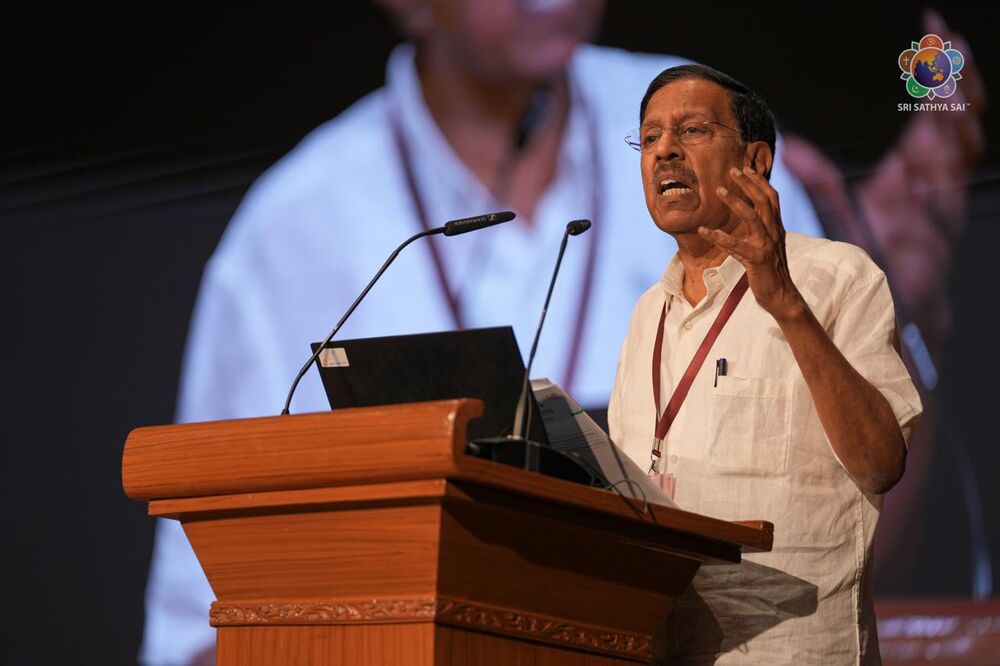
Read transcript 909 words
Namaskar. Good morning, everyone. Thank you very much for giving me this opportunity to be here and share a few of my ideas, as well as my lifelong journey of serving the rural poor.
After I became a doctor, everyone asked me what I would do next. My only answer was, “I will serve the poor.” No one believed I would actually follow through. Yet today, after 51 years, we continue to serve those in need. It is the rural poor who truly need your help—who need your consistent presence. It’s not enough to visit once every three or six months, hold a camp, and move on. It’s crucial that you are there consistently. This presence builds trust and faith. In any village you visit, people will speak of you. They will say, “My doctor will come.” Through this consistency in rural healthcare, your family will grow—not just your spouse and children, but hundreds of families throughout many villages.
India has over 700,000 villages, and most lack even basic care. Many have no qualified doctor to address the everyday issues that arise.
May I request you to play a short video of 2 minutes?
Back in the day, no one believed I would continue serving the rural poor for this long. Over the last 51 years, our village clinic has grown immensely. My wife, Emma, has supported me from day one. Together, we have built what has become the world’s oldest and longest-serving free clinic. We see over 1,000 patients on average. Gradually, we added more services—cardiology, with my son Dr. Cherry, a DM in Cardiology, monitoring ECGs. My daughter-in-law, Dr. Shanthani, handles dermatology. My other son, Dr. Abhijeet, a DM in Endocrinology, manages diabetes care. My second daughter-in-law, Janavi, oversees the nutritional aspects of our services. These additions have elevated our village clinic to a super-specialty facility.
I noticed that many patients would come from distant places, often without food. So, we began providing them with a hearty lunch—plenty of vegetables, sambar, and well-cooked rice. Even this has made a significant difference.
Without patients, a doctor is nothing. I am deeply grateful to every member of my team who made this possible.
Om Sai Ram. It is an honor to stand here in the spiritual presence of Bhagwan Sathya Sai Baba, whose teachings have guided not only my path but also those of countless other healers around the world. Baba once said, “Hands that serve are holier than lips that pray.” This principle has fundamentally shaped my life and inspired me to serve the rural poor.
We started the free clinic in 1973. I used to sit under a tree every Sunday, seeing just three or four patients. But I never missed a Sunday, not even once in the last 51 years. Even today, I sit under that tree. In those early days, there was no help, no publicity, no signboard. Even now, none of the thousands of patients I’ve treated know my name—they just know their doctor will come. The trust and faith they have in their healer has been built over decades.
As Dr. Gurva Reddy mentioned, the most important element is your touch. The way you look at patients, with sympathy and empathy, makes a difference. When I see a patient, I touch the part where they have pain—be it knee or joint pain. Sometimes their bones are raw, with barely any flesh. When I move their joint, it creaks, worse than an old, rusty door hinge. Imagine the pain these elderly patients endure. What we do is relieve this pain for hundreds and thousands, every Sunday, treating 700 to 900 patients. In 51 years, we have cared for over three million patients, absolutely free.
This could not have happened alone. It has occurred through divine intervention and support. First, my family—my wife, sons, and daughters-in-law—have been with me every Sunday, making the work a joy. It’s a beautiful Sunday when my whole family is helping the poor beside me.
We are also supported by 49 volunteers, none of them doctors. Many were once patients themselves, who recovered and then joined us out of a sense of service, or Seva, which is our Dharma. They have learned everything I do and can now do it themselves, sometimes even better. When you do Seva, you attract like-minded people who make your work easier.
Treating these patients impacts more than just the individual. When we treat an elderly man with a bad knee—one who would otherwise need a costly knee replacement—we save him almost 300,000 rupees. This money can then be used for his family’s welfare, his daughter’s wedding, or his grandchildren’s education. When an old man regains his vision after cataract surgery, he returns to care for his cattle and regains his dignity. An elderly woman treated for mobility issues can again manage her kitchen, care for her grandchildren, and recover her sense of self-worth. By helping the elderly, we give new strength to society and support the next generation.
Treating simple illnesses and restoring people to their daily lives has far-reaching effects. I’ve heard pearls of wisdom from every speaker here, and I promise to absorb and implement every idea shared. I am sure this will help me continue my service. All my work has happened through grace—divine blessings have given me strength day after day, year after year, decade after decade.
Once again, thank you all for giving me this wonderful opportunity. Sai Ram.
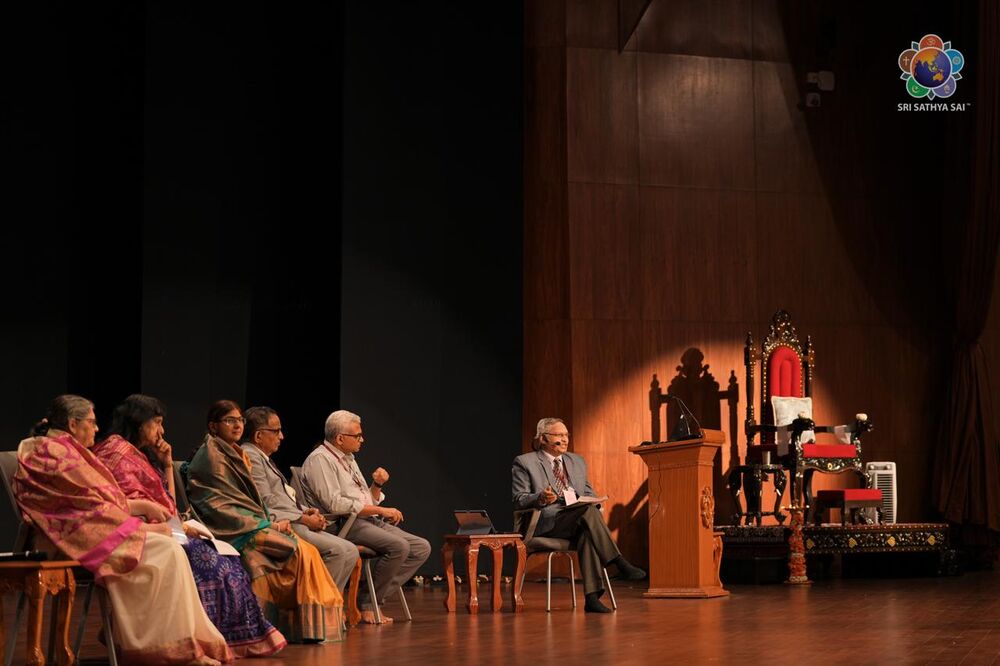
Delivering Sai Ideal Healthcare - Impact, Challenges and Opportunities - A Panel Discussion
- Moderator Dr. Kolli S.Chalam, Senior Consultant, Dept. of Anaesthesiology, SSSIHMS-WFD
- Dr. Gurumurthy - Senior Consultant, Plastic Surgery and Director, SSSIHMS-PG
- Dr. Varsha A. Shah, Honorary Consultant CTVS, Sri Sathya Sai Heart Hospital, Rajkot and Ahmedabad
- Dr. Neelam Desai - Senior Consultant, CTVS, SSSIHMS-PG
- Dr. Reeta Varyani, HOD, Cardiology, SSSIHMS-WFD
Read transcript 1,636 words
My warmest greetings to all, and my deepest respect to the Lotus Feet of the revered Bhagwan. I offer my gratitude to the Esteemed Trustees, Organizing Team and to all the delegates—Loving Sai Ram to each of you. Thank you for inviting me to this wonderful conference at the World Class Convention Center.
Let me begin with the preamble to Sri Sathya Sai’s ideal healthcare. We often attend national and international conferences that charge substantial registration fees, sometimes as much as ₹10,000 to ₹20,000. Typically, the discussions focus on quality improvement and patient safety. At a recent high-level medical conference, I was struck when the speakers emphasized that doctors should treat patients as they would treat their own family members.
This philosophy, however, has been a guiding principle for us since Bhagwan established the General Hospital in 1954, and even before, at the original medical clinic. Bhagwan has always taught us to treat every patient as a close friend or relative, without discrimination. The fundamental principle of Sathya Sai healthcare is that it is free and universal—no one is turned away, just as the doors of a temple welcome everyone equally, regardless of wealth or status.
Doctors at Sathya Sai Healthcare are committed to providing the best possible treatment, with no financial considerations for the patient. The care is not only comprehensive but also deeply compassionate. The very architecture of our hospitals reflects this ethos, with open and welcoming spaces. If you look at an aerial photo of the Sri Sathya Sai Institute of Higher Medical Sciences in Whitefield, Bangalore, you’ll see it is designed in the shape of the letter ‘K’, symbolizing ‘Karuna’—compassion. Compassionate care is delivered at all levels: body, mind, and soul, focusing not merely on treating diseases but on holistic healing.
Importantly, Sathya Sai Healthcare prioritizes preventive healthcare. India, unfortunately, is a global leader in diabetes, with approximately 8 million diabetics, and in cardiovascular diseases—with a cardiovascular mortality rate of 273 per 100,000 people, compared to the global average of 235. The World Health Organization recommends a healthy lifestyle, balanced diet, and regular exercise. Bhagwan has simplified these concepts for everyone, famously promoting the “Hurry , Worry , Curry” principle for heart health, which, if followed, minimizes the need for medical intervention.
Another key feature of Sathya Sai Healthcare is the timely and immediate provision of care. For example, if a patient suffering a heart attack arrives at our doors, there are no delays for billing or negotiations. The patient is taken directly to the catheterization lab, where a stent can be placed in less than 30 minutes—because in these moments, time is truly life.
With these introductory remarks, I am pleased to introduce our distinguished panelists, who will discuss the impact, challenges, and opportunities of Sri Sathya Sai healthcare.
First, I invite Dr. Neelam Desai, who has served at Sri Sathya Sai Institute of Medical Sciences in Prashanti Gram for the past three decades and performed thousands of complex cardiac operations. Dr. Neelam, could you share your thoughts on the impact of Sri Sathya Sai Healthcare on patients and their families?
Dr. Neelam Desai:
Thank you. When we consider the number of patients who have received treatment in our hospitals since their inception, it is truly humbling. Many of these individuals would have had nowhere to turn without our institute, especially those facing heart illness. Financial burdens and the difficulty of finding trustworthy medical advice are major obstacles, especially for the poor and uneducated. Bhagwan created this hospital precisely to offer hope and unremitting solace to the most vulnerable, providing free care when all other avenues seem closed.
I recall a young man—let’s call him John—who learned of his cardiac condition while working in Abu Dhabi. He returned to India, but the cost of surgery was beyond his means until he discovered our hospital. The care he received transformed his life; he joined the Sevadal organization to give back, enrolled his children in Swami’s educational institutions, and today his son teaches at one of our institutes. Grateful for the surgery he could not otherwise afford, he feels he has received a new lease on life and is determined to use it to help others. There are countless stories like this, each testament to the power of free, compassionate healthcare to inspire gratitude and transformation.
Thank you for sharing that heartwarming story, Dr. Neelam.
Next, I turn to Dr. Reeta, Head of Cardiology at the Sri Sathya Sai Institute of Higher Medical Sciences. Dr. Reeta, what is the impact of Sathya Sai Healthcare on patients and their families?
Dr. Reeta:
The greatest impact comes from the free, high-quality treatment we provide, particularly in emergencies such as heart attacks or strokes. At such times, there is no opportunity for families to worry about finances—the focus is on urgent, expert care. Our institute offers preventive counseling, diagnostics, therapeutics, post-treatment support, outreach programs, telemedicine, and mobile hospitals, all as part of Swami’s vision for holistic healing.
Many patients have made life-changing choices after coming to us. For example, some have quit smoking or drinking not out of fear of disease but because they want to align with Swami’s principle of ahimsa (nonviolence). One patient from the Andaman and Nicobar Islands, with severe heart dysfunction, received an ICD device from us despite financial and physical challenges. He was so inspired by his experience that he began organizing community gatherings and contributed to building a Sai Mandir (temple) in his home. Over the years, countless individuals have been transformed by the mission—even those initially unfamiliar with Swami’s teachings have found their lives deeply touched.
Thank you, Dr. Reeta. Clearly, Sathya Sai Healthcare transforms not just patients and their families, but also entire communities.
Now I’d like to ask Dr. Gurumoorthy, Professor of Plastic Surgery and Director at the Institute, to speak about his experience.
Dr. Gurumoorthy:
Since 2014, I have been privileged to serve at Sathya Sai Hospital. What sets our hospital apart is that we never consider a patient’s financial status when deciding on treatment—we simply provide the best possible care. Let me share an example. In 2018, an 18-year-old girl from Kerala came to us with a large vascular malformation on her face and neck. She had sought help everywhere without success. The surgery was risky, involving potential cardiac arrest, but she bravely chose to proceed. During the operation, she did experience two cardiac arrests but was revived both times, and the procedure was ultimately successful. After multiple stages of surgery, she made a remarkable recovery, returned to normal life, and is now employed and supporting her family. Stories like these show the life-changing benefits of the Sathya Sai organization.
Listening to your story, Dr. Gurumoorthy, I am reminded of the words of former Indian Prime Minister Atal Bihari Vajpayee: “This is a hospital where you find the very best medical expertise, combined with the divine grace of Bhagwan Sri Sathya Sai Baba.”
With this, we conclude the first round of our panel discussion. Let us now move on to the challenges and opportunities ahead.
In 1998, during the 50th anniversary of the World Health Organization, our former director Dr. A N Safaya published an article in the World Health Forum magazine. He wrote about the seemingly impossible task of providing high-tech healthcare to the rural poor in Andhra Pradesh. He stressed that healthcare must be delivered with dedication, commitment, and selflessness, and that the Sathya Sai model is replicable while maintaining its core principles.
More recently, Sathya Sai Healthcare has received global recognition, including from the United Nations in its Sustainable Development Health Goals. The Sri Sathya Sai Central Trust has provided $400 million worth of free healthcare to humanity.
Let’s now hear from our panelists about the challenges and solutions in sustaining and expanding this model.
Dr. Reeta, what are some of the key challenges in your department?
Dr. Reeta:
Day-to-day work is increasingly challenging—the cases are more complex, with more advanced heart disease even among younger patients. To manage this, we integrate the latest technology, best equipment, and a dedicated team, all supported by the Sri Sathya Sai Central Trust. Collaborative efforts, often with doctors from abroad, have made it possible for us to provide high-cost devices like CRTDs and ICDs at no charge to those in need. Our department has treated 80,000 patients and performed over 80,000 procedures, with around 100 patients seen daily and 8–10 catheter procedures each day.
Now I turn to Dr. Varsha, Professor of Cardiac Surgery with four decades of experience and over 40,000 surgeries performed. Dr. Varsha, how can we further strengthen and expand Sathya Sai Healthcare?
Dr. Varsha:
I’m grateful to represent our managing trustee, Shri Manoj Bhimani. We operate two hospitals, in Rajkot and Ahmedabad, with Bhagwan Sai Baba as our guiding force. I also consult for eight other hospitals, but the miracles I witness here are unparalleled. Our hospitals provide entirely free treatment, including care for relatives, thanks to partnerships with eight state governments across India. We regularly hold camps, provide food and transportation, and ensure patients receive timely surgeries. Our last camp in Indore saw 400 patients, with 150 given surgery dates, including pediatric cases as young as 2.5 kg.
We also offer telemedicine, which has benefited 19,000 neurology and 19,000 cardiology patients, and run a nursing college to train compassionate professionals. Our DNB program, with nine gold medals across various specialties, prepares the next generation of doctors.
In closing, Sathya Sai Healthcare is committed to serving the poor and needy with love and care. Swami taught that health is a fundamental right, and it is our duty to ensure it is realized for all. Just as ancient Indian texts guided surgery and medicine, I believe the Sai Samhita will lead contemporary healthcare to new heights.
Thank you, and Jai Sai Ram.
Following the Sathya Sai Example
Dr. Bharath Balasubramaniam, President Sankara Eye Hospital
Read transcript 749 words
Offering my humble pranams at the Lotus Feet of Bhagawan Baba. Greetings to all on behalf of Shankara Foundation, India.
We have built a network of 49 hospitals across the country—soon to be 50. But what is most remarkable is that we began as a modest two-room medical center in the heart of Coimbatore. Our founders, Dr. Ramani and Dr. Radha Ramani, dedicated their lives and time entirely to the service of society. Wanting to give back beyond their private practice, they established this medical center.
Today, as I mentioned, with nearly 50 hospitals, we perform close to 250,000 free eye surgeries every year. By the grace of the Divine, we have been able to reach over 2.5 million individuals, providing free surgeries and assistance to those in need.
As I reflect on our participation in this Healthcare Summit, I wonder: Where do our paths converge with others present today? What brings us onto common ground? This morning, I realized that we have been blessed to live in a time when living Saints have walked among us. This is the common thread between Shankara and all Sai institutes—having lived and learned from those who exemplify godly lives, inspiring us to do more and serve better.
Allow me to highlight two innovations that, with the grace of God, we have introduced. The first is called SERVICE—Shankara Electronic Remote Vision Information System. This is a handheld device carried by our field workers during their door-to-door service. The chief advantage is that it gives us a real-time view of the community and the prevalence of diseases, as the platform supports geotagging and data collection. This enables us to identify patterns and reach out proactively. Technology has empowered us to make our interventions more scientific and data-driven, allowing us to collect insights and evidence that we can take to the government, advocating for better solutions in regions with high rates of blindness.
We currently work across 11 states, capturing valuable information which, we believe, will be an immense resource for the future. Data is the new wealth, allowing organizations like ours in the service sector to do even more for the people we serve.
The second innovation is focused on patient experience, called SAHI—Shankara Head to AI. Once AI began to emerge, we sought new ways to capture patient feedback. Initially, we used paper forms, then tablets where patients could enter their responses. But we truly wanted to hear the authentic voice of each patient. That's how SAHI was born: a system that captures patient feedback directly through their mobile phones, using AI-powered multilingual solutions to process input in 15 unique languages—even accommodating regional dialects, such as the differences in Tamil spoken in Chennai and Coimbatore.
The real breakthrough is this: if a patient comments, "Your counseling was excellent, but the waiting time at the optometry clinic was too long," SAHI, using AI, routes the feedback directly to the respective department heads. If the canteen receives praise while optometry receives criticism, both departments are notified automatically. A ticket is raised for any negative feedback, and it is the department head's responsibility to address and resolve it. We also track recurring issues for further review and improvement.
To provide a broader view of how we leverage technology: these tools help us extend our reach to the very doorsteps of rural communities, ensuring our interventions are impactful and evidence-based.
We have even applied the SAHI concept to our internal performance reviews. With over 3,500 employees, my wife, who leads HR, has helped implement a system where both the reviewer’s and reviewee’s emotions and experiences are captured—helping us ensure that feedback is fair and constructive.
In the early morning sessions today, several speakers observed that good work attracts the right people. We experience this daily: when SAHI was born, the idea actually came from a patient who visited our Hyderabad hospital. A consultant there connected the patient to me, and though the patient didn’t have a software solution, he had a vision. We simply listened. His concept aligned perfectly with our goals for customer feedback, and we were able to bring it to life.
I firmly believe—and can vouch for this—that good work attracts good people. If we continue to pursue the responsibilities given to us with sincerity, more and more dedicated individuals will join us, enabling us to reach and serve even more people.
That is my insight and my humble submission. Thank you very much, Dr. Sundaresh, for this opportunity and your kind invitation.
Punditry and Poignancy in healthcare
Dr. Anil Nanda - Peter W. Carmel, MD, Endowed Chair of Neurological Surgery & Professor in the Department of Neurosurgery at Rutgers - New Jersey Medical School and Robert Wood Johnson Medical School.
Read transcript 1,911 words
It is a real privilege to be here, among brothers and sisters of the Sai family—trustees, leadership, and directors of the institution. I would not be standing here but for the grace of Bhagwan Baba. I was very blessed, at the age of 14, to attend the summer course in Brindavan. As Swami would say, these Delhi boys have "monkey minds," and he tamed that monkey mind of mine—something for which I am forever grateful. I don’t think I can ever repay that debt, not for many lifetimes. I am just deeply, deeply grateful to him.
We had a conference in 2005 on healthcare, where we spoke about the tradition of "Matru Devo Bhava, Pitru Devo Bhava, Acharya Devo Bhava." There are many acharyas here, but we also said, "Patient Devo Bhava," and I think that has been the theme of this meeting. As Lord Krishna says in the Gita, "If you see me in all beings and see all beings in me, you are very dear to me." I am also very grateful to my mother, who brought me to Baba. There is a doha by Kabir: "Guru Gobind dou khade, kake lago paye? Balihari guru aapki, jin Gobind diyo milaye." She brought me to the Lotus Feet, and I came here in 1973. I am forever indebted to my mother for bringing me here.
It is always worthwhile to talk about history, especially in medicine. We must know our history, because it strengthens us and reminds us of our roots. All Indian medicine, one might say, begins with Lord Shiva cutting off the head of Ganesh—a neurosurgical procedure that enlightens us and teaches that great surgical outcomes can come in unexpected ways. Even in Greek mythology, we see Zeus suffering a terrible headache, and Hephaestus cracks open his skull for Athena to emerge—many compare Athena to Lakshmi. I once gave an oration comparing the two.
As we consider the marvels of these temples of healing, let us not forget that just 100 years ago, in 1912, if you were admitted to a hospital, you had only a 50-50 chance of leaving alive. We have come a long way since then, and we should be deeply grateful for this progress.
I chose the topic of medical punditry because arrogance can grow in medicine. We may say, "Oh, I have done thousands of these," or "I have published this," or "I have done that." We must temper that punditry, for it can breed overconfidence and dangerous generalizations. Physicians and medical professionals sometimes develop a toxic certainty, believing their way is the only way. This is dangerous, and we must remember that.
Historical examples illustrate this danger. In the Roman era, gladiator blood was thought to cure epilepsy, and for hundreds of years, people consumed it, believing it would help. Now we know this was a dangerous form of punditry. In the Middle Ages and the 19th century, bloodletting was common for various ailments—again, a practice that proved harmful. I found it poignant to see an image where the "Om" symbol appeared on George Washington’s forehead, as if Swami was trying to tell us there was a problem with American leadership. Even King Charles of England experienced similar treatment. In our own profession, lobotomies proved disastrous; as many as 25 lobotomies might be performed on women in mental asylums, but later, with the advent of drugs like Thorazine, we realized how wrong that punditry was.
We must also be realistic about COVID. William Osler said that humanity has three great enemies: fever, famine, and war. During the Iliad, Apollo’s arrows rained upon the Greeks, killing huge numbers—COVID was like Apollo’s arrows for us. Francis Collins, a deeply spiritual man, pointed out that while lockdowns attached infinite value to saving a single medical life, they also ruined the economy and caused a generation of children to fall behind educationally. Was this a mistake? Was this punditry in error? We must honestly reflect on such questions.
Not all punditry is bad, however. In the history of medicine, Ambroise Paré, on the fields of war, used rose water instead of burning oil on wounds and found it healed better. Joseph Lister introduced carbolic acid, and Florence Nightingale was a master of public health—she made the first pie charts to show that high mortality in hospitals was due to poor sanitation. Marie Curie, Harvey Cushing, Barry Marshall—all challenged prevailing punditry and changed medicine for the better. When Barry Marshall proposed that Helicobacter pylori caused peptic ulcers, people laughed at him, but he was right. When I was in medical school in Pondicherry, one of the most common procedures was vagotomy; now, it is rarely performed.
Punditry sometimes works and sometimes doesn’t. We must look at our own skill sets with humility. Sometimes, after a technically successful surgery—perhaps removing a large spinal cord tumor—a patient may wake up with complications. Anna Akhmatova, the Russian poet, wrote that during the First World War, “in a single hour we aged 100 years.” All of us in medicine—nurses, physicians—have had those nights when we stayed up, wondering what we could have done differently. Fortunately, many patients recover. But the poignancy of complications, the emotional toll, is very real.
Mistakes can also be fatal. In one New York Times report, patients with trigeminal neuralgia received ten times the intended radiation and became brain dead in six months—a terrible tragedy. Even the best hospitals make mistakes, such as operating on the wrong hand. There should be no power hierarchy in the operating room; everyone, including nurses, must feel empowered to speak up if they see something wrong.
Our moral DNA as physicians is shaped by how we respond to mistakes—through honest root-cause analysis, without accusation or berating, asking ourselves how we can do better. As Keats wrote, greatness lies in being “capable of being in uncertainties, mysteries, doubts, without any irritable reaching after fact and reason.” Uncertainty is important; it helps us balance punditry and poignancy with equanimity and continual self-questioning.
There is a book I recommend to everyone. It describes a strike in Jerusalem where, for four months, physicians were unavailable except for critical cases—yet the death rate went down. We may think we, as doctors, always make a positive difference, but humility is important in analyzing our impact.
Prime Minister Narasimha Rao’s favorite saying was, “Ma Bhaya, Ma Sambhiktah”—neither triumphant in victory nor daunted in defeat. As physicians, this balance is essential, as every day brings both humbling failures and uplifting successes.
A dean at Cornell Medical School once said, “Everything that we teach you—half of it is wrong. The problem is, we don’t know which half.” This still applies to us. Sometimes we are not certain, but we can always learn.
Steven Pinker, in his book, discusses K arl Landsteiner, who saved a billion lives by discovering blood groups, and the chlorination of water, which saved 200 million people. And above all, I would add that Bhagwan Baba has probably saved the whole universe—he should top that list.
All of us here are blessed with the genetic gift of Sathya, Dharma, Shanti, Prema that Baba gave us; it is in our chromosomes. Whether we live up to that gift is up to us. What brought us here is Baba’s grace; what we do from here on is determined by our conduct. There is a beautiful hymn: “They will know we are Christians by our love.” In the same way, people will know we are Sai devotees by how we treat others. Gandhi’s favorite bhajan, “Vaishnava Janato,” reminds us that true faith is understanding the pain of others.
When the massacre occurred in Connecticut and 17 children were killed, a Christian theologian named Kinan wrote, “Mercy is entering into the chaos of another.” Every day, all of you in healthcare enter into the chaos of another’s life. What motivates us is compassion and empathy—that is what keeps the world going.
Faith is important, too. A study from Italy found that nuns who meditated had no high blood pressure; attending church or bhajans was found as effective as taking Lipitor. Bhagwan’s spiritual emphasis truly is a longevity predictor.
One cannot say enough about the great mission happening here—the Temple of Healing. These are doctors like Dr. Hegde performing craniotomies. The number of cases is phenomenal, and there is no billing department here. From a public health point of view, this is significant. Consider the sinking of the Titanic: first-class passengers had a 39% mortality, second-class 58%, and third-class 75%—a striking parallel with healthcare today, where the poor have much worse outcomes. In New York City, there is a 12-year gap in life expectancy between wealthy areas and the ghetto. Swami’s mission, by providing universal healthcare, is truly phenomenal.
I have a question for the audience: Would you operate on your 90-year-old grandmother with an aneurysm? Most would say no, but I did, at her insistence, and she sent me Christmas cards for six years afterward—another instance of punditry misfiring.
I love the symbolism in the Sistine Chapel: depending on your specialty, you might see God as the brain, the heart, or the femur. Everyone has their own interpretation, but as has been said today, “Hands that serve are holier than lips that pray.” That is important for all.
Comparing healthcare systems: in the United States, healthcare is high-tech, high-cost; here, it is high-tech, zero-cost, service-dependent, and motivated by love for service. As Swami says, “Blood is liquid love.” In the operating room at St. Thomas Hospital in London, it reads: “For compassion, not gain.” In contrast, the Romans said, “Salve Lucrum”—for profit. Bhagwan Baba said, “Salve Prema”—for love. That is the mission we are privileged to serve.
In the United States, 70% of people in medical debt owe more than $10,000, often cutting back on food or basics. We can learn from this health system how to truly help people. Swami said in 1980, “The doctor full of love and compassion is a receptacle for divine power.”
To conclude: Albert Schweitzer said, “To cure sometimes, relieve often, and comfort always.” Mercy is entering the chaos of another. Ambroise Paré, the father of surgery, said, “Je le pansai, Dieu le guérit”—“I dressed the wound, God healed it.” We, of course, believe Bhagwan performs the healing.
Here is a great picture of the neurosurgical unit—the whole team, who deserve our congratulations for their work.
They once asked Margaret Mead, "When did civilization begin?" Some might look to the avatars of Vishnu, but Mead pointed to a 15,000-year-old healed femur as evidence that someone nursed another back to health, and that is where compassion began. That is what is required of all of us.
I end with this story: I operated on a young Hispanic girl who was quadriplegic from a spinal AVM—a high-risk case. She wasn’t moving, and her mother, who spoke only Spanish, told me, “Just remember, this is the most precious thing in the world for me.” That is what is really important, and it is why all of us are in healthcare.
Bhagwan Baba once wrote to my mother: “Be happy. I am with you, in you, around you, my dear.” That is the message he sends to all of us, always.
Michelangelo is said to have spoken these words before he died at age 83: “Ancora imparo”—“And still I learn.” Bhagwan Baba’s message to us in this educational meeting is to remind us, still we learn.
Jai Sai Ram.
Address by Trustee
Padmashree Dr. Mohan V., Member, Sri Sathya Sai Central Trust
Read transcript 1,531 words
I offer my most humble pronouncements to the Divine Doctor, the Lord and Master, Sri Sathya Sai Baba. I would like to thank Dr. Sundaresh for the kind invitation. This whole morning, I was privileged to listen to fantastic presentations, and the more I hear about this work—after having been associated with the organization and trust for over 30 years—the more I am amazed. Each time, it is a revelation to realize how many lives are being touched. Every visit is a humbling experience.
This meeting, I feel, is one with a difference, and I am sure all of us will return home fully charged and inspired. I thought I would speak about diabetes, because it is such a common condition. I don’t want to embarrass anyone by asking how many in the audience are diabetic, but if my statistics are correct, quite a few hands would go up. In fact, if I were to ask you to raise your hands, you would see how widespread diabetes is.
By age 50, if you live in a city like Chennai or Delhi, almost half the population has diabetes, and about a quarter has prediabetes. So by age 50, living in major cities like Delhi, Chennai, or Mumbai, 75% of the population either has diabetes or prediabetes, and only about 25% are normal. With statistics like these, we can expect that diabetes will touch all our lives. This is a disease that leads to significant costs and misery unless it is well controlled. Therefore, I thought we should speak a little about it.
You heard mentioned today that, within Kuttakarpet, the cycle works very well. You also heard presentations from Rajsaur, Ahmedabad, and other places where the Sai mission is being carried out. Please note that in almost every state and city in this country, we have clinics offering free service, following the principles of the Sathya Sai organization. These principles are universal: the humanization of healthcare, a focus on human values and preventive care, and, as we've heard all morning, the touch of spirituality and love in everything we do. These are not confined to our organization or even to India; they are global.
Therefore, as doctors and members of the medical profession, I believe that regardless of your specialty, you may not be able to provide every service entirely free, as there are costs involved. Still, the principles should be followed as much as possible. Just by incorporating these values into your practice, you will be making a big step forward.
Speaking about diabetes in India: In 1972, when I began my work as an 18-year-old, joining my father, the prevalence of diabetes was only 2% in cities and 1% in rural areas. After 1991, when India opened its borders and allowed foreign investment, two things happened. There was economic growth, and India began transitioning from a very poor country to one nearing developed status. In the next 10–15 years, we may become a developed country, but the price we have paid is higher rates of obesity and diabetes.
Our latest studies in cities like Delhi and Chennai show that almost a quarter of the population has diabetes, and among those over 50, about half have diabetes. Similar numbers are seen in other major cities, and even in villages, the prevalence is up to 20%.
The ICMR-INDIAB study, which covered every state, union territory, and island in the country, included about 124,000 people. The numbers are staggering: today, 101 million people in India have diabetes and 136 million have prediabetes. To put this in perspective, that is almost twice the size of the UK or four times the population of Australia! This number is rising rapidly and will likely reach 130 or 140 million in the next five to ten years.
How do we provide equitable healthcare to all these people, especially when half can barely afford food? This is the challenge. Private care alone cannot address it, nor can government care alone. Everyone involved in medicine must reach out to the poor, as we saw wonderful examples of this morning. That is how we join the Sathya Sai Organization in running free clinics and mobile clinics. Some of my colleagues devote one day a week to free service, and the rest to their practice. Whatever you can do, it must be done.
On one occasion, during an interview with Swami, I was asked about the reason for the rise in diabetes in India. I offered explanations such as genetics, but was reminded that genes have not changed in 30 years, so something else must be contributing to the increase. He pointed out that our own research indicated that the amount of white rice consumed is a key reason for the rise in diabetes. When we analyzed our data, we found that in Chennai, those in the highest quartile of rice consumption (about 400 grams per day) had four times the risk of diabetes compared to those in the lowest quartile (about 200 grams). For example, if 8% in the lowest group had diabetes, it was 32% in the highest group. This insight was inspired by Swami, and I often say he should have been the first author of our paper, as the idea was his.
We later conducted a longitudinal study, following people without diabetes at baseline for 10–15 years, to see who developed diabetes and to link it to rice intake. The results confirmed a strong correlation between white rice and type 2 diabetes, exactly as had been suggested.
Physical activity is also crucial. Those who exercised vigorously had a diabetes prevalence of 5%, while those with little or no exercise had rates as high as 17%. So, for all of us, two things are essential: avoiding excessive carbohydrate intake, especially white rice, and maintaining regular physical activity. If you address these two factors, 50% of diabetes cases can be prevented or, if you already have diabetes, it can be controlled or even reversed.
Prevention also involves managing stress, which can be reduced through meditation, yoga, and pranayama. But daily physical activity and dietary modification are key. If you eat well—eat slowly, eat on time, and ensure balanced nutrition—you can push back the onset of diabetes. Getting diabetes at 40 instead of 70 means you are more likely to experience complications like kidney disease or heart problems by age 60. Treating diabetes itself is not expensive; treating its complications is.
So how do we prevent diabetes and other chronic diseases? It starts with a proper diet. The plate concept is very important: when you eat, half your plate should be filled with vegetables, especially green leafy vegetables of different colors, which are low in calories and full of nutrition. One quarter of the plate should be protein, preferably plant-based proteins such as Bengal gram, green gram, black gram, chana, paneer, and milk. Protein helps lower blood sugar levels and increases muscle mass. The remaining portion of the plate can be your chapati or rice. By reducing carbohydrate intake, you can prevent, reverse, or at least control your diabetes.
All these principles are supported by scientific evidence. In our studies, we used mathematical calculations to determine how much carbohydrate reduction is needed. Extreme low-carb diets (like keto) are not advisable, as they can lead to excessive fat intake and other problems. Our research shows that reducing carbohydrate intake by 10–15%—as accomplished through the plate method—is effective, especially when replaced with protein from pulses, legumes, and beans.
Exercise remains very important. It helps control blood sugar, increases good cholesterol (HDL), and reduces triglycerides, among many other benefits. The "POWER" principle for exercise includes three components: flexibility (like being able to touch your toes, which should be practiced daily), aerobic exercise (walking, jogging, playing badminton—five or six times a week), and resistance training (particularly important for those over 40 or 50). Resistance training builds muscle, which helps prevent falls and injuries, and supports overall health.
Swami has said that the secret to perfect health is keeping the mind cheerful—never worrying, never hurrying, never burdened by fear or anxiety. This is where mindfulness and a touch of spirituality can make a difference for everyone, whether you have diabetes or not. This should become part of your daily routine.
Three things, the A, B, and C, must be controlled to prevent complications: A1C below 7%, blood pressure below 140/90, and cholesterol/LDL within normal limits. By maintaining a healthy diet and exercise regimen, complications can be prevented. Our research shows that people with type 2 diabetes who control blood sugar, blood pressure, and lipids can achieve 50-year survival after diagnosis. Even those diagnosed at age 30 or 40 can live into their 90s or even beyond 100, with no complications.
The mantras are: eat less, walk more, sleep well, and reduce stress. Swami said, "Engage yourself in service activity. Consider social service as service to God. This is the best way to earn God’s love. Love all and serve all—your entire life will be sanctified thereby." Whether you are a doctor, health professional, or not, we can all do seva (selfless service). As Swami has said, "Love all and serve all."
Thank you once again.
Telemedicine
Dr. Sathya Swaroop Patnaik - HOD, Cardiac Anaesthesiology, Hitech Medical College, Bhubaneswar & State President, SSSSO, Odisha.
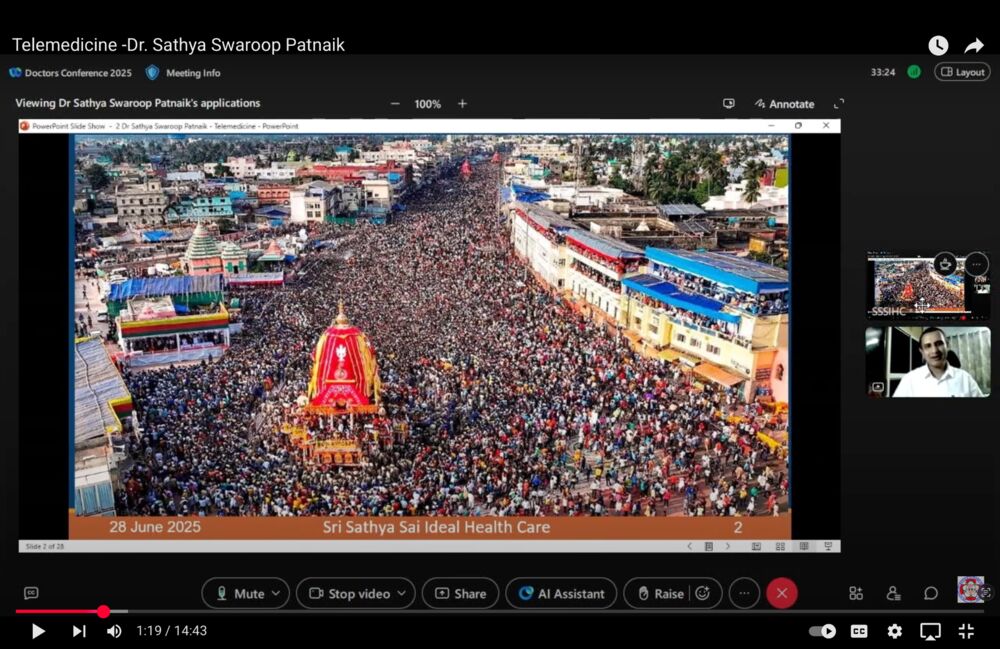
Read transcript 1,135 words
Offering my prayers and gratitude, I would like to congratulate all the doctors who have had the opportunity to visit this sacred land; surely, setting foot on it can only happen by divine call. We have all been summoned and let us express our gratitude for this in today’s session.
We are here to discuss the various ways healthcare seva can reach even the last person in society, transcending boundaries. In the next 12 to 15 minutes, I will focus on telemedicine seva—how we can utilize it to bring care to those furthest from access.
Let me bring greetings from the land of Lord Jagannath. Just yesterday, we celebrated the auspicious festival where, each year, the Lord leaves the sanctum sanctorum, moves along the Grand Road, and gives darshan to hundreds of thousands of devotees who cannot visit the central sanctuary. Regardless of caste, color, creed, religion, or nationality, the Lord reaches everyone. In much the same spirit, we strive to reach the last person in society—a path shown to us thousands of years ago through the Jagannath Puri tradition, fulfilling Bhagwan’s mandate.
Building upon this, organizations like ours organize health camps in rural and urban areas, specialty clinics at our science centers, mobile medical units, and rehabilitation for patients, as well as telemedicine seva. All our efforts are aimed at reaching those who are most in need.
Our healthcare ecosystem consists of primary and secondary health centers. Patients often must travel to tertiary healthcare centers or government hospitals for specialized care. During our gram seva and other outreach activities, telemedicine plays a crucial role in connecting patients with doctors.
At our Institute of Higher Medical Sciences, Bhagwan instructed us to start telemedicine services as early as 2008–2009, at a time when video conferencing was still a dream and 2G networks prevailed. Bhagwan was always ahead of the times: over 35 years ago, he established a free cardiac hospital in rural India. It has taken decades for the world to realize that advanced healthcare—like cardiac surgery—can be provided free of cost in remote areas. The same forward-thinking vision led to the creation of telemedicine centers.
With ISRO's help, satellite-based telemedicine centers were first established in West Bengal and Odisha, since most of our patients came from those regions. Bhagwan’s wish was that, after receiving treatment, patients could return home and only come back to the hospital when absolutely necessary. Follow-up care could be conducted closer to their own homes, saving them time and resources. Many patients are daily wage laborers who, accompanied by caregivers, lose work and bear significant expenses each hospital visit. Concerned about this, Bhagwan directed us to set up these centers, and video consultations quickly became the mainstay.
Statistics reveal many outcomes, but some aspects cannot be captured by data—the joy patients feel when they see their treating physicians on a screen. After receiving care at our hospitals, patients often fear what will happen if they fall ill again, with the hospital so far away. Telemedicine reassures them, as they can see and consult with their doctors remotely.
Our telemedicine centers have since expanded to offer anticoagulation clinics. Many cardiac patients require monthly PT/INR tests, but traveling to the state headquarters every month is not feasible. Over the last five years, we have established 11 such clinics in Odisha, allowing patients to access point-of-care testing and teleconsultations with cardiologists at their district headquarters. Local doctors interpret the results, and patients are provided prasad and lunch before returning home. This is a far cry from previous visits to government hospitals, where patients endured long waits for blood tests and consultations. By organizing these clinics and teleconsultations, we have greatly improved patient compliance with tests and medications.
The COVID-19 pandemic presented new challenges, but we were determined not to let our patients down. Immediately after the lockdowns began, we launched telemedicine services so non-COVID patients could avoid hospital visits. Our volunteers—our organization's strength—acted as the interface between doctors and patients. Patients would call a central number, and volunteers would direct them to the appropriate department, connecting them with a doctor who, also working from home, could provide care safely. Consultations were documented, discharge summaries generated and sent as PDFs to patients, who could then obtain medications from their local pharmacy.
Initially, this service was launched in Odisha, Telangana, and Kerala in 2020 and was quickly expanded nationwide. A doctor in Telangana could advise a patient in the north of India, breaking down geographical barriers. During the pandemic, this service was essential, as it reduced the need for non-COVID patients to visit hospitals. In Telangana, the service—called Sri Sathya Sai Pranav Mitra—is now in its sixth year, with 25 to 30 doctors from multiple specialties providing telemedicine services weekly.
Building on this experience, alumni at the Institute of Higher Learning set up a helpline at the Whitefield campus of the Institute of Higher Medical Sciences. The main goal is to help patients schedule outpatient visits and avoid long queues outside the hospital. Today, patients can call for appointments, and staff can proactively contact patients. In the last year alone, this helpline has handled nearly 200,000 calls. Since 2020, it has attended to more than 1.2 million calls.
Across the nation, telemedicine services have been implemented using mobile apps, video conferencing, and platforms like Help For All, resulting in substantial savings. A very conservative estimate puts the cost savings at close to 6 million, not including the travel expenses patients no longer incur.
As doctors and healthcare coordinators, we must understand the relevance of telemedicine—whether in mobile units, rural centers, or follow-up care. Specialists may not always be available everywhere, but telemedicine allows us to provide the best services even in the most remote areas. In 2020, the Government of India released telemedicine practice guidelines requiring registered practitioners to uphold the same professional and ethical standards as in-person consultations. These guidelines detail dos and don’ts for doctors and volunteers, emphasizing patient privacy and confidentiality. Wherever possible, calls and consultation notes should be recorded and maintained.
To ensure compliance, we conduct webinars, provide individual training for doctors and volunteers, and share relevant resources. Training volunteers, who often lack medical backgrounds, is particularly important. We are proud that our telemedicine services adhere closely to these guidelines, and our medical coordinators play a key role in ensuring quality and compliance, helping both doctors and patients receive a seamless experience.
Ultimately, telemedicine is a powerful platform for involving more doctors in seva and sharing resources across states. As Bhagwan says, if you have the will, you will surely find the way. Even if obstacles seem insurmountable—whether due to lack of doctors or resources—commitment and determination will lead to solutions. I offer this presentation at the lotus feet of our revered master and thank the organizers for this opportunity. Thank you.
Sai Rehabilitation Program (SRP)
Sri. Amith Dubey, State President, SSSSO, Madhya Pradesh
Read transcript 1,038 words
Om Sri Sai Ram.
I offer myself at the lotus feet of our most beloved Bhagwan Shri Sathya Sai Baba. Respected elders, dear brothers and sisters, loving Sai Ram to all of you.
I think you can sense my apprehension—being a non-medico speaking at a medical conference. This is actually the second time I've found myself in such a situation. The first time was in Srinagar, where I was giving disaster management training to the Jammu and Kashmir armed police. I am an engineer by profession, not a medical professional, but today I stand here because of Swami. It is all his doing, not mine.
I am truly honoured and pleased to present to you a very special and unique program: the Sri Sathya Sai Rehabilitation Program (SRP). The SRP is one of its kind—a unique follow-up initiative that supports patients throughout their lives. There is no parallel to this in any government or corporate hospital. It exemplifies the comprehensive healthcare envisioned by Bhagwan’s guiding principles, and is a collaborative effort between the medical expertise of the Sri Sathya Sai Institute of Higher Medical Sciences and the selfless seva of the Sri Sathya Sai Seva Organization.
The vision is clear: patients who return home after successful cardiac procedures or surgeries at the Sri Sathya Sai Institute of Higher Medical Sciences should be able to fully benefit from the free treatment they have received by adopting a healthy lifestyle, following proper dietary habits, engaging in appropriate physical activities, and taking prescribed medications regularly. This will enable them to gradually resume their responsibilities toward their families. At present, SRP is currently focused on cardiac patients.
The mission of the SRP is to help these patients regain and maintain their health by facilitating access to a competent local medical support system. This local support system consists of a doctor, a pharmacy, and a laboratory, and also provides socioeconomic support as needed, ensuring compliance with the discharge advice and guidelines of the Sri Sathya Sai Institute of Higher Medical Sciences.
This unique follow-up initiative has wide coverage. Currently, it is active in 30 states, including Odisha, Telangana, Tamil Nadu (North and South), Karnataka (North), Kerala, Maharashtra, Madhya Pradesh, Jharkhand, Bihar, Haryana, West Bengal 1, and West Bengal 2. These states were chosen based on the number of cardiac patients residing there.
How does this system work? Every month, both units of the Sri Sathya Sai Institute of Higher Medical Sciences—Whitefield and Prashantigram—compile and share a list of cardiac patients who have been recently discharged after surgery or treatment. This list is forwarded to the respective state-level Sri Sathya Sai Seva Organization, which then distributes the information to the district and Samiti-level SRP in-charges. At the ground level, the Samiti SRP in-charges or assigned volunteers take responsibility for each patient in their locality. They personally visit the patients’ homes to assess their postoperative condition, verify medication adherence, ensure compliance with lifestyle recommendations, and provide emotional support.
This decentralized yet well-coordinated system ensures that every patient, regardless of location, receives consistent follow-up care and compassionate support, reflecting the organization’s commitment to holistic service.
Volunteers reach out to patients in their localities to check if they are following medical protocols and lifestyle advice, and to determine if they need assistance—whether medical, financial, or emotional—or if they require a consultation via a telemedicine center. As you may know, there are three telemedicine centers: one in Kolkata, one in Bhubaneswar, and another in Jabalpur, Madhya Pradesh.
A holistic recovery support approach ensures continuity of care after surgery, so that patients receive the full benefit of Swami’s free treatment. The accompanying photographs show SRP volunteers visiting patients, facilitating necessary tests, providing medical advice, and offering support.
Continuous follow-up is conducted through home visits by trained SRP volunteers. The aim is to monitor the patient’s overall recovery, track symptoms, and ensure continuity in postoperative care. Regular updates and consistent communication with the hospitals at Prashantigram and Whitefield are vital. After each follow-up with the local doctor, a report or summary is shared with the hospital. In some cases, telemedicine consultations are arranged so that the patient can receive expert guidance directly from hospital doctors.
One of the most crucial aspects of recovery is ensuring that the patient takes prescribed medications exactly as advised. SRP volunteers verify that patients follow their medication schedules, educate them on the importance of adherence, and assist in overcoming barriers such as lack of access to medicines or confusion regarding dosages. Importantly, SRP volunteers do not provide medical advice or prescriptions; they strictly facilitate and support the doctor’s guidance.
Periodic diagnostic tests are often recommended after cardiac surgeries to monitor progress and prevent complications, such as PT tests. SRP ensures that patients undergo these tests on time and that results are reviewed by a qualified doctor. If any changes in health parameters are noticed, the local doctor or the hospital is consulted immediately for appropriate adjustments to treatment.
True healing goes beyond physical recovery. SRP also focuses on the emotional and mental wellbeing of patients. Volunteers offer compassionate listening, spiritual encouragement, and family guidance, helping patients regain confidence, peace of mind, and a sense of purpose. This holistic approach is deeply rooted in the organization’s core value: Love All, Serve All.
The overall impact of the program to date is significant. In these 13 states, there are approximately 4,600 beneficiaries and about 1,600 SRP volunteers from the SSSO Sevadal. The costs incurred mainly cover financial assistance for medicines and required PT tests.
Cardiac surgery may end within hospital walls, but true healing begins at home—with love, care, and consistent follow-up. The Sri Sathya Sai Rehabilitation Program is a living example of this philosophy, where medicine meets compassion and service extends beyond the operating room. What sets SRP apart is not just its structure, but the spirit behind it: the spirit of selfless love, personal involvement, and holistic wellbeing.
Through the coordinated efforts of volunteers, doctors, and Sai Samitis across states, we are not merely following up with patients—we are walking with them on their path to complete recovery, physically, mentally, and spiritually. With firm faith and loving action, may we continue to serve in the true spirit of Love All, Serve All.
Jai Sai Ram.
Sri Sathya Sai Palliative Care
Sri. Gunaranjan.P, Founder, YouSee
Read transcript 1,250 words
Loving salutations at Lotus Feet of Bhagawan.
I am grateful for the opportunity to share updates about a recent initiative that began around three years ago. We will soon complete three years of operations at the Sri Sathya Sai Palliative Care Center in Puttaparthi. This initiative is driven by alumni from Sri Sathya Sai University’s Institute of Higher Learning at Prashant Nilayam and is run by a foundation created by these alumni called Swasthya Palliative Care and Cancer Foundation, with technical support from the well-known Pain Relief and Palliative Care Society in Hyderabad.
The center, pictured here, is just about 700 meters from here. Should you wish to take a walk in the near future, you are all welcome to visit. As the saying goes, a picture is worth a thousand words, and the experience of visiting will provide far more insight than anything I can convey today.
Palliative care remains a relatively new subject for the general public and, to some extent, even within the medical field. I would like to set the scope for palliative care. While it is often linked to end-of-life or terminal care—which was its original focus—today, palliative care as a medical specialty has broadened its scope. It is now recommended from the time of diagnosis for chronic, serious, life-limiting illnesses. These can include cancer, stroke, organ failure (kidney, heart, liver), and various congenital neuromuscular disorders—a wide spectrum of conditions where patients face recurring, challenging symptoms. Palliative care is thus recommended right from the diagnosis stage in such cases. While curative specialties play the primary role at first, the scope and importance of palliative care increase as the disease progresses and becomes more serious or terminal. At the end-of-life stage, palliative care becomes the primary focus, and our engagement does not end with the patient’s passing—we continue to support families through grief and help reduce the shock and loss they experience.
Palliative care is broad in scope, and its implementation depends on available training and resources at each center. Ideally, it should be delivered as a continuum of care, from home care to inpatient care, and supported by telehealth. In our current setup, we have two vans, each serving about six patients a day at home, within a 50-kilometer radius of Puttaparthi. This covers all the major towns and around 150 villages. This is complemented by a 10-bed inpatient facility offering everything from day care to long-term care (sometimes one to three months), with the average stay being about a week. We are also seeing an increase in day care cases.
To understand the ideal paradigm of palliative care, consider that, traditionally, most people have to go to a hospital for medical needs. Day care is possible, but sometimes limited because insurance does not always cover it, pushing people toward hospitalization. Home care in the conventional system is often a privilege enjoyed by a few. In palliative care, however, the ideal model is a “funnel”: the best place for palliative care is at home, and our constant endeavor is to deliver as much as possible in home care settings. Only when necessary do we bring patients to the hospital, and even then we encourage as much home care as possible, with only a small percentage needing inpatient care.
In palliative care, we act as “shock absorbers” for patients facing these challenging illnesses. Patients often experience one shock after another—a huge burden of symptoms, starting with pain. Palliative care is often associated with cancer because the symptom burden is so severe and unpredictable, and pain management becomes central. But it’s not just pain; many other symptoms need to be managed, often occurring together. In home care, we address not just medical management but also chronic wound care, whether from non-healing cancer wounds, pressure sores, or chronic venous ulcers—which are particularly neglected in rural settings. Our home care team provides repeat wound management; we manage GI symptoms, constipation, catheterization, feeding tubes, lymphedema, and recurring ascitic tapping for liver conditions. For some, we may visit as often as twice a week; for others, fortnightly. For those who are bedridden with limited mobility, getting to a hospital is nearly impossible.
We also provide care for colostomies, tracheostomies, fistulas, and even address issues like maggot infestations resulting from poor hygiene or lack of wound care knowledge. Much of this is done at home, but other services—like physiotherapy—may be offered at our inpatient center. Counseling is central to palliative care, which takes a holistic approach, addressing mental and emotional health as well. We provide music, art therapy, games, and other forms of support, often with the help of volunteers. End-of-life care is, of course, a core aspect.
Palliative care is a universal need. When we are born, we need pediatricians and gynecologists, but as we age and become frail—a universal reality—society has yet to provide universal access to palliative care. Our effort is a small step toward addressing that gap.
Currently, we are caring for over 1,000 patients; about two-thirds have cancer, and among those, 60% have breast or cervical cancer. We asked ourselves: can we do more for early detection, so fewer patients need palliative care in the first place? About a year ago, we began working on early detection, with support from Ramayana Hospital. Since then, we have screened about 1,000 people locally. The idea is to not just screen, but also to follow up with early intervention. In India, outcomes for breast and cervical cancer are still poor compared to Western countries, despite having access to medicines, chemotherapy, and surgery. Two reasons for this are late detection and a tendency to abandon treatment after the initial few months, due to family or patient fatigue. By having more localized centers, we hope to reduce the need for travel and dislocation, and funnel those with early-stage cancers into intervention programs at Puttaparthi.
As part of Swami’s 100th birthday celebrations, we hope to set up a new facility that will integrate palliative care with early cancer intervention, surgery, and chemotherapy—our offering for the centenary.
All this is possible thanks to a tremendous team effort: full-time staff, doctors, nurses, support staff, volunteers, visiting doctors, physiotherapists, partner institutions, and continuous support from our super specialty and general hospitals and the mobile hospital in Puttaparthi.
Palliative care is unique in that it integrates spiritual care with physical, emotional, and social care. I have often reflected on the challenge of alleviating spiritual suffering. Medical intervention can relieve physical pain and symptoms, but deeper existential questions—“Why has this happened to me?”—cannot be answered by any medicine. Some patients, even young people with no apparent risk factors, face terminal illness and ask profound questions. Addressing this requires lifelong preparation and spiritual investment.
I lean on an ancient prayer from our culture: “Naya Se na maranam, bina, Dahiya, na jeevanam, dehante tava saiyajam dehime parameshwara.” This prayer expresses the hope for a death without suffering and a life as pain-free as possible. Many people endure pain for years, and our goal is to make that journey as shock-free and painless as we can. Not all suffering can be managed with pills alone. I am humbled by patients who, despite intractable pain, remain calm and pleasant, finding solace in spiritual contemplation. Their resilience is inspiring and cannot be prescribed—it is a lifelong pursuit.
Palliative care requires holistic effort and true teamwork. Ours is a small initiative, but we hope it can be a model for others and help bring holistic care to more people and places.
Thank you, Sairam.
Care continuum for chronic diseases - Challenges and Opportunities
Dr. Nayanjeet Chaudhury - Director, Amrita Patel Centre for Public Health, Gujarat and Consultant, Regional Health & Family Welfare Training Centre, Govt of Meghalaya
Read transcript 1,465 words
My humble salutations to Bhagwan Sri Sathya Sai Baba for arranging this invitation through the voice of Dr. Sundaresh. This is my first time visiting, and I was truly surprised to receive the invitation. When I studied the Sri Sathya Sai Ideal Healthcare Model, I realized that all the public health training I have received over the past two decades could have been gained simply by being part of this model. As a result, I felt a little apprehensive about speaking before such an august audience—stalwarts who have been sharing their wisdom since morning. I wondered if I would be tongue-tied.
However, my good friend Dr. Raja, who has come from Hyderabad, reassured me: “Don’t worry. You are here because of a divine reason, and whatever you speak, surely Baba has already arranged for you to say.” With that in mind, I originally prepared a very scholarly presentation about how the Sri Sathya Sai Ideal Healthcare Model can be adopted within the universal healthcare approach of low- and middle-income countries, especially India. I created a flashy set of slides and sent them to Dr. Sundaresh. A few days later, I received a message from a colleague of his, asking if I might tweak my slides, since everyone else would be talking about the model. The suggestion was to instead share something from my own experience—something not part of the model.
I believe Baba designed it this way, so I can offer an outside perspective that resonates with the Sri Sathya Sai Healthcare Model and is also endorsed by global scientific literature. Let’s see how much I am able to achieve that. Dr. Mohan has already explained how the prevalence of diabetes and other chronic diseases, such as cardiovascular disease and cancer, is rapidly increasing, with a significant spike since COVID, including many neurological problems. The burden falls most heavily on the poor, who are disproportionately affected.
Thanks to my PhD student, Dr. Deepika, who generated most of the photographs using AI—no informed consent was needed, except for one photograph from my own project. From a commonsense approach, chronic care involves a population at risk and individuals who decide at a certain point to seek care, approaching practitioners in either the public or private sector, or formal or informal caregivers. An initial diagnosis occurs, and if necessary, a higher level of care is sought for a definitive diagnosis and more intensive treatment, depending on the person’s condition or complications. Eventually, there is complication management, rehabilitation, and other steps—this is the cascade of chronic care.
Whether it is cardiovascular disease, lung disease, diabetes, metabolic disorders, or cancer, the boundaries between communicable and non-communicable diseases are now blurred; they are two sides of the same coin. In this context, prevention and care levels—primary, specialty, rehabilitative, and palliative—are essential. All of this is amalgamated in the Sri Sathya Sai Ideal Healthcare Model, which offers universal, comprehensive, holistic, loving, and free care. In universal health coverage, we call it subsidized care; when it is 100% subsidized, it is free care. That is exactly what this model demonstrates.
Back in 1998, Dr. E.H. Wagner, a practitioner in the U.S., introduced the Chronic Care Model (CCM). This model involves the community and the health system. In the health system, there is decision support from caregivers, equipment, and machinery, as well as protocols for care delivery. There is also support for patients’ self-management after discharge, and a clinical information system. Most importantly, an effective chronic care model features informed, activated patients and prepared clinical teams who work collaboratively. It is not a hierarchical model; instead, there is productive interaction between the patient, caregiver, and care team. This seamless transition leads to personalized and cost-effective care, improving outcomes—precisely what the Sri Sathya Sai Ideal Healthcare Model promotes.
From a scientific perspective, this model is well established globally. The World Bank and other organizations endorse a multidisciplinary approach to chronic care. Integrated care frameworks include community workers, home-based care, hospital facilities at various levels, and different types of referrals. There are numerous permutations of this integrated care. One well-demonstrated practice here is “task shifting.” The world labels this as task shifting, and the WHO advocated it in the early 1990s for cervical cancer screening: high school graduates could be trained to conduct screenings, making care more accessible and affordable. Task shifting allows specialist doctors to delegate many responsibilities, while general practitioners can guide community volunteers and carry out protocol-based treatment. Nurses can actively screen for chronic diseases and even initiate treatment, and community health workers or volunteers can provide counseling.
A crucial component of task shifting is an integrated digital space, where real-time data collection and informed decisions can prevent complications. I believe the Sri Sathya Sai Ideal Healthcare Model already embodies these elements. Community engagement has been shown to be an evidence-based, proven approach to chronic care, as has peer support, digital tools, telemedicine, integrated disease care, and culturally adapted interventions. An intervention in urban Shimla will differ from one in rural Udaipur, so contextual adaptation is key. Strong partnerships and leadership across all sectors—public and private—are also essential.
Let me share an example from my own experience: I was part of a global health program in four countries overseeing a community empowerment model called SALT CLCP (Stimulate, Appreciate, Learn, Transfer; Community Life Competence Process), promoted by the Constellation NGO in Belgium and implemented in nearly 70 countries. The goal was to see if transferring true ownership of healthcare to the community could improve clinical outcomes. There were three intervention groups and a pure control group with only government services. The results were striking: the intervention groups, as expected, showed better health control. During the COVID lockdown, when volunteers were absent, these groups maintained significant control over their metabolic health, such as diabetes and hypertension. This shows that when ownership is transferred to the community, it sustains itself. In Udaipur, control rates even increased in the intervention groups because people recognized the need to own their health care.
This was published in the Indian Journal of Public Health, and—just as Baba promotes—the key predictors of control, after logistic regression, were regular physical activity, diet, and continuity of care. This is the same preventative care model the Sri Sathya Sai Ideal Healthcare Model champions.
Another example: In a village in Karnataka, peer support groups took ownership of managing their health and that of their families. After one year, the percentage of patients with controlled blood pressure and blood sugar was significantly higher than those exposed only to government health facilities. There was no other intervention—just peer support.
I encourage our esteemed leaders to examine data from community empowerment across the country through Sathya Sai organizations, and see how spiritual inclusion affects clinical outcomes. Chronic disease, as Rittel and Webber called it in 1973, is a wicked problem—complex, with interconnected causes and competing stakeholders. I am diabetic myself; I must manage my medicines, food, sleep, exercise, and checkups, as well as my mental health. If my doctor is excellent, they are also likely very busy and can’t give enough time. The introduction of digital healthcare, for instance, is often met with reluctance from doctors. Communication is frequently lacking between doctors and patients in other healthcare models.
For the last three years in Meghalaya, we have been teaching every public sector doctor and nurse, at all hospital levels, competencies that they never learned before—communication, persuasion, emotional and social intelligence, empathy, and project management. These are the real challenges, not clinical training.
From the Sathya Sai Ideal Healthcare Model, I learn three things the world should adopt: empower all healthcare providers and volunteers, shift ownership to the community, and invest in capacity-building for providers to bridge the information gap. In healthcare, this gap is like the difference between a car owner and an engineer: you rely on the expert for diagnosis and costs. We need to build the workforce’s capacity to bridge this gap.
Radical transformation, as demonstrated by the Sri Sathya Sai Ideal Healthcare Model, is needed in healthcare design and delivery—along with culturally adaptive leadership. This, I have heard from every speaker today.
To summarize, the foundation of an ideal healthcare model lies in trust building, shared learning, shared decision-making, and accountability to commitments. We must build community capacity for local health planning and, importantly, redesign medical education so patients are no longer passive recipients, but active partners in healthcare delivery. Participatory approaches, leadership, systems thinking, and context-specific clinical training are essential—this is what I take home as my learning at the feet of Bhagwan Baba.
In closing, I offer a prayer: “Sarve Bhavantu Sukhinah, Sarve Santu Niramayah, Sarve Bhadrani Pashyantu, Ma Kashchid Dukha Aa Bhavet” (May all be happy, may all be free from illness, may all see only good, and may no one suffer).
Academics at Sri Sathya Sai Hospitals
Dr.Prakash Khanchandani, HOD, Orthopedics, SSSIHMS-PG
Read transcript 1,471 words
My humble salutations at the divine Lotus Feet, esteemed dignitaries, dear brothers and sisters—my loving Sai Rams to everyone.
I will present a brief overview of the academic activities at Sri Sathya Sai Hospitals. Please pardon me if I proceed a bit quickly due to time constraints. We are all familiar with the timeline of our divine hospitals. Sri Sathya Sai Hospitals are not merely temples of healing—they are also temples of learning. These hospitals conduct various national academic programs across multiple medical specialties and have created a niche in the fields of medical education and research. In line with Sri Sathya Sai Baba’s principle of free educare, all these courses are provided completely free of cost to the students.
I will now discuss the departments one by one:
The Cardiology department was the first to be established at the Prasanthi Gram hospital in 1991. The DNB program began in 1994. Fourteen students have been trained so far, and seven are currently enrolled. The department was awarded a DNB national gold medal in 2022. It has published over 44 papers in national and international journals, with numerous presentations at conferences and many awards received. The department has organized four international conferences and two CMEs for medical education.
The Department of Cardiology at Prasanthi Gram started in 1991, with the DNB program launched in 1994. Thirty-five students have been trained, and six are currently pursuing the course. The department has about 20 publications in national and international journals, and has made several conference presentations, earning many accolades. Dr. P.K. Dash has been honored with the Sri Sathya Sai Dhan Mantri Seva Award and the Rotary Award. The department has organized three international conferences and one national echo conference for medical education.
The Urology department was inaugurated in 1992, and its DNB program started in 1994. Forty-six students have been trained, with six currently enrolled. The department has earned two DNB gold medals and has organized three national conferences with workshops. It has made twenty presentations at national and international conferences, receiving many awards. The department has published over 50 articles in national and international journals and contributed to four book chapters.
The Department of Ophthalmology was inaugurated in 1994, with its DNB program starting in 1998. Forty-six students have been trained, and six are currently enrolled. A DNB gold medal was secured in 2009. The department has published five papers and made numerous presentations at national conferences, receiving many honors. Two DNB candidates recently received awards for outstanding thesis research. The department has organized two national conferences and one CME, and maintains academic collaborations with the Sri Sathya Sai Institute of Higher Learning on two precision medicine projects.
The Department of Orthopaedics was established in 2006, with the DNB program beginning in 2007. Forty-six students have been trained, and seven are currently pursuing the course. Dr. Sundaresh, our Chairman, was honored with the Sri Sathya Sai Dhan Mantri Seva Award. The department has organized four international and four national conferences for medical education, and regularly conducts surgical workshops with national and international faculty. It also features the Sri Sathya Sai dry bone and simulation lab for resident training. The department has started fellowship programs in orthopedic subspecialties in association with the Super Specialty Hospital, Whitefield. There are over 36 publications in national and international journals, including three in the prestigious journal Nature. The department has presented more than 40 papers and posters at orthopedic conferences, winning many awards. It received a national gold medal from the orthopedic association for 10 years of landmark research on avascular necrosis of the femoral head—a precision medicine project. There are four research projects with the Institute of Higher Learning in various orthopedic specialties.
The Department of Anesthesia began in 1991, with the Pro DNB program starting in 1998. Sixty-one students have been trained, and six are currently enrolled. The department started a fellowship in cardiac anesthesia in 2013, and has published six papers in national and international journals and contributed to two book chapters. It conducts an AHS-certified BLS and ACLS training program three times a year, absolutely free of cost. Fifty-one presentations have been made at national and international conferences, and the department has received two awards. There is an ongoing precision medicine research project in collaboration with the Institute of Higher Learning.
The Department of Radiology was inaugurated in 1991, and has conducted three CME workshops and two research projects—one with GE Healthcare and one with the Institute of Higher Learning.
The Department of Cardiothoracic Surgery at Whitefield Hospital was inaugurated in 2001. The DNB program began in 2002, the BSc Perfusion program in 2008, and the pediatric fellowship program in 2015. The department has secured three DNB gold medals. It has organized one national conference, eight workshops, and conducts an annual boot camp for resident teaching and exam preparation. Twenty students have been trained, and four are currently pursuing the course.
The Cardiology Department at Whitefield Hospital started in 2001, with the DNB program launching in 2002. Thirty-four students have trained, and five are currently enrolled. The department has earned five DNB gold medals so far, made 43 presentations at national and international conferences (winning various awards), and published 252 papers in national and international journals—a remarkable achievement. The department also conducts a program called SPEED every year for the last ten years for DNB and DM examinations, in association with Prasanthi Gram Hospital.
The Department of Neurosurgery in Whitefield was inaugurated in 2000, with the DNB program beginning in 2002. Twenty students have trained, and four are currently enrolled. A DNB gold medal was secured in 2019. Dr. A.S. Hegde was honored by the Government of Karnataka. The department has conducted multiple conferences and made numerous presentations, winning many awards. It is designated as a Center of Excellence in Glioma Research by the Department of Biotechnology, Government of India. Two articles gained media attention. There are multiple collaborative projects with the Institute of Higher Learning and other biotechnology institutes, and the department has over 200 publications in national and international journals. It is considered number one in publication metrics among all DNB institutes in India, which is an exceptional achievement.
The Department of Anesthesia at Whitefield was inaugurated in 2001, with the DNB program starting in 2005. A three-year BSc Anesthesia Technology program began in 2008, and a two-year cardiac anesthesia fellowship started in 2010. The department has conducted six Indo-US Critical Care Medicine workshops, one CME, and two nursing training programs, and has received ten awards at 32 conferences. There are many publications in various journals.
At Prasanthi Nilayam General Hospital, the DNB program in family medicine was started in 2008. Twenty-one students have been trained, and five are currently pursuing the course. The General Hospital has conducted nine CMEs in specialties such as pediatrics, non-communicable diseases, and critical care.
The College of Nursing at Whitefield Hospital was established in 2008. Six hundred ninety students have been trained, and 240 are currently enrolled. The Nursing College has organized numerous national and international conferences and continues to do so. The nursing department at Prasanthi Gram Hospital conducts in-service teaching and regular in-service training programs.
Our founder’s guidance reminds us: scientific knowledge should serve society, and research without social relevance or application is an expensive futility. In accordance with this principle, we have initiated many collaborative projects with the Sri Sathya Sai Institute of Higher Learning. The Institute manages several healthcare projects in precision medicine in collaboration with our hospitals. The Central Research Instruments Facility (CRIF) was established at an estimated cost of ₹50,00,00,000 by the Sri Sathya Sai Central Trust, and serves as the backbone of many academic programs and research projects of national importance. CRIF is a state-of-the-art facility with all cutting-edge equipment under one roof—a unique resource.
Regarding social impact: Students trained at our institutes, in addition to their professional skills, internalize Swami’s principle of serving humanity with love and compassion. They are fortunate to learn firsthand the feasibility of free healthcare. Many of my friends outside find it hard to believe that joint or valve replacement surgeries can be done completely free of cost, but our students know it is possible because they have worked within this system. When they return to their states or workplaces, they actively contribute to free Medicare service programs, especially those connected with Sri Sathya Sai Seva Organizations and local state organizations, including telemedicine outreach to remote districts.
Additionally, our students continue to contribute to academics and patient care at their parent institutions and often return to serve with us—they become part of our extended family. As our Swami said, "The end of education is character." In keeping with Swami’s principle, our objective is to train doctors with the highest professional skills and character. We will continue striving towards that goal. Jai Sai Ram.
Care continuum - Impact, Challenges and Opportunities - A panel Discussion
- Moderator Dr. Anil Kumar Mulpur - Jt.Director and HOD CTVS, SSSIHMS-PG
- Dr. Iyer V.R, Senior Consultant & HOD, Cardiology, SSSIHMS-PG
- Dr Rajdip Barai, Consultant HOD-General Medicine, SSSGH, PSN
- Sri.Umesh Rao, Counsellor, SSSIHMS-WFD
- Chandrasekhar S.R , State President, SSSSO, Tamilnadu
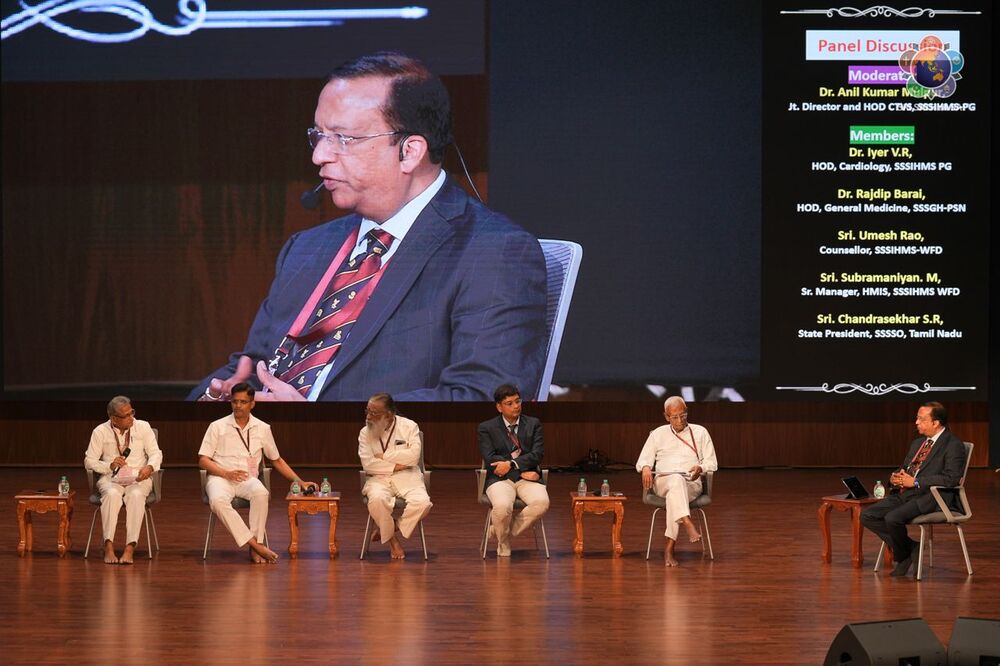
Read transcript 1,057 words
It's late in the afternoon, and the energy in the room is high. This is a limited-overs discussion, so we’ll keep it focused. After hearing from so many distinguished speakers and enjoying the refreshments, I know it’s a challenge for everyone to stay alert. Some may even be dozing off! That’s why I call on Vaibhav Suryavanshi to help keep the momentum going.
Let’s reflect on the concept of the care continuum. Is it simply what the previous speaker showed on their slide? It’s not just about delivering healthcare within a traditional setup. The continuum of care is where healthcare starts, where it ends, and all that happens in between. In truth, there is no real start or end—it’s a cycle that originates in the community, flows into the healthcare system for interventions, and circles back to wellness within the community. This continuous monitoring and support shouldn’t be confined to healthcare facilities alone.
Rajdeep, as a general physician who treats patients from all specialties, how do you see this care continuum? Do you agree that it’s truly a cycle?
Absolutely. The Sri Sathya Sai Ideal Healthcare System is comprehensive, coordinated, and all-encompassing. We have community outreach, Swami’s mobile hospitals find diseases at the community level, and patients come to the general hospitals for further treatment. If surgery is required, they are referred to the super-speciality hospitals. If a non-communicable disease must be controlled before surgery, the patient returns to us for management—it's a bidirectional flow. Patients feel reassured, knowing there’s no financial burden. While 80–75% of India’s health infrastructure is urban-centric, here the system is rooted in rural care, absolutely free of cost. The approach is holistic, with interconnected hospitals and doctors using technology to maintain continuity of care. Even after surgery, if patients are local, their chronic conditions are managed by us, or the rehabilitation program supports them upon returning home. It’s not a one-way street; everything is interconnected.
Sri Umesh Rao, with your experience, do you think this patient care continuum is significant?
One thing I’ve learned through my long association with Swami and the counseling department is that belief in God is fundamental to healing. Every doctor and staff member in this system recognizes that a patient’s reaction is the real measure of success. Swami’s vision statement for our hospital says, “Healthcare should be provided free to all, in an atmosphere of love, aiming to heal body, mind, and soul.” The mission is to provide free medical care with dedication, love, and the best skills, facilitating healing in body, mind, and spirit.
When we talk about spirituality, it’s often confused with religion, but in moments of crisis, almost everyone turns to God for help. Across all backgrounds, people confronted with life-threatening situations—like a heart attack or stroke—first rush to the hospital, then immediately pray for help. Over the years, I’ve observed that faith is universal and inherent.
Dr. Iyer, as head of cardiology, you see a range of cases. How does the care continuum work for your patients?
Continuum comes only after the first stage of care is delivered. Many patients don’t even know what heart disease is—awareness is the first step. When someone comes in with chest pain, they don’t understand the diagnosis; they just want relief. After treatment, whether it’s angioplasty, stenting, or medication, patients often believe they’re fine after a few months. Real continuity of care depends on patients understanding their disease and the need for long-term management. It’s not feasible for specialists to manage every patient indefinitely. That’s where telemedicine and community support can help, though it might take another decade for these systems to be fully integrated.
Let’s hear from our grassroots expert. What does care continuum mean to you, especially in medical camps, and what challenges do you face?
The SRP program mentioned by Brother Amit Dubey has made a real impact, especially on the mental health and morale of patients. Our camps and home visits help ensure patients are on the right path, and counseling sessions often transform them into lifelong devotees of Bhagwan. Many former patients and their families return to volunteer with us. However, reaching discharged patients in remote areas and getting them to attend camps remains a challenge. For those needing regular INR tests post-valve surgery, we wonder if home care kits can be deployed through local samitis. Importantly, anyone can be trained to use point-of-care machines—doctors aren’t always necessary. In truly needy cases, state organizations like Tamil Nadu can support the cost after background checks.
I want to clarify: our medical camps are not just for treating coughs and fevers. Across India, these camps provide comprehensive care, complete checkups, specialist referrals, and even support with government or private insurance schemes.
Rehabilitation is also critical. Across the country, Sri Sathya Sai skill development centers offer vocational training, not just to patients but also their families, helping them achieve financial independence. Job fairs are organized as well.
Subbu, as an IT expert, what do you see as technology’s role in the care continuum?
Running the SRP program, we see a need for integrated IT systems. Currently, data is fragmented. If a patient moves, new volunteers or doctors have to start from scratch. A solid electronic medical records system would ensure continuity no matter where the patient goes or which doctor sees them. It would also help track medications and ensure proper follow-up.
Let’s take final quick points from the panel. What are the main challenges?
The challenge is bringing SRP data back to the central team—a system for this would help. As for telemedicine, it works best when a clinician is available at both ends, and the local physician maintains personal contact with the patient.
For tertiary care specialists, the main challenge is patient education. If a patient doesn’t understand how to care for a stent or valve, the investment in their procedure may be wasted. Umesh Rao reminds us that faith in God can be harnessed as a powerful motivator—about 97% of the Indian population believe in God, regardless of background.
In summary, the care continuum should involve a back-and-forth flow of information and services, connecting primary, secondary, and tertiary care, particularly for chronic illnesses. Health education, patient empowerment, and leveraging IT and community resources are vital. Thank you very much—Sai Ram.
Heartfelt thanks to all the panelists and special thanks to the organizers.
SAI Counseling
Smt. Gita Umesh
Read transcript 978 words
Offering my humble pranams at Lotus Feet of our Beloved Bhagawan.
It is an honor to be present here. This is a wonderful learning experience, having listened to every speaker yesterday. On behalf of my colleagues and the Department of Counseling at our institute, I would like to thank the organizers, Dr. Sundaresh, and each one of you for giving us the opportunity to share what we do and the possibilities within the counseling department.
Grant me the serenity to accept the things I cannot change, courage to change the things I can, and wisdom to know the difference. Emotions are celebrated and suppressed, analyzed and medicated, adored and ignored—but rarely, if ever, honored. In a nutshell, I think what we at the counseling department strive to do is to understand the human side of medicine, to connect with the person who is the patient, and to approach every patient with empathy and compassion for their emotions. This is purely Swami’s divine sanction; everything that happens here is by Swami’s grace.
This department would not even exist had it not been for Swami’s vision and the inception of the Whitefield Hospital. Going back to the year 2000, Swami called me and said, “Take care of my patients.” I was not qualified in the medical field at all and wondered what he meant. At the time, it never occurred to me that Swami was talking about taking care of the emotional well-being of every patient. I am happy to share with all of you that we not only counsel patients themselves, but also caregivers, attending to the emotions of those who care for the patients.
There is an iconic photograph of Swami checking the heartbeat of an individual—Dr. M. Sanjay Rao. What happened that day is something I wish to share with you. Swami was not just listening to the heartbeat; Dr. Rao had brought a new batch of stethoscopes for the General Hospital back in 1976 and wanted Swami to bless them. Many doctors gathered around. Swami, in public, said, “Let me first listen to the compassion in your heart.” This message, I believe, ran as a theme throughout yesterday’s discussions—it is only Swami who can truly listen to our hearts.
Over two decades later, Dr. Sundar Rao’s son, Mr. Umesh Rao, had to undergo major emergency surgery for mitral valve replacement. As a family, we have always relied solely on Swami’s guidance. Swami said that the surgery should take place at a corporate hospital in Bangalore, and we were advised not to move my husband from Bangalore to another city. Even at the age of 87, undergoing such a surgery was daunting. Swami chose us for this experience so we could learn both as patients and caregivers.
I must thank the trustees, especially Sri Lanka, Sri Prasad Ji, and everyone who ensured this program continued, as well as the directors—Dr. Survey, Dr. Swami, Dr. Sundaresh, and Dr. Shekhar Shekharam—who continue to guide us and help plan for the future.
Healing, we believe, is introduced by the love we cultivate in the counseling department. We see every patient who is routed for cardiac surgery, cardiology, or neurosurgery at four different intervals because both patients’ and caregivers’ concerns change at every stage. The first stage is even before admission, and we have a beautiful system in place, all thanks to the support from hospital executives, managers, the nursing team, and our counseling team.
At the grassroots level, we receive patients—and their caregivers—in a serene space with soothing music. Our counselors welcome them warmly and introduce them to therapy. There are two parts to our counseling: the counseling itself and therapy. The therapy component involves Dr. Herbert Benson’s relaxation response, which is quite similar to yoga. This relaxation technique helps release tension from the body, starting from the toes, focusing on each part with every breath, emphasizing abdominal over shallow chest breathing. We have trained all our nursing students in this technique, integrating lessons in compassion and relaxation into their education.
When these students enter the hospital, they teach patients body relaxation and encourage them to reach out to the God of their choice. I would now like you to listen to a prayer offered by the daughter of one of our patients—a patient who suffered from peripheral artery disease and was still in the evaluation stage. This prayer shows why it is so important to take care of caregivers’ emotions; their peaceful state can only help patients recover.
We began humbly, but now have a strong presence, seeing many patients each day. The number is 8,1273 beneficiaries, with 4,906 having undergone surgery and received our relaxation program. Our approach is informed by experience, observation, and reflection, leading to new ideas that we test and refine.
We also learned much from Dr. Judith Moore and Dr. Gordon Samet, and our counseling team continues to grow. When the NCA chairperson visited, he said our department was an impressive innovation and a remarkable example of how new practices can emerge and grow in a large organization.
We have trained and continue to train nursing students, and our efforts have been recognized at conferences. Our patients, especially in the neuro ICU, benefit from this free hospital program. We support the entire team—including staff and caregivers—because you never know when someone’s emotions will need support.
We provide a peaceful atmosphere where patients and caregivers can practice relaxation. Our work has been featured in interdisciplinary publications and books. One moving example is that of a woman who lost her daughter and, after counseling, was able to speak for the first time in a month and a half.
The transformations we witness are profound: young and old alike, patients and caregivers, experience gratitude and healing. We even have a magazine and book in our domain, with Swami blessing our entire counseling team during our 2010 offering.
Technology in Healthcare (VIRTUAL)
Prof. Sethuraman Panchanathan, Director, National Science Foundation, USA
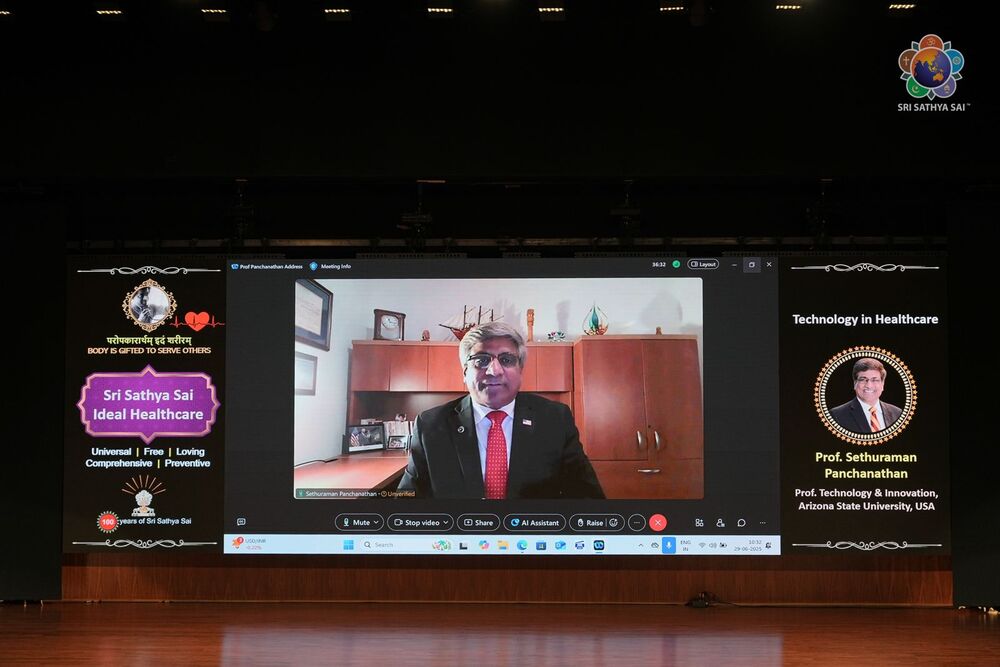
Read transcript 947 words
Today, I am grateful to participate in this conference on Sri Sathya Sai Ideal Healthcare, and I am especially thankful to my dear Brother, Dr. Sundaresh, for his dedication to the patients. The guiding principle of the Super Specialty hospital is paropakara—service to humanity. Our bodies are gifts, meant for serving others.
I want to take a few moments to highlight three key elements: strategy, advancement, and innovation—or, in other words, impact. Let’s begin with strategy.
Allow me to share a precious memory from an encounter with our Lord Bhagwan. In the summer of 2001, Swami inspired me to bring a group of young people from Arizona, and we visited in December 2001. Shant Ravi guided us through the Whitefield Hospital, which was newly built at that time, and discussed its features in detail with the youth. He asked one of the young visitors to bring architectural plans from the inner room, and he explained the hospital’s unique aspects with both pride and compassion.
We discussed the mission’s work in terms of the three H’s: the university, the hospital, and the service projects. Swami emphasized the impact of our work for the benefit of the people and praised a presentation given by one of our sisters. He described the primary focus of the hospital as providing high-quality, free healthcare—a powerful lesson for all of us on how grand projects are realized through perfect alignment of vision, strategy, practice, and operations.
Swami was a visionary striving for excellence. He strategically placed the medical sciences, education, and service institutions in close proximity, fostering innovation and collaboration. This concept—having hospitals and research universities side by side—was ahead of its time. Today, many leading institutions in the United States and worldwide follow this model, with clinical facilities and research centers sharing campuses.
This proximity enables ideas and exchanges to happen organically, especially when bringing together medical students, clinical settings, and academic research. Swami encouraged us not only to focus on urban environments but also to broaden our thinking to include rural settings and to extend the benefits to all, as was discussed at the IT For Sai conference on rural advancement and education.
His vision inspired me and continues to influence the work I undertake in the United States and elsewhere. This is a unique moment in history, as the power of science, technology, and innovation is rapidly transforming healthcare, focusing on both health outcomes and overall wellness. It is not just about managing illness but also about proactively maintaining good health while providing the highest quality care when people do fall ill.
The global pandemic challenged all of us, but it also brought nations together, catalyzing rapid solutions through science, technology, innovation, and international collaboration. Sharing data, best practices, and solutions benefits everyone across the globe.
For example, in the 1960s, research into bacteria by NSF led to the development of PCR testing, which became invaluable during later health crises. Similarly, MSF investments in the 1970s led to the birth of 3D printing technology, now widely used in healthcare. Pioneers like Jennifer Doudna, who developed CRISPR gene editing, exemplify how sustained investment in people leads to transformative breakthroughs.
This is why the proximity of clinical and healthcare environments with outstanding research universities is so important. Federal and industrial investments drive innovations that scale.
In global healthcare, the convergence of disciplines—biomedical sciences, synthetic biology, genomics, proteomics, informatics, engineering, behavioral sciences, humanities, policy, law, economics—enables comprehensive solutions for health and wellness. This approach helps us break the cycle of illness and restore balance.
Technologies like big data, machine learning, AI, nanotechnology, quantum computing, and advanced manufacturing are transforming healthcare monitoring and delivery. AI, for example, is the product of decades of sustained investment, even during periods of skepticism. Persistent funding has ensured the development of technologies with far-reaching impact, some of which do not even have names yet but will emerge in the coming decades.
This brings us to the theme of impact. AI is influencing every aspect of healthcare, from enhancing medical images to automating routine tasks and identifying clinical abnormalities. For instance, AI can detect subtle changes in tissue that allow for earlier cancer diagnosis. The FDA has already approved over 4,000 AI applications, and major clinics use hundreds of AI models for advanced healthcare.
Predictions that AI would replace radiologists underestimated the complexity of the profession. In reality, radiologists do much more than read scans, and AI is now seen as a tool to augment their expertise.
The best technological solutions are designed with a focus on humanity, ethics, and responsible implementation. Technology should always serve people, learning from human interaction to improve lives. This co-evolution of humans and machines allows both to achieve greater things together.
I am delighted to see this spirit of convergence evolving at Prashanti Nilayam and Whitefield. Last week, for example, Subramanian from the IT Department at the Institute of Higher Medical Sciences graduated with a PhD in machine learning. His research was completed using AI tools in this collaborative environment, and there are many such projects underway.
This is a tremendous opportunity for growth and collective evolution, one that will bring pride and progress. I am confident that Swami’s inspiration will lead us to unleash groundbreaking technologies and solutions in the future.
Congratulations to all of you for making this happen. I wish you the very best. I am thrilled that this conference focuses not only on technology but also on care, bringing together academics, researchers, clinicians, practitioners, and leaders. This synergy creates the vibrant environment necessary for innovation.
Let us remember: our bodies and technology exist for the service of humanity. May we continue to dedicate our efforts to this noble cause.
Impact of IT in Healthcare delivery at Sri Sathya Sai hospitals
Sri. Subramaniyan.M, Sr.Manager, HMIS, SSSIHMS, Whitefield and Sri Kannan, Sr. Manager, HMIS, SSSIHMS PG
Read transcript 1,735 words
Aum Sri Sai Ram. Offering my humble pranams at the Lotus Feet of Beloved Bhagawan.
I am here to share, and perhaps explore, how insights from data can enhance the delivery of patient care. Here is a term we have all heard—health IT—but it is not just about technology. Swami often uses the pun on technology, but thankfully, we have “information” placed before “technology,” highlighting that it’s about where, what, how, why, and whether it is used. This can be incredibly helpful.
So, I will introduce another term: informatics. I prefer using this because technology is only an enabler—the proof of the pudding is in the eating, as the saying goes. Informatics is about how information is gathered, shared, and utilized in medical practice. Ultimately, the point of all this is to exchange knowledge and, perhaps, draw actionable insights, all with the aim of providing the best possible patient treatment. If we can do that, IT has served its purpose.
We might better call this applied clinical informatics. As Professor Panchanathan mentioned, it all begins with automating processes. Automation streamlines operations, but we also want to enhance care, improve diagnosis and prognosis, and possibly even predict outcomes. Yesterday, we discussed the care continuum; IT also plays a role there. But the real benefit comes from implementing adaptable models that are scalable as we go along.
In the healthcare value chain, the patient is at the center. A lot of information is generated by various systems—be it the health information system (HIS), the picture archival communication system (PACS), pharmacy, or other systems found in hospitals and care settings. But always, the patient is at the core, and there is a symphony of information being generated and exchanged between these systems to deliver the best possible care.
The HIS is core, handling various processes at both outpatient and inpatient levels, supported by other systems. The clinical information system enables clinicians to enter accurate data and retrieve the information needed for further treatment.
With all this data generated, the biggest benefit of informatics is making it actionable. If information is not actionable, as IT professionals say, it’s “junk in, junk out.” What matters is how information is used for the benefit of patient care.
In the next few slides, I’ll highlight what we do for efficient patient management from both clinical and administrative perspectives. Hospitals have various committees focused on patient management. For example, a patient welfare committee might use reports or dashboards to monitor readmissions. These dashboards can display information about a patient’s treatment during hospitalization, prior surgeries, current readmissions, and other relevant data. If there is a readmission, we analyze possible reasons.
Next, we analyze reexploration cases to see if deviations in protocols or risks of adverse events have contributed to a patient returning. Long-stay monitoring is also crucial—shorter stays mean lower risk of hospital-acquired infection, which correlates with comorbidities or other factors needing analysis. All this information is available at the click of a button, allowing management to take appropriate action.
Here I have an example of data entered by our nursing team regarding lines, tubes, and other devices used for a patient. This enables effective infection monitoring. Our infection control dashboard projects postoperative patient details along with antibiotic data: which antibiotics the patient is receiving, which organisms have been isolated, and the sensitivity or resistance of those organisms. Relevant lab values are shown in parallel, so the infection control team can gather all necessary data.
Of course, we also track mortality reports, which are under 1% in our hospitals—a significant achievement. Moving from in-hospital care to telematics, we also practice telemedicine, especially for postoperative follow-ups from distant regions like West Bengal and Orissa.
When assessing the cost-effectiveness of telemedicine, it’s more than assigning a value for a consultation. We consider patient-perceived utility, opportunity costs (such as lost wages due to travel), and the effectiveness of telemedicine care compared to inpatient care. Even when a telemedicine consult is deemed “unsuccessful”—meaning the patient must return for in-person treatment—it may still offer value by identifying issues early or directing the patient to the right specialty.
We developed a model to assess the ideal location for telemedicine centers, considering factors like facility costs, workdays lost in routine care, success rates, and the number of patients visiting the center. These findings were published in a peer-reviewed journal.
On the financial side, managers and administrators use these tools as well. Operating on monthly budgets, we plan how many cases to handle, track resource utilization, and analyze costs under various subcategories. For instance, the Department of Cardiology tracks angioplasties performed and the overall cost. We monitor consumption by cost centers, looking for exceptions or deviations from set standards, and adapt practices accordingly.
These automations help with daily operations. Now, shifting gears to artificial intelligence (AI): if thinking is like walking up stairs, AI is like taking an elevator. In early collaborations with the Sri Sathya Institute of Higher Learning, we worked on a dosage calculator for INR management, aiming to reduce patient stays and improve care. Other predictive analytics projects include expediting diagnosis, advancing disease prevention, and improving surgical outcomes—such as screening for cardiogenic brain abscesses in underserved areas, predicting recurrent lumbar disc herniation, or assessing outcomes in mitral stenosis patients after balloon valvotomy.
We created a simple app for use in SRP centers, where it can recommend dosages or predict INR for the following day. Comprehensive clinical audits for administrators track case types, admissions, readmission rates, reexplorations, and mortality, providing a complete overview for quality improvement.
Quality indicators prescribed by NABH have been integrated into our systems, allowing doctors to act on them directly. How is all this possible? We pride ourselves on being early IT adopters, enabled by Swami’s vision. Since the Institute of Higher Medical Sciences opened in 1991, we have focused on availability, accessibility, and affordability, adding attitude and adoption as key elements.
Our system evolution includes health information and picture archival systems (using Medream), and most recently, Atma Health, which manages our comprehensive electronic medical records (EMR). An advanced data center, soon to be discussed by my colleague Mr. Kannan, is our latest addition.
Compliance is key: consent is a cornerstone, and all systems are HL7A and FHA-compliant, as well as DICOM 3 compliant. International standards, like ICD for tracking mortality and morbidity and SNOMED for better coding, help clinicians classify diagnoses accurately.
Looking ahead, we plan to implement Adiya Namah and two mobile apps so doctors can access patient records anywhere. We’re ready to integrate with the national Ayushman Bharat Digital Mission, and our product is ABDM-enabled. Our data lake project, in collaboration with our college, aims to move from knowledge to augmented intelligence, supporting agent-driven solutions for clinicians and administrators.
We are climbing the knowledge pyramid—from data to wisdom—to develop deep understanding and actionable insights. With this foundation, we align with the UN’s Sustainable Development Goal 3 for good health and well-being. Our IT systems are already improving early warning signs for health risks, bringing us closer to these global goals.
In summary, we are moving from individual effort to collaboration. Together, we can develop and deliver better patient care. As Swami often said, “Kalasima Issi Perigudam kalasiminalisi thirugudam kalasi malasi telesu kurna telivini poshan chudam.” We have gathered here to collaborate, discuss, and, through collective effort, make the world a better place. Thank you for the opportunity.
Sri Kannan, HOD IT Department, SSSIHMS PG
Om Sri Sai Ram.
Loving salutations at Bhagwan’s lotus feet. Honored trustees, heads of institutions, brothers and sisters, Sai Ram to everyone. We just heard our colleague Subramaniam speak about IT and AI capabilities; I am here to highlight a different but crucial part of IT—the behind-the-scenes work: the hardware and data center.
This is where the real power of IT resides, equipped with the latest servers, memory, and software with vast storage, supporting even AI. Today, AI runs on hundreds or thousands of computers and data centers worldwide, processing years of data with remarkable speed thanks to robust hardware.
Recognizing this importance early, we decided to refresh our entire hardware infrastructure once a decade. This involved forming an IT committee—including internal staff and industry experts—to review and select hardware, software, and applications. The committee recommended a centralized data center that lowers costs by eliminating duplicate licenses and servers, serving all hospitals as a unified entity. Security is stronger with a single point of Internet exposure, protected by a firewall and VPN with OTP authentication.
Cloud infrastructure is a major advantage, allowing us to avoid large upfront server costs in favor of affordable monthly billing. A centralized setup enables easy scalability—by increasing server capacity, all users immediately benefit from improved performance.
Unified communications are another benefit. A doctor can securely access patient data from home via VPN or the forthcoming ADI app on a mobile device. In-hospital, the Atma app provides seamless access to patient records. Nurses can instantly share information with doctors, making communication and care more efficient.
Centralized data means all patient information from every hospital is in one place. Previously, data was siloed; now, one database and application provide a complete view.
When planning the infrastructure, we found HIS and PACS were the most critical applications. Some were cloud-ready, others not, so we adopted a hybrid approach—some services on the cloud, others on-site. We audited existing resources, apps, and databases, and set a data retention policy: only recent data is stored online for speed, with older data available on request.
Network reliability is vital for day-to-day functioning, so we upgraded our main switches and firewalls to 10G. The Atma implementation was inaugurated on September 22, 2024. Later, we set up a physical data center, buying two servers and one storage unit, inaugurated on May 12, 2025.
After this major IT project, what benefits have we delivered? As Subramaniam said, IT is an enabler. We can’t directly treat patients, but we can help doctors spend less time on computers and more time with patients by enabling faster responses to their queries. We minimized costs by choosing free, open-source technologies, saving over 5 crores by using PostgreSQL instead of Oracle and Atma HIS in place of EM, and by adopting Medream PACS.
Looking ahead, we aim to enable the ADHI app so doctors can access HIS and patient data from anywhere, enabling quicker responses and improved patient service. Thank you for your support. Thank you everyone. Sai Ram.
Harnessing emerging IT in enhancing healthcare delivery - A panel discussion
- Moderator Sri. Manish Sharma, Founder Director, Yajur Healthcare
- Sri. Nallajerla Murthy, General Manager & Country Leader, Board Member - Greenway health
- Dr. Sandeep Reddy, Professor and Head of Discipline for Healthcare Management at Queensland University of Technology
- Dr. Thanga Prabhu, CIO, Apollo Hospitals
- Mr.Sudhir Kumar Jha - Athma Team - Narayana Healthcare
- Sri. Subbarao.G.V.R - HOD, HMIS, SSSIHMS-WFD
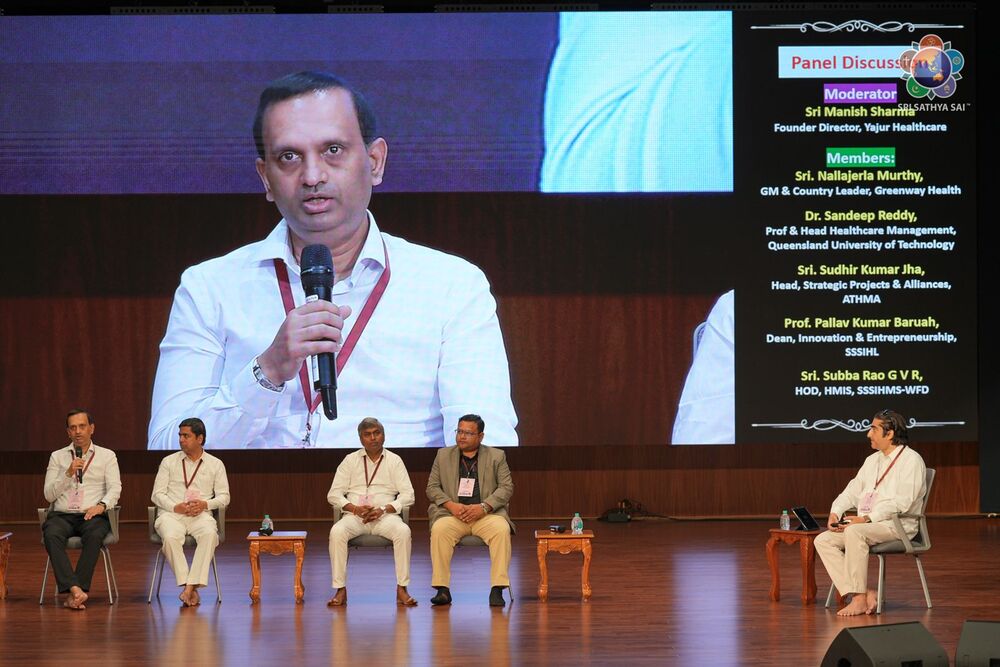
Read transcript 1,409 words
My humble salutations at Bhagawan’s lotus feet. It has been a very interesting experience at the start of today's conversation regarding the enablement of IT and IT systems in healthcare. I believe this is especially crucial in the age of AI. However, before we discuss today’s advancements or what the future holds, I’d like us to look back at the origins. Just yesterday evening, I was reflecting on Bhagawan’s discourse from 1991. Among the topics he mentioned was the centrality of patient care—it must be accessible and affordable. In our current era, especially during conversations with startups, affordability and accessibility remain key focus areas for any organization. Another point from that discourse was that people would come to Parthi for both mental and cardiac health.
As we gather here at Swami’s lotus feet, may we remain free from tension and keep our hearts full of love for him. For the next 100 years of Swami’s mission, let us carry forward the work he began. Today, we have an esteemed panel: Professor Sandeep Reddy Subbarao from the hospital IT department, Mr. NLS Murthy, who has shifted from pilot-centered to patient-centered navigation systems, and Sudhir from the ATMA team, whom you heard from earlier.
For this session, we’ll begin with opening remarks from each panelist, followed by two rounds of discussion lasting about eight and four minutes, respectively, before concluding.
Dr. Reddy, in the age of AI, governance and explainability are among the most important considerations. From your perspective, could you share your opening remarks on how we move forward in these areas?
Sairam. Namaste. Thank you to the organizers and to Manish for having me here. We are all aware of AI’s potential, but what I’d like to highlight is the importance of governance, explainability, and transparency. This is especially critical in healthcare, where clinical decisions must always prioritize patient safety and transparency.
Technically, many AI algorithms and models lack transparency; they are often “black boxes.” It’s crucial that any AI deployed in healthcare is interpretable—or, at the very least, explainable. To clarify: some models are inherently explainable, with transparent decision-making, while advanced models such as neural networks are more opaque. Some years ago, I wrote a paper for The Lancet advocating for explainability. When doctors can clearly explain treatments to patients, adherence improves. Conversely, lack of explanation can cause concern and reduce adherence.
There is a growing field around explainability, but for the sake of time, I won’t go into technical details. Regarding governance, back in 2019 I noticed that conversations about AI focused heavily on ethics but less on governance. We need frameworks to turn ethical principles into action, especially considering medical-legal concerns, which are increasingly critical both in India and internationally. The paper we wrote now has around 894 citations, and by year’s end, we hope to reach 1,000—this demonstrates the importance of governance frameworks.
Sandeep Murthy, could you give us a worldview of key emerging technologies, especially from the Indian context, and describe the transformations making real impact at ground level?
Sairam to all. Thank you for having me. Before I begin, I’d like to note that we all have smartphones. If you search the same questions Manish asked me, you’ll find plenty of information. The challenge lies not in access to information, but in implementation.
Professor Panchanathan spoke about technologies such as AI, 5G, IoT, and blockchain—the buzzwords of our time. The key issue is translating these concepts from theory down to practical use on the ground. For example, recently, a close family member needed surgery at a renowned corporate hospital in Bangalore, which boasted a state-of-the-art, digitally integrated management system. Yet, I observed the doctor spending more time with the computer than with the patient. Additionally, an hour before surgery, there was a problem retrieving laboratory images needed for a surgical decision. This illustrates that even with robust infrastructure, real-time information must reach practitioners and, most importantly, patients.
AI is everywhere now—even in our phones. Yet when implementing AI or process improvements, do we truly understand today’s workflows? For instance, do we know a doctor’s workday from start to finish? How about an administrator’s? In hospitals, we need a comprehensive understanding of how different roles and workflows interact, applying technology where it can streamline processes. Collaboration between academics, researchers, startups, and—importantly—investors is essential to make this happen.
A significant challenge is interoperability—bringing together data stored in various, often incompatible, legacy systems. This will be the biggest challenge facing the medical fraternity over the next decade.
Subbarao, as the IT department serves as the bridge between clinical and technical communities, could you share your experiences with implementing IT systems in hospitals?
Sai Ram, thank you for the invitation. As the IT department, we act as the interface between IT professionals and clinicians. Based on experience, the main goals of hospital IT are: 1) ensuring information is accessible to clinicians and administrators at the right time; 2) streamlining interdepartmental processes and communications; and 3) supporting better decision-making.
Recently, we centralized both infrastructure and enterprise software, moving from a legacy system to a centralized, cloud-based solution. Now, a patient’s entire history is available instantly across institutions, reducing duplication of work and resources, such as redundant tests.
Technology is also cloud-based and web-enabled. Radiologists worldwide can now remotely report scans done in our departments. Back office functions benefit as well, with an integrated ERP covering inventory, assets, accounts, and finance. Analytical reports can be generated at patient, department, unit, and enterprise levels. This consolidated system helps provide better service, ultimately improving patient care.
Sudhir, how has your experience at Narayana developed as you’ve seen IT systems grow and diffuse across centers?
Thank you, Manish. Sai Ram to everyone. Years ago, IT was relegated to hospital basements, but today, technology is central to every industry, including healthcare. At Narayana, we see technology as an enabler, and we believe in co-creation—technology must be developed with input from all stakeholders. For doctors, systems must support their daily routines; for organizations, technology must make care safer and more seamless. Our journey building ATMA, from 2017 to 2025, has been ongoing, with constant enhancement and reinvention to fit our evolving needs.
As we close this panel, let’s discuss impact factors and the road ahead, especially as AI moves toward “augmented intelligence.” Sandeep, what should future collaboration look like for maximum impact?
I’d like to quote Swami: “Sarve Bhavantu Sukhinah, Sarve Santu Niramayah”—may all be happy and free from disease. Another quote: “Daiva Preeti, Papa Bhiti, Sangha Neeti”—love the divine, fear sin, and serve others. Healthcare technology implementation must focus on serving people, not just technology. Investments and energy should be directed toward people-centric solutions to achieve Swami’s vision of universal, comprehensive, and free healthcare.
Murthy, you help drive impactful startups and the innovation ecosystem. How can healthcare startups innovate faster and align with meaningful solutions?
Thank you. Startups do need to move faster—no question. I advise several investment groups and incubators, including the Sri Sathya Sai Research and Innovation Foundation. There’s a huge opportunity to foster a healthcare incubator here. Startups often gravitate to software and SaaS because of the business potential, but the real challenge is access to data. Without data, innovation stalls. Hospitals and medical institutions must find ways to make information available for innovation and research, or progress will stagnate.
Further, there is a wealth of intellectual property from public R&D and universities, but in India, we often fail to commercialize it. We should productize our intellectual property, making it useful and accessible, which would unlock tremendous value.
Sudhir, moving forward, what impact factors are you tracking as you build out your systems?
For us, building systems is about accessibility for all stakeholders. Technology should empower patients to do what they need from home, so we developed the patient app. For doctors, technology must be accessible on the go, enabling real-time updates and care decisions. Nurses’ documentation has been digitized, creating an interconnected platform for seamless information exchange. We’ve reduced length of stay, turnaround times, discharge processing, and paper usage—directly and indirectly impacting revenue and outcomes.
As we close, Subbarao, you mentioned that simple interventions can be impactful. That sums up today’s conversation: technology augments clinicians’ work, and it’s a collaborative journey. Impact is achieved through seamless collaboration toward patient-centered care, reaffirming Swami’s mission for the next 100 years. He has given us a template and ideas for generations to come. May this conversation continue forward. Thank you, Sai Ram.
Medical Technology In Healthcare - Infra and impact on Healthcare delivery at SSS hospitals - A panel discussion
- Moderator Sri. Ravi Kumar, Sr. Manager, Imaging Services, SSSIHMS-PG
- Dr. Gopikrishna, Pediatrician, SSSGH-PSN
- Dr.Sumit Thakar - Sr.Consultant, Neurosurgery
- Dr. Kaushik, Sr.Consultant, Orthopedics
- Dr.Anuj, Sr.Consultant & HOD, Ophthalmology, SSSIHMS- PG
- Dr. Prayag Kini, Senior Consultant, Cardiology, SSSIHMS-WFD
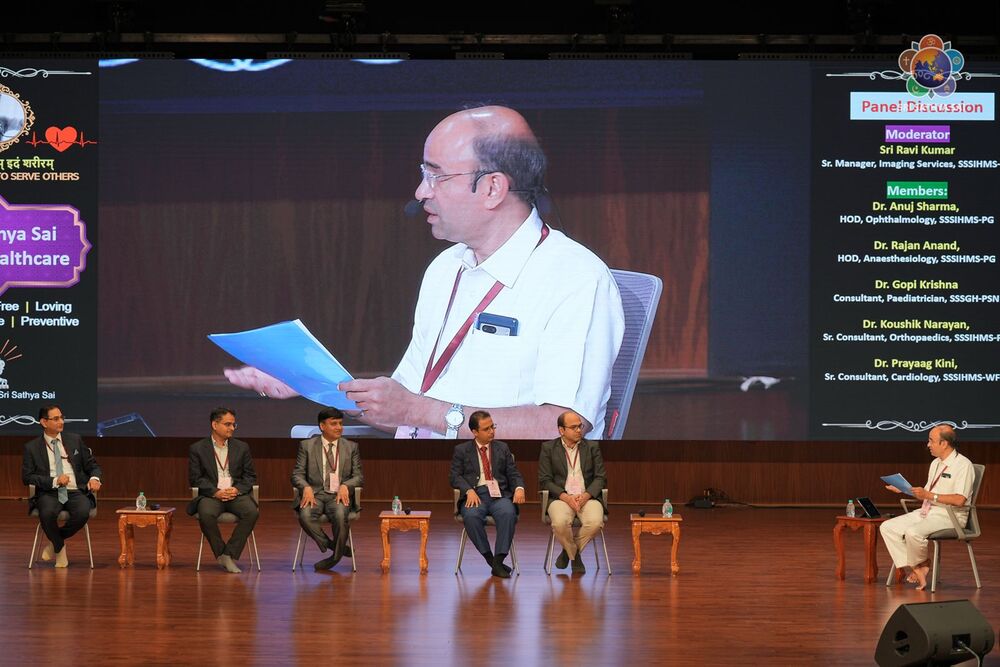
Read transcript 1,076 words
Sri Ravi Kumar
Sai Ram. My humble salutations at Bhagawan’s lotus feet on behalf of the esteemed panel.
Today’s panel discussion focuses on medical technology in healthcare infrastructure and its impact on delivery at Sri Sathya Sai hospitals. To set the context, Voltaire, a French philosopher, once said that the art of medicine consists of amusing the patient while nature cures the disease. While this may have been true when medicine was more art than science, today, science and technology are integral to modern medicine.
Why discuss technology at Sathya Sai hospitals? One tenet of this healthcare system is world-class treatment, delivered free of cost. Free need not mean inferior—Swami believed in providing the best. Today, we’ll touch on equipment and instruments, imaging, high-Tesla MRIs, CT scanners with increasing slices, smart devices like insulin pumps and wearables, research labs, gene editing, and point-of-care tests. We’ll also discuss electronic health records, telemedicine, teleradiology, and the all-pervasive topic of AI.
First, Dr. Prayag: How do equipment and technology support your cardiology practice?
Thank you for this opportunity. Swami always gave love for free—never just medicine or hospitals. To illustrate technology’s role: imagine a 42-year-old man arriving at 3 a.m. with a heart attack, the sole breadwinner of his family. I have access to the best ECG and echo equipment for early detection, and a state-of-the-art cath lab with high-resolution imaging for precise stent placement. The process is seamless, from diagnosis to post-treatment counseling, reducing the risk of recurrence and lowering overall costs. Technology must serve patients, not remain locked away in servers. AI should always be combined with “Sai”—compassion and love.
Next, Dr. Rajan: As an anesthesiologist working across departments, what technologies do you use?
As perioperative physicians, we employ advanced tools to ensure safety, comfort, and life support. This includes easy access to records through information systems, modern anesthesia workstations, point-of-care ultrasound, and monitoring devices. In cardiac surgery, we use heart-lung machines, temperature control modules, and real-time 3D echocardiography. In urology, we balance technology with physiology through fluid management systems; in orthopedics, we use nerve and depth monitors; and in plastic surgery, we rely on advanced airway gadgets. In critical care, state-of-the-art ventilators and blood gas machines allow us to monitor and manage patients remotely. These technologies enhance safety, accuracy, and outcomes across departments.
Dr. Gopi, dealing with children is challenging. How has technology helped?
For babies, even a small amount of blood is critical. We now use ABG machines that need only two drops to provide many parameters at once. We screen newborns for hearing loss at discharge using otoacoustic emission machines and identify issues earlier than ever before. Non-invasive devices allow us to monitor jaundice without painful pricks. In emergencies, point-of-care devices let us rapidly triage and get patients the specialist care they need. Portable X-rays support dental care at bedside, and fiberoptic scopes help in ENT for diagnosis. Overall, technology has made decision-making faster and less stressful for both physicians and patients.
Dr. Kaushik, orthopedics has traditionally relied on manual tools. How has technology changed your practice?
We still use pen, paper, and surgical tools, but technology brings precision. For example, deformity correction once required multiple steps; today, software assembles a fixator based on precise parameters, guiding manipulation for optimal results. Surgery can be simulated beforehand, building confidence for both surgeon and patient. Any discrepancies can be addressed with fine-tuning, and all six axes of correction can be managed simultaneously. Technology brings precision to what used to be a slower, more manual process.
Dr. Anuj, ophthalmology is a field where small advances make a big difference. What technologies do you rely on?
The eye is a small yet vital organ. Technology such as high-end OCT machines, IOL Masters, and visual field analyzers help us evaluate and plan patient care. In the operating theatre, we use advanced microscopes and vitrectomy machines. These advances allow for more efficient, effective, and safer eye care.
Let’s now discuss the impact of these technologies. Dr. Rajan, how has technology improved patient monitoring, especially during anesthesia?
Technology has revolutionized perioperative medicine. For example, point-of-care ultrasound provides real-time cardiac and volume assessments, helps with vascular access, and supports accurate diagnosis and management in the ICU. High-tech monitors and ventilators allow for safe management and fast recovery, even in complex cases.
Dr. Gopi, how have things changed in your years of service?
The availability of smartphones and new devices has transformed care since 2010. For example, therapeutic hypothermia for newborns used to be managed manually, but now, server-controlled machines automate the process safely. Real-time access to reports through hospital information systems has reduced delays and improved continuity of care, even across facilities. WhatsApp and digital communications allow us to consult with specialists worldwide. Non-invasive ventilators and improved lab facilities support faster, better treatment.
Dr. Kaushik, how does data support your department’s care?
Accumulated data over more than a decade now guides future treatment. For example, mathematical models help predict outcomes for clavicle fractures, supporting objective counseling and decisions about surgery. Similar approaches are being used for bone infection relapses, providing probability calculators for patients. As this data-driven approach expands, fields like neurosurgery and cardiology are moving toward AI modeling.
Dr. Anuj, could you share an example of technology aiding patient care?
A patient once arrived with an eye injury and a suspected foreign body. Imaging allowed precise localization, followed by urgent surgery to remove both cataract and the foreign object. When trauma complicated lens placement, technology enabled us to offer a specialized solution, restoring the patient’s vision. Advanced imaging, anesthesia, surgical equipment, and teamwork made this possible.
Dr. Prayag, rapid intervention for heart attacks is crucial. How does technology support this, and is there a risk of over-reliance?
Technology augments, not replaces, clinical judgment and empathy. For example, our hospital’s in-house scoring system, built with the help of data analytics, provides prognoses at one month, six months, and ten years. Having patient-centric, Indian data is vital, as disease patterns differ from those in Western textbooks.
A memorable case involved a four-year-old boy from Bangladesh with complex heart disease. Even when standard solutions failed, advanced imaging and intraoperative technology enabled a unique, life-saving intervention. Technology must serve patients and clinicians, not simply reside in servers or IT departments.
Thank you to all the panelists for this enlightening discussion. May we always use technology as an instrument, keeping our hearts with our patients and using science as a tool for healing. Sai Ram.
"
Harnessing emerging Medical Technologies in enhancing healthcare delivery
Dr. Rakesh Mullick - Chief AI Scientist, GE Healthcare
Read transcript 1,538 words
I don’t think anything could be more real than what we just heard on stage about bringing technology into the hands of our clinicians.
First, I would like to thank Dr. Sundaresh for the opportunity to be here. I am blessed to stand at the Lotus Feet of Bhagwan and speak with all of you. It is truly an honor to attend, though I should mention that I am not a clinician. Please excuse any errors, omissions, or misrepresentations on my part.
I bring to this forum a global industry perspective, particularly on how we attempt to scale innovations. As Dr. Panchanathan mentioned this morning, healthcare and academic research institutes must collaborate. It is at this intersection that invention and innovation truly happen—especially when industry, clinicians, and innovative companies work together. You have heard about the many devices now in the hands of our clinicians, and it is heartwarming to know that technology is reaching them directly.
When industry and innovative companies join forces with clinicians, we can translate advancements into clinical practice. Much has been said about AI, and I will share how it fits into this context. I’ll discuss some emerging technologies that are enhancing healthcare delivery, but due to time constraints, this talk cannot cover everything. The rapid pace of technological change makes it nearly impossible to keep up with every development.
Let’s start with the challenges facing healthcare. I am among practitioners who may correct me if necessary, so please consider my perspective accordingly. The healthcare system faces significant burdens. We are fortunate to be near Sathya SaiHospital in Whitefield and to benefit from collaboration and shared learning. However, that hospital is an exception—everything happens calmly and peacefully there. This is not the case in many hospitals I have visited across the country and around the world, where stress and unmet needs are common. Operational efficiency and patient care remain constant concerns.
Several factors contribute to this stress. The global population is aging, and demographic shifts are occurring worldwide, including in India. Increasing complexity arises as our understanding of biology and science deepens: we face a proliferation of disease subtypes, epigenetic and genetic factors, rising cancer incidence, and, as highlighted, the need to make care accessible and affordable for those who currently lack it. These are the major challenges we are trying to address.
At the same time, we are experiencing an explosion of data. Surveys indicate that approximately 180 zettabytes of data are generated each year—progressing from gigabytes to terabytes, petabytes, and now zettabytes. Healthcare accounts for about one-third of all global data, much of it from wearables, imaging, histopathology, clinical notes, prescriptions, and operational systems. Despite generating 30% of the world’s data, 90.7% of healthcare data remains unused, and 80% is unstructured—not neatly labeled or formatted.
Making sense of this unstructured data, scattered across multiple IT systems, is a daunting task. Clinicians spend increasing time entering information into electronic medical records and hospital information systems, leading to staff turnover. These are global issues, and as more enterprises enter healthcare, the problem grows. In oncology, for example, the rising number and complexity of cancer cases, subtypes, and treatments strain the system. Errors, manual processes, and a shortage of clinicians compound the problem, especially as the number of patients and survivors increases.
So, how can emerging technologies help? According to the World Economic Forum's recently published list of the top 10 emerging technologies for 2025 (across all fields, not just healthcare), biotechnology for health stands out. This includes engineering living therapeutics—methods for developing new therapies using helpful bacteria for internal healing and therapy. Many are familiar with the so-called wonder drugs for obesity and diabetes management, GLP-1s, which may also help treat Alzheimer’s and Parkinson’s disease. There is still much research to be done.
Other critical advances include autonomous biochemical sensing—monitoring health non-invasively—which is key for patient wellness and care. In recent years, CRISPR has transformed genetic care, mRNA vaccines helped us through the COVID pandemic, and AI-driven molecular design is now shaping drug development.
In IT, computing drives much of this progress. Gartner’s 2024 hype cycle shows the status of various technologies—whether at the innovation trigger, peak of inflated expectations, trough of disillusionment, or plateau of productivity. Some technologies are maturing as we enter 2025. Focusing on Gartner’s 2025 strategic technologies, AI imperatives like agentic AI are becoming significant. AI governance platforms are being developed to address ethics, legal mandates, and emerging global standards. The EU AI Act, for example, is now law, with implementation deadlines approaching.
Disinformation and security are also crucial. Cybersecurity must ensure that complex systems—often called black boxes—are not compromised. The principle of "do no harm" remains paramount. Agentic AI represents the next phase in large language models, evolving from static tools like ChatGPT or Copilot to adaptive models that update frequently. These models are beginning to orchestrate complex goals—from simple tasks to supporting clinicians in sophisticated environments. While most healthcare AI systems are supervised, there is growing discussion about autonomy—not to replace professionals, but to support and refocus on patient care.
I’ll briefly cover governance platforms and how they are evolving, as well as how we are addressing deepfakes, reputation management, privacy, and security. Recently, Gartner’s 2025 AI hype cycle highlighted two key elements: AI agents and foundation models. These are areas where we are actively working.
But is this hype justified? There is real value. For instance, AI is accelerating drug discovery—idiopathic pulmonary fibrosis treatments are now in Phase 2 trials, a major milestone. Operational efficiency is another benefit. Tools help with planning prescriptions, scheduling, and pre-authorization, reducing the administrative burden. In terms of extending healthspan, AI helps us understand systemic, not just organ-level or cellular, complexities—often beyond human comprehension.
Predictive diagnosis is another area of progress; the goal is not just to identify disease but to predict effective treatments and improve quality of life. Studies—including those published in JAMA—demonstrate how automated systems can assess and interpret echocardiograms with high accuracy, saving clinicians significant time. Similar advances are occurring at the intersection of imaging and genomics, such as using retinal scans to predict genetic disorders.
Within our ecosystem, we are seeing innovations aimed at addressing doctor shortages and ensuring the ethical use of AI. Governance and regulatory approvals are stringent—tools must be interpretable, unbiased, safe, and reliable, with ongoing monitoring to guard against data drift and changes in patient populations or hospital systems. The EU AI Act, for example, mandates checks and balances for safe, reliable AI.
To many, AI may seem straightforward: gather data, build a model, and generate value. In reality, particularly in healthcare, it is much more complex. Data must be identified, diverse, and enriched, with privacy regulations like GDPR and HIPAA strictly observed. After model development, extensive clinical evaluation and regulatory approval are required before integration into hospital workflows and post-deployment monitoring.
Today, many commercial AI solutions exist, making departmental decisions complex—there may be a dozen radiology AI tools for chest X-rays alone. Comparative evaluation on local data is essential before adoption.
Earlier AI models required a large amount of annotated data for each specific application. Now, foundation models use self-supervised learning from vast, unlabelled, multimodal datasets (imaging, text, video, genomics), allowing accelerated development and later fine-tuning for specific tasks. This evolution enables broader, more flexible applications, including large language models capable of interpreting text, images, and more.
We are building foundation models for ultrasound, full-body X-ray, and multimodal MRI, adaptable for specialized applications like fracture detection or cardiovascular assessment—all from a common core. Multimodal capabilities—combining images, text, and other data types—allow even greater flexibility and accuracy.
Recent studies show that AI diagnostic accuracy in clinical dermatology, for example, now outperforms clinicians in controlled settings, enabling differential diagnosis across 128 skin conditions. In cardiology, fine-tuned segmentation models built from foundational concepts have surpassed earlier models like Echonet.
Agentic AI adapts and simplifies complex workflows, especially in fields like oncology, where numerous data points and decisions are required at every stage. Our "health companion" concept includes specialized AI agents coordinated by an orchestrator, delivering tailored insights for specific queries—like PSA levels in prostate cancer—based on the wealth of collected data.
These applications enable automated report generation, classification, and workflow automation, integrating into every stage of the patient journey across oncology, neurology, and cardiology. The goal is to provide precision care—moving from prescriptive to predictive, and making healthcare as personalized as possible, unleashing the full potential of digital data for clinical insight and trial matching.
At the enterprise level, AI supports patient management, resource allocation, and operational forecasting, addressing pain points like patient discharge and insurance processing. Healthcare faces unprecedented challenges, but the convergence of AI, cloud, and digital transformation creates enormous opportunities for patient-centered care, pushing the boundaries of what’s possible and making limitless care a reality.
Thank you very much.
MC:
Thank you, Doctor Malik, for illuminating the path where innovation meets intention. Healthcare is an industry leader in IT and medical technology, and it is truly exciting to hear directly from a leader in AI. Thank you for making the journey to Putaparthi and for participating in this conference. We hope to strengthen our collaboration to further Bhagwan’s ideal of healthcare, and for everyone’s clarity, yes—AI is the master in virtual reality.
SSSIHL - SSSIHMS Research Collaboration for healthier Tomorrow
Dr. Raghunatha Sarma Rachakonda - Director, SSSIHL-PSN
Read transcript 1,173 words
The guiding principle and inspiration behind all this collaborative work has been the divine dictum, "Paropakarartham idam shariram." Many speakers have mentioned this beautiful dictum given by Swami, which outlines the purpose of a researcher's life, especially at our university.
The objectives of this session are as follows:
To briefly present some projects completed in collaboration with super-specialty hospitals
To provide a list of useful projects suggested by doctors and IT managers from these hospitals
To discuss the Insights Project, a multimodal research platform that we are planning to launch
Let me begin with a humble app we developed back in 2017, called Awaaz. Previously, announcements for the ward were made manually—the ongoing soothing bhajans would be paused, then the announcement made, and afterwards the bhajans resumed. Sometimes there was so much rush that managers had to leave their work to make these announcements. With the help of a student, guidance from the engineering and hospital management teams, and support from some of us here, we undertook this project and made the process almost 100% automatic. Announcements could be made from a cell phone anywhere—even from a manager’s office. They could simply choose which announcement to make and click, and the announcement would be delivered. This app proved very useful and could potentially be used in many hospitals with similar requirements.
Recently, we also completed an automatic data transfer app. This application backs up DREAMS data to Google Cloud for reliable storage, using Python libraries for win32com and the Google API to interface with Google Drive. It comes with simple software that allows for bulk transfers and is currently in use.
Additionally, there are four other contributions from MCS students at the Nandigiri campus, working with IT managers at the Super Specialty Whitefield campus:
Bicard: Captures and stores echocardiograms for later review
MPrescribe: A bedside app that helps doctors in real time and reduces medication errors
Sandesh: Sends out critical reports and lab results, alerting recipients in real time. These have been in use since around 2015.
Wrong Predict: A research endeavor using machine learning to predict whether a patient should undergo angioplasty or bypass surgery. I would like to know from my colleagues if it has been published—if not, it is worth publishing immediately, as it has important implications and could be part of the Insights Project we plan to launch in full.
PowerTask is another tool used at the Whitefield campus. It utilizes the PowerShell environment to automate certain tasks. The system admins can centrally handle user management, printer management, disk space monitoring, and event log monitoring across all computers in the hospital’s various departments.
Next, we have a data-driven app for detecting urinary tract infections, which Dr. Pradeep will discuss after me. I will not take away from his topic and will leave the details for him to share.
All these apps demonstrate the full-stack development capabilities of our faculty and students through their project work. Now, I will present a few samples of our research publications:
Segmentation and classification of CT renal images using deep neural networks. We first identified the mask for the kidney, then applied a standard classical algorithm for segmentation. This hybrid approach resulted in a research paper.
Dr. Uday Kiran and his team developed automatic segmentation of white matter hyperintensities in the brain, even determining their distribution for longitudinal study. Due to time constraints, I have not included additional slides, but Dr. Uday’s team has also worked on segmentation and reconstruction of the left ventricle, which can help detect cardiac diseases early by analyzing the movement of the left ventricular wall.
Deep learning-based detection of urethral stricture, inspired by Dr. Ashwin Shekhar. This research is archived and being prepared for communication. It helps classify the type and location of the stricture, providing valuable clinical insights.
This morning, there was mention of Subramanian’s PhD work, which I was fortunate to be part of. His work led to significant findings in cardiogenic brain abscess, PTMC outcomes, and recurrent lumbar disc herniation. Notably, we adopted an interpretable machine learning framework:
The first step is classification, identifying a specific condition.
Steps two and three are doctor-centric, focusing on confidence analysis—which helps the doctor understand how reliable the result is—and model interpretability. We used SHAP in Subramanian’s thesis to explain why certain variables were chosen.
The fourth and crucial step associates non-invasive parameters with invasive ones over time to develop deployable protocols, ensuring proper data ethics and ethics committee approval.
This framework could be further developed into an app.
In summary, I have presented examples of our app development and research work to showcase the strength of this collaboration. Looking ahead, rather than working in isolated pieces across departments, it is time to consolidate efforts and move forward together.
Capturing knowledge from action is crucial, as emphasized in many talks this morning. This includes not only data but also experience—such as prescriptions or videos of particular surgeries or the interpretation of echocardiograms or radiology images. Preserving this knowledge is essential.
Organizing knowledge for action is the next step, structuring data so that it is useful and suitable for AI or ML techniques. Finally, applying knowledge in action means adapting protocols for real-time use in clinical settings.
Towards this goal, we are launching the Insights Project, as mentioned earlier. This project will have several layers:
At the infrastructure level, we will create digital health principles and capture use cases, such as patients admitted for spinal surgery who require telemedicine follow-up. This approach, discussed in yesterday’s session, highlights the types of apps needed for comprehensive care.
We will build a data ingestion pipeline to marshal and normalize data, adhering to international standards for formatting and storage.
We aim to create a warehouse infrastructure that brings together clinical records, laboratory reports, and various types of image data to facilitate AI-related tasks, such as conversational tools for natural language processing.
Data privacy and personal data protection will be key priorities.
Our master plan aims for technology readiness up to level 9. The first two levels—making data available online and completing initial infrastructure tasks—are largely achieved. Students and faculty from SSIHL, doctors from the Super Specialty Hospital, and industry experts are collaborating to promote internships. Through these, we hope to advance the Insights Project significantly.
Special thanks to Manish Sharma and his team for providing valuable internships and training our students, enabling full-stack development and helping us realize our dream. Publishing research is one thing, but seeing it applied in clinical trials is the greatest satisfaction for any researcher. By Swami’s grace, we have this opportunity, and we are truly grateful to the super-specialty hospitals for their support.
Due to time constraints, I will stop here, but these are some readily available projects that students can take up. I have a long list of project ideas provided by Super Specialty hospital managers, to whom I am very thankful.
SDG 3 has already been mentioned. I offer this as a humble tribute at the lotus feet of Swami for the centenary celebrations.
Thank you, Sai Ram.
Impact of Transdisciplinary collaborations in Healthcare Technologies
Dr. Pradeep BE, Asst Professor, Dept. of Bio Sciences, SSSIHL-PSN
Read transcript 1,289 words
Offering our collective salutations at Swami’s lotus feet, esteemed elders, and delegates: Sai Ram to everyone. I thank the hospital and the conference organizers for this wonderful opportunity. Here, I am going to present some of the technologies that have been developed by the Sri Sathya Sai Institutes—our university and hospital working hand in hand.
Let me begin with an overview: first, a small-area imaging gamma camera, followed by several devices developed for disease diagnostics, an AI tool, and finally, a recent development— the Sri Sathya Sai Research and Innovation Foundation, which aims to transform these technologies into products for the greater good.
First is the Sai GC Torch. This started as a discussion between Professor G. Venkatraman and Professor Shiv Shankar Sai, who visited our hospital to repair a legacy gamma camera. What resulted was a handheld mobile gamma camera, combined with fluorescence imaging, which can now be used during surgeries for cancer detection. Here, you can see the dual modalities of gamma acquisition and fluorescence, all built in-house, including the AI stack that manages the entire operation. This technology is the first of its kind in the world; it is used for navigational assistance and surgical validation of cancer sites, provided through an intraoperative probe. The device is handheld and weighs less than 7 to 8 kilograms—with efforts underway to reduce it to under 5 kilograms for even greater efficiency in hospitals. The device holds 5 global patents and has achieved 100% successful detection. It is currently being tested at HCG Cancer Hospital in Bangalore and its results are being correlated with clinical methods such as histopathology. For the first time in the world, gamma imaging is being used intraoperatively. Previously, gamma cameras—like CT scanners—were so large that patients had to be transported to them before surgery. Now, live during surgery, the gamma camera can be used to guide the procedure, and it has been called a game changer by leading surgical oncologists.
Now, I will show a quick demonstration of this small-area imaging gamma camera. The device, seen here, is used to identify the location of cancerous tissue in real time, helping clinicians determine exactly what tissue needs to be excised. After the tissue is removed, the camera can immediately check if all cancerous tissue has been excised, so that nothing is left behind—eliminating the need for a second surgery. The intention is to strengthen the hands of clinicians, providing technological support during the most critical moments of surgery. This handheld gamma camera is unique in the world and has been entirely developed by our faculty and students at the Sri Sathya Sai Institute of Higher Learning, Department of Physics.
Next, we have a cardiac troponin T quantification device, which uses a highly sophisticated and ultrasensitive technology called SPCE (surface plasmon coupled emission). This was funded by the Department of Science and Technology, with Dr. Nagasai Vishveshwar, Dr. Sai Satish, and Dr. Ganesh from the Department of Chemistry leading the development. The technology is available for commercialization, and we invite companies to help bring it to global benefit.
Another innovation is the handheld, smartphone-based dengue diagnostic device, which enables multiplexed detection of related biomarkers using color intensity. All sensors and components were developed in house, with funding from the Department of Defense, DRDO.
There is also a device for identifying perinatal depression, developed by the same team. This device uses cortisol as a marker and could eventually be used for therapeutic purposes as well as diagnostics. It was funded by Tata Trusts.
The first academic institute-developed COVID kit approved by ICMR was also created by the Sri Sathya Sai Institute of Higher Learning. The kit, called COVID Durate, allows both antigen and antibody diagnosis.
Despite developing these useful technologies, we initially lacked a mechanism to transfer them to the outside world for routine use. This has now changed: we have developed a process to bring these innovations to patients.
Another technology, initiated by Dr. Sundaresh with support from Dr. Prakash of the orthopedics department, is autologous chondrocyte implantation. To avoid knee replacement, we took a patient’s own cartilage biopsy, cultured the cells in vitro, and re-implanted them. In one case, a truck driver from Hindupur suffered debilitating knee problems. After treatment here, he avoided knee replacement and, 10 years on, remains healthy and active. We are not just doing superficial research; we focus on deep, impactful innovations that truly translate to patient benefit and strengthen clinicians’ capabilities. All this work has been funded by the Sri Sathya Sai Central Trust, university, and hospital.
Next is aMRX, an advanced, culture-free, AI-based UTI diagnostic tool. Without touching or collecting samples from the patient, we can predict urinary tract infection, identify the causative organism, and determine its antibiotic susceptibility to 14 antibiotics—all in two minutes, using only clinical history and presenting complaints. This reduces unnecessary tests, avoids traditional cultures, saves resources (especially in limited settings), and supports clinical decision-making with instant results. The technology meets global HIPAA and GDPR standards. It has been transferred to Signv Biosciences, a start-up in Hyderabad, and is covered by Indian, US, and global patents, as well as the aMRX trademark.
To use it, the doctor enters basic patient information and clinical complaints—such as dysuria, fever, and flank pain. The system instantly analyzes the input and predicts whether the patient is UTI positive or negative. For UTI-positive cases, it identifies the organism and provides antibiotic susceptibility for 14 antibiotics. The tool offers 93% accuracy, 99% specificity, and 95% sensitivity, validated with 8,000 patients from 7 hospitals across India and correlated with gold-standard clinical culture reports. The results were impressive: of 8,000 suspected UTI cases, 51% were actually culture-negative, but many were still given antibiotics. The tool helps avoid unnecessary testing and antibiotic use, thus combating the rise of antimicrobial resistance.
The aMRX technology has won several awards, including Economic Times and Business Times Best Healthcare Technology of the Year (2024), recognition as one of Microsoft’s top 200 global AI innovations, and honors as a top 10 healthcare AI startup by the Hyderabad Software Association (2025). It is available globally through Microsoft Azure and IBM Z Scale.
To ensure these innovations reach clinicians and patients, our university has set up the Sri Sathya Sai Research and Innovation Foundation, a Section 8 company. Our motto is “innovation is our tool, seva is our purpose.” The foundation, along with the Central Research Instruments Facility and a significant investment from the Sri Sathya Sai Central Trust, gives us world-class infrastructure: high-resolution electron microscopy, metabolomics, proteomics, NMR, biosafety levels 1 and 2, and advanced medical device and biotechnological research facilities. We have high-performance computing power—currently 581 teraflops with 6 GPUs, soon to be scalable to 1,500 teraflops—supporting AI-driven digital diagnostics, drug discovery, molecular dynamics, and more.
Our lab supports startups developing CRISPR diagnostics for bacterial infections and AI-based drug discovery. We are also setting up clinical biobanks with more than 100,000 patient samples per disease, catalogued and stored for use by startups, researchers, academics, and clinicians to develop next-generation therapeutics and diagnostics suited to Indian populations.
We have also partnered with the Federation of Asian Biotech Associations to provide students with a global education, ensuring our graduates are industry-ready from day one. We are committed to providing not just free education and treatment, but care and education of the highest global standards.
If you have queries or ideas, reach out to the Sri Sathya Sai Research and Innovation Foundation—our CEO is here to help. If you want to develop a new idea or solve a clinical problem, visit our institute, contact our CEO, and we will provide you with a platform, guidance, and investor connections to ensure your idea becomes a product that benefits society. Thank you. Sai Ram.
Healthcare activities of Sri Sathya Sai Global Council
Dr. Geeta Kamath, Chair, Medical Committee, Zone-1, SSSGC
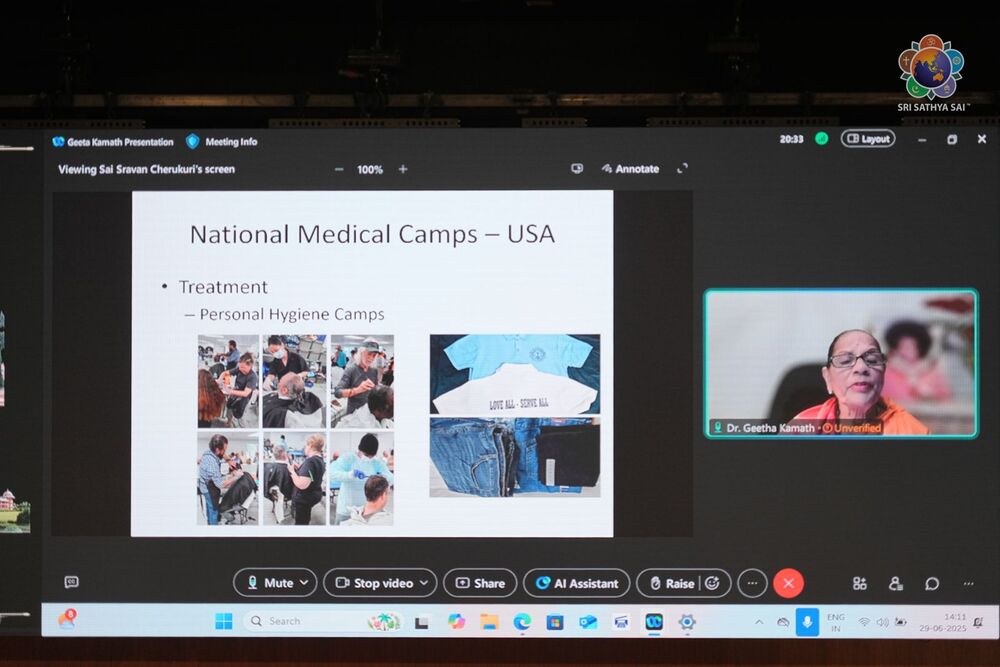
Read transcript 825 words
My humble salutations to the Lotus Feet of Bhagwan—my mother, my father, and my everything.
I would like to acknowledge our managing trustee, Rathnakar, Dr. Mohan, trustee center trust Dr. Sundaresh, and Dr. Gurumurti, directors of the Super Specialty Hospitals, as well as all esteemed doctors, nurses, and paramedics. My sincere greetings to all of you.
I was fortunate to receive divine guidance on the concept of healthcare directly from Swami, starting from my internship days. Swami emphasized two important principles. First, the quality of medical service is more important than quantity. He said to serve everyone with love and compassion, which matters more than technical expertise. Second, the unity of the healthcare team is essential—sometimes more so than the outcome of a project. Swami was always more interested in the process behind a project than its outcome.
The overseas medical camps began as “Birthday Camps” in the early 1970s. At first, they were extensions of the General Hospital, catering to large crowds during festival times. In the 1990s, Swami allowed us to add the Gurugram camp, making it a twice-yearly initiative. People from around the world—UK, Nepal, USA, Canada, Malaysia, Singapore, Trinidad, and many more countries—joined these medical camps.
In 2023, all medical plans were unified into one initiative, thanks to our managing trustee, Rathnakar, who played a key role in merging the two camps. I would also like to thank Dr. Ram Manohar for assisting me; he is my counterpart in India, and we have been working together on both these camps.
During these camps, we saw about 3,000 patients at the Gurupoornima camp and nearly 12,000 patients during the birthday camp. As an extension of the General Hospital, our goal was not only to manage the crowds but also to transform doctors through service. Swami insisted that these camps continue, mainly for this reason.
Organizing such camps in the US is very challenging due to legal and medical regulations. We conducted two types of camps here: screening camps, which involve no direct doctor-patient relationship and are held across the country to screen for various diseases, though treatment is not provided during these camps.
We started with camps of around 100 to 200 patients in 2004 and eventually saw thousands at venues like the Coliseum. At that point, we began to shift from purely screening camps to treatment camps, which is very challenging. However, with Swami’s help, the impossible became possible. By His grace, we were able to start treatment camps.
Swami was insistent on identifying and addressing the deficiencies within our own communities. Screening camps helped us understand the health needs present locally. For example, patients in screening camps asked for dental care, so we started dental hygiene and treatment camps in partnership with the local health department. Though difficult at first, these were quite successful. We also offered podiatry camps to address local needs, as requirements differ greatly from country to country, city to city, and even state to state.
The podiatry camp was particularly well received. We provided foot care, new shoes, and socks, which was greatly appreciated by the community. Eye care camps were also challenging, especially in finding optometrists and ophthalmologists, but we managed to help many people by providing free prescription glasses.
Most recently, we started personal health camps for the homeless. We brought people from shelters and streets to nearby soup kitchens, offered hot showers, haircuts, a full set of clothes, and provided them with essential toiletries. These efforts were extremely well received.
All of these camps were conducted with love, compassion, and a sense of unity. Swami’s presence was felt at each event, and we strived to practice His teachings throughout.
Supporting projects for overseas communities include assisting Super Specialty Hospitals. New residents from abroad have participated in neurology nursing certificate programs, provided neuroradiology support, and helped with neurosurgery. We have also supplied surgical equipment when needed and created opportunities for visiting physicians.
In my opinion, there is still much room for improvement, and doctors from all over the world can join to help the two Super Specialty Hospitals. Teaching seva, or selfless service by physicians, is another crucial initiative.
Moving on to the guiding principles for these medical camps, Swami emphasized the importance of serving our own local communities. He said, “You don’t have to fly anywhere in the world to do medical service. Help your own community.” He instructed us to identify and address real needs, not just offer what is convenient. For instance, when our community survey revealed a need for dental, podiatric, and eye care, we tailored our services accordingly.
Swami also encouraged doctors to serve according to their own specialties and to offer themselves fully to their local communities, which he called “your backbone.” There is no need to go elsewhere.
At this point, I will conclude my talk due to time constraints. I offer my thanks to all the organizations for this wonderful opportunity. Good evening and thank you.
Overview of healthcare activities of SSSSO, India
Dr. T Ram Manohar Rao, National Medical In-Charge SSSSO India
Read transcript 607 words
Our inspiration has always been our beloved Bhagwan. Due to time constraints, I will make my remarks as concise as possible and focus on the objectives and guiding principles moving forward. Healthcare initiatives place a strong emphasis on preventive health, ensuring that every camp—regardless of specialty—is preceded by a session on preventive health awareness.
Within SSO India, the Preventive Healthcare Module, authored by Dr. Mohan and myself, is actively used and has been translated into several languages. These activities, which I'll briefly summarize, span the period from April 1, 2024, to March 31, 2025.
We conduct pediatric and antenatal camps, as well as exclusive camps for pregnant women. Dr. Sanjaya will provide further insights on this later. Cardiac screening camps are also organized, with patients referred to higher centers as needed. Additionally, we hold cancer screening and dental camps, and other specialty clinics such as ENT and orthopedic screenings.
Our static free clinics, popularly known as 'psychopath clinics,' operate nationwide, utilizing existing hospitals and clinics to serve those in need. We also support single-doctor clinics, where individual doctors offer free services in their own practices. Regular blood donation camps are part of our ongoing efforts.
In 2021, the young adults of SSO India launched a new initiative as an offering for Bhagwan's birthday. Our mobile medical care program, with 87 vans currently in operation, will be further discussed by Dr. Pankaj.
Medicare is included as part of the Triple SVIP program, alongside individual care, education, agricare, and other services. Veterinary camps are an integral element of our rural outreach, supported by an extensive network of veterinary professionals. We also conduct camps in homeopathy, AMS, and Ayurveda. The Sri Sathya Sai Rehabilitation program, previously covered by Brother Amit, and the global Satisfied initiative have, for the past three years, merged international and Indian camps under the Sathya Sai Global Council.
At Prashanti Nilayam, major medical camps are held twice a year—once during Guru Poornima in July and again for Bhagwan's birthday in November. Doctors from overseas and various Indian states, together with paramedical and allied health professionals, participate in these camps. I warmly invite all doctors here to join us for the upcoming Bhagwan's birthday medical camp in November 2025. For further details, please contact your respective state medical coordinators.
We began organizing medical camps in the Andaman and Nicobar Islands last April, and in Leh-Ladakh since 2021. Additional services, including daily medicine clinics and specialized programs such as bibronic leagues and pressure therapy at Prashanti Gram, are ongoing. From January 1st to December 31st, each state participates in the annual medical roster, with accommodation and meals fully provided by the Sathyasai Central Trust at no cost to participating doctors.
Doctor Seva at the General Hospital in Prashanti Nilayam is complemented by disaster management support from the medical community. Allow me to spend a moment on the broader impact: From April 1, 2024, to March 31, 2025, SSO India has conducted a total of 19,130 medical camps, benefiting 1,587,303 people. The mobile medical van fleet stands at 87. There have been 5,591 undergraduate doctors, 21,058 postgraduate doctors, 38,665 paramedical staff, and 74,182 sevadals—the backbone of SSO India's medical outreach.
If we estimate the cost of providing these services free of charge, the total would reach approximately ₹21,000 crores (₹21,000,41,98,295). However, what is truly priceless is the hope restored, the dignity preserved, and the compassion rekindled in every patient, family, and life touched through this 'healthcare with a heart'—a model of love in action.
I express my sincere gratitude to our beloved Bhagwan and the organizing committee, chaired by Dr. Sundaresh, for giving me this opportunity. Jai Sai Ram.
"Divyang Jan Seva" - Making ailing Brothers and Sisters move - An initiative of SSSSO and SSSCT
Sri Koteeswara Rao, National Coordinator (G)-Service SSSSO India
Read transcript 942 words
My very humble salutations at the Lotus Feet of Bhagwan. I offer my reverential pronouns to all the prana-acharyas and prana-datas present here. I must also express my respect for all the doctors—why, Narayana Hari himself gives life, but you protect and sustain it. The work you do under the auspices of the Sri Sathya Sai Organization or institution is truly sacred, and I offer my humble salutations to you all.
Long ago, there was a bhajan: "Deena dukhiyon se prem karo," which means, "Love the poor and the suffering." If you please Swami by loving the needy, automatically you please Swami himself and uplift all people.
The "Divyang Jan Seva" initiative is a joint venture of the Sri Sathya Sai Central Trust and the Sri Sathya Sai Seva Organization. This began in October 2023, when the heads of these two organizations—Sri Ratnakar from the Central Trust and Sri Nivesh Pandya Devaran from Visakhapatnam—met during a major Shivaratri program. During a short break, they visited an industrial unit making artificial limbs. Impressed by a presentation on the scope of this work, a brief discussion between the managing trustee and the All India President led to the sankalpa (resolve) for Divyang Jan Seva: to provide a new life to at least 100,000 divyangs (persons with disabilities). This goal was set together.
The task is to support as many divyangs as possible by providing artificial assistive devices. Truly, hands that serve are holier than lips that pray—one of the most beloved sayings of Bhagwan Sri Sathya Sai Baba, adopted by many organizations. This principle is at the heart of our mission.
Historically, Swami has shown us the way to support the divyangs—providing tricycles, implements, livelihoods, and other support through the organization and even personally since the 1970s and 1980s. Now, this has crystallized into the Divyang Jan Seva initiative.
To fully understand the provision of artificial limbs, we formed a committee at the apex level of the organization and sent them for a study tour to Visakhapatnam. They met with the manufacturing unit at Andhra Pradesh Medical Technology Zone (AMTZ) and concluded that the endoskeletal prosthesis is the best choice. While advanced AI-integrated prostheses exist and cost between ₹500,000 and ₹2,000,000 in India, our focus is on providing affordable solutions for everyday people—artisans, rickshaw pullers, drivers—whose families rely on their labor. The endoskeletal prosthesis is simple, modular, customizable, durable, lightweight, and cost-effective. Its cosmetic appearance, functional adjustability, and balance are its key advantages.
Another vertical within this seva is "at your doorstep" service. Some people cannot travel, so a mobile unit—a mini manufacturing plant equipped with all necessary facilities—was created. Wherever at least five to ten eligible beneficiaries are identified, this unit can provide endoskeletal artificial devices on site within three to four hours. This was inaugurated on Guru Poornima Day 2024 by the then-Governor of Himachal Pradesh, Shuklaji.
Just as we have the Liquid Love app, we have created a mobile app for Divyang Jan Seva. Today, we have surpassed 300,000 donors in the Liquid Love platform from Sri Sathya Sai Seva Organization. With the Divyang Jan Seva app, registrations begin with verification by Sevadal and the Samiti convener. When they identify someone as divyang (physically challenged), they review the individual's family background, economic status, and lifestyle. They avoid surgical interventions and cases with comorbidities such as diabetes with unhealed wounds, ensuring safety for each beneficiary. Additionally, we aim to provide skill development to the recipients so they can gain employment—mobile technology repair, for instance—empowering them beyond just receiving an artificial limb.
Screening camps are conducted, and eligible beneficiaries are brought for further assessment. Competent medical professionals check their condition, take measurements, and create plaster of Paris molds for prosthesis manufacturing. The second camp is the distribution camp, where the limbs—manufactured at Visakhapatnam—are brought to places like Puttaparthi and Pondicherry. Here, doctors and technicians not only fit the limbs but also train recipients to walk or use them. After years without a limb, the emotional excitement can be overwhelming, so Sevadal volunteers support and guide them as they relearn basic movements.
One example is a bright, marginalized girl who lost her leg and could not continue her studies. Now, with renewed hope, she promises not only to pursue her education but also to help fellow divyangs.
On November 23rd, during a second distribution camp in the divine presence at Sai Kulwant Hall, the Honorable Governor of Andhra Pradesh attended as 84 divyangs received artificial limbs. Many arrived with pain and despair, but left Prasanthi Nilayam with hope and new life.
Bhagwan’s commitment to fundamental necessities—education, healthcare, water, shelter—stands as a living testament, going beyond just words to true, selfless service. His life and teaching embody the essence of the sacred scriptures through loving action and compassion.
Our strength lies in a dedicated volunteer base, a robust technology framework, and the compassionate philosophy of seva. At its core, this project transforms the lives of both beneficiaries and those who serve, continuing Bhagwan’s legacy of uplifting humanity through love and service. We humbly dedicate this initiative at the Lotus Feet of Bhagwan.
Thank you very much. Please join us in all our endeavors through the Sri Sathya Sai Seva Organization and the Sri Sathya Sai Institute of Medical Sciences. Volunteer wherever and whenever you can—just walk in and offer your specialized services. Contact our medical coordinators or institute directors to dedicate yourself to this cause. Let us do something for the nation, for society, and for the needy. This is our humble appeal.
Thank you, Bhagwan, and thank you to the directors of the Sri Sathya Sai Institute of Higher Medical Sciences. Jai Sai Ram.
"Liquid Love" - Voluntary blood donation Program - A directory for running the life line in vessels of the needy
Dr. Prabhu E, State Medical In-Charge SSSSO T N (North)
Read transcript 656 words
With millions of humble pranams at the divine Lotus Feet, I also offer reverence to the elders of our organization. I take this opportunity to thank Dr. Sundaresh for giving me this memorable occasion.
In fact, when we talk of "liquid love," this is an initiative that all of us can access by downloading the app onto our cell phones. On opening the app, we are reminded that our very existence happens only because of the divine grace of our Lord. It is this divine love that flows through our blood vessels, and we are here to share it selflessly with all of humanity.
This initiative was started sometime in 1997–98. The first registration for "Liquid Love" blood donation in Chennai was at Sundaram, and you can see how patients are identified and cared for. The Information Center operates 24/7, and whenever we receive a call from a patient in need, fresh blood is promptly provided. This center meets the requirements of more than 20 to 30 hospitals in the area—not just in Chennai, but all over India. Swami’s divine love extends throughout the country, whether it is in Odisha, AIIMS Pune, West Bengal, Delhi, Himachal Pradesh, or even as far away as South Africa. You can find many of these stories and images online.
We do not simply provide whole blood. We separate it into its components: packed cells, white cells, platelets, and frozen plasma. These are the real benefits for those in need. We need technology to ensure these blood products reach recipients quickly, so we can serve the maximum number of people.
To give an idea of how the "liquid love" program works, let me share some data from the last six months. The blue line represents December 2024, yellow is March 2025, and orange is May 2025. As you can see, the demand is steadily increasing among patients. When a patient registers a need for blood through the app, a Sevadal volunteer immediately checks if the request is genuine. After verification, another Sevadal contacts donors from our list, matches them with the patient's need, and confirms identities. Once the donation is completed, the system is updated and the ticket is closed. This process functions seamlessly 24/7 across the country. We also maintain a list of rare blood groups in our database.
Analyzing the data, we see a consistently increasing number of patient requests, but the total number of blood donations does not yet meet the demand. For example, in May alone, there were around 374 patient requests, yet donations were only able to fulfill about one-fourth to one-third of these requests. We need to make the program more popular so that we can serve even more people.
Looking at regional data from December 2024, March 2025, and May 2025, the highest number of donations come from Tamil Nadu, closely followed by Andhra Pradesh and Karnataka. However, we don’t have full access to data from all regions, especially the North and the West, due to time constraints. We are hopeful that, by Swami's 100th birthday, we will have a more complete picture.
It is heartwarming to note the upward trend: over the past 12 months, donor numbers have consistently risen. This positive momentum must be encouraged, mobilizing more donors and making full use of our resources to benefit all patients.
Special mention must be made of the Bombay group, which conducted a large blood donation camp in Andheri West, spreading the spirit of "liquid love." In summary, Liquid Love is our humble offering at the Divine Lotus Feet of our beloved Bhagwan. The positive trend is encouraging, and we must continue to motivate more Sevadal volunteers and donors to join this sacred movement.
We also propose that International Peace Day be celebrated as "Liquid Love Day." I take this opportunity to thank Brother Devagar Sai for helping me collect the data and prepare this presentation on time.
Thank you very much. Sai Ram.
Aiding functioning of far flung hospitals -An exemplary sevice in Mahabodhi Hospital Leh Ladakh and Andaman & Nicobar - an initiative of SSSO and SSSCT
Dr. Sanjay Aggarwal, Zonal President(North Zone), SSSSO, India
Read transcript 737 words
With deep reverence, I bow at the Lotus Feet of our beloved Bhagwan Sri Sathya Sai Baba. I offer salutations to Swami’s Institute of Higher Learning and to the Institute of Higher Medical Sciences for showcasing such impressive collaborations and innovations. They truly deserve a huge round of applause for their efforts.
I would like to thank all the organizers for inviting us from across India and presenting our work. It was my honor to be assigned the duty of presenting the support we provide to far-flung hospitals, with exemplary service in Mahabodhi Hospital, Leh-Ladakh, and the Andaman and Nicobar Islands, all under the aegis of the Sri Sathya Sai Seva Organizations. This presentation, along with those before me, serves as a call to all doctors to come forward and assist us. The Sri Sathya Sai Seva Organizations are committed to expanding these seva (service) activities across the country—and indeed, across the world.
In Leh-Ladakh, our journey began in 2021, during the devastating floods in Srinagar. At that time, under the guidance of our most respected All India President, Sri Nimesh Pandya, and the Managing Trustee, Ratnakar Bhaiya, we all participated in rehabilitation efforts for those affected. Afterwards, a series of camps were held in Srinagar, in Ompura, and in other regions impacted by unrest. During our work, we also discovered Alexandra Palace on Dal Lake, where Swami had once stayed in the houseboat. This exploration was deeply meaningful to us.
Following these efforts, we began operations at Mahabodhi Karuna Hospital in Leh-Ladakh. Camps were organized in 2021, again in 2023, and in 2024, when we successfully relaunched Mahabodhi Karuna Hospital, which had ceased functioning during the pandemic. With support from the Sri Sathya Sai Central Trust and the Sri Sathya Sai Seva Organizations of India, we were able to secure financial assistance of ₹2,00,00,000 to relaunch the hospital and equip it with state-of-the-art medical equipment and infrastructure.
The respected Managing Trustee and All India President, Sri Nimesh Pandya, along with the National Service Coordinator, led the effort to modernize the hospital. We provided advanced ultrasound and Doppler machines, modern operation theatres, laparoscopy equipment, display monitors, a 40-bed facility, ophthalmic surgery tools, andrology sets, an oxygen generation plant of 1,000 liters capacity, and comprehensive gynecology, obstetric, and pediatric care setups.
The organizers of Mahabodhi Karuna Hospital and the surrounding population of around 500,000 in Leh expressed their profound gratitude to the Sri Sathya Sai Seva Organization and Bhagwan Sri Sathya Sai. The participants from the Seva Organization received a grand welcome. A memorandum of understanding was also established with the Sri Sathya Sai Heart Hospital, Rajkot and Ahmedabad, to facilitate free heart procedures for the people of Ladakh.
Several camps were conducted during the inauguration, including one on May 24, 2024, where around 179 patients were seen. Patients traveled from distant areas, including Pathar Sahib Gurudwara—an important spiritual site where Guru Nanak Dev Ji is believed to have performed a miracle. Patients came even from these far-off places. I would also like to mention Dr. Vikram Shetty, an orthopedic surgeon who, after the relaunch, performed several knee replacement surgeries at the hospital.
Our seva continues, as we plan to organize more medical camps in Leh-Ladakh this month. A second medical camp was held on May 26, 2024, serving 267 patients.
With Swami’s grace and blessings, we were also able to extend our service to the Andaman and Nicobar Islands. In a place named Nishchintpur—which itself means “to be at ease”—with the help of the Sri Sathya Sai Seva Organization, Tamil Nadu, and the support of State President Mr. Chandrasekhar and his team, we reached out to those in need. We landed in Port Blair and traveled nine hours by road, foot, and water to serve patients in remote villages. The people there were so grateful that they have requested more such camps in the future. Altogether, in three medical camps in the Andaman and Nicobar Islands, we treated approximately 1,351,816 patients.
These are just some of the services we are providing in remote areas—we have touched Kashmir, Leh-Ladakh, the Union Territories, and the Andaman and Nicobar Islands, and there is still more to do. We pray for the continued support of the Central Trust, the Institute of Higher Learning, the Institute of Medical Sciences, the Institute of Biological Sciences, and Whitefield, so that we may reach the farthest corners of India with our healthcare services. Sai Ram.
"Skill Development in Healthcare- Bedside Assistant and Geriatric Care Course
Dr. Krishna Kumar, In-Charge, National Skill Development Centre
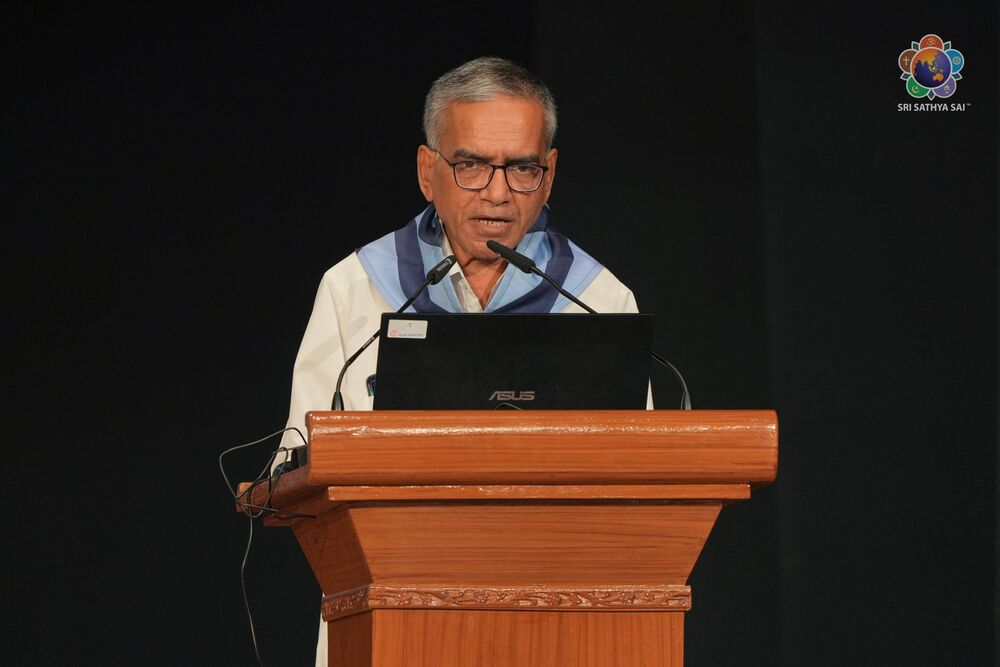
Read transcript 892 words
Om Sri Sai Ram.
I offer my reverential salutations with gratitude at the Divine Lotus Feet of Swami, and loving Sai Rams to all my fellow professionals here.
Since the 1970s, with Bhagwan’s grace, the All India Sai Seva Organization has initiated vocational training programs for rural youth across India. This continued, and in the 1990s, the then All India president, the late Sri V. Sreenivasan, redesigned the entire program as Rural Vocational Training Centers. From then until about 2018 or 2021, Sri Ratnakar Garu gave us the innovative idea to rename this initiative as Skill Development Programs. Ever since 2021, these programs have been conducted pan-India.
Among the various skill development programs, we offer courses ranging from basic tailoring and fashion designing for women to paramedical, semi-engineering, software, plumbing, carpentry, and electrician training. For women, we also provide courses in fashion design, tailoring, beautician skills, and mehendi. These programs are primarily aimed at rural youth, most of whom are 10th-grade dropouts, whether pass or fail, or have left after 12th grade.
Some notable practical training courses we have introduced include the Home Health Aide (a one-month course, also called Healthcare Assistant), General Duty Assistant (one month), First Aid and CPR, and Dental Technician. Recently, we redesigned these courses so that trainees can address the needs of patients from pediatric to geriatric care. This extended training program now includes five months of instruction and one month of internship.
The first such program began in 2018 in Khammam district, Telangana, as a Healthcare Assistant program for 45 days. Due to the pandemic, we had to pause the program. Later, we developed the Bedside Assistant training, addressing pediatric to geriatric care needs. The course was initially designed by Dr. Urmila from Karnataka North, and then reviewed and enhanced by our national medical team: Dr. Ramanu Garu, national in-charge for Medical and Health Services; Dr. Sanjay Agrawal, a renowned laparoscopic surgeon from North India and Zonal President; and Dr. Anil Kumar Garu, currently Joint Director at Sri Sathya Sai Institute of Higher Medical Sciences, Puttaparthi. They added significant value to the curriculum.
Eligibility for the program is 10+2 pass, primarily targeting women candidates. Attendance of at least 90% is mandatory, and candidates need at least 70% to obtain a certificate. The faculty comprises qualified and registered MBBS doctors, MDs in Ayurveda, nurses with a four-year degree plus MSc in Nursing, MSc Home Science professionals, and yoga trainers. Most daily sessions include prayers, theory classes, and practical training, with medical professionals and experts from related fields as instructors.
Karnataka North initiated the caregiver training program for rural women with the intention that they serve their own communities, not just seek jobs in urban areas. They have conducted 22 batches of this program so far.
In Himachal Pradesh, we recently completed our first five-month bedside assistant training course. Here is the testimonial from a trainee:
"Sai Ram, my name is Ajay Kumari from Patni Dugri village. I am immensely grateful to Sri Sai Smriti Dharmshala for the opportunity to take the DSA vocational course at the age of 32. Through this, I can earn ₹7,000 per month by serving a woman from 9:30 AM to 1:00 PM, supporting my husband financially and managing my household."
A few years ago, the Karnataka South Sai Seva Organization signed an MoU with the Government of Karnataka's Skill Development Ministry, Kaushalya Karnataka, to start the Healthcare Assistant training program. Professor D.C. Sundaresh Garu kindly inaugurated the first batch at the Whitefield campus. This year, Sri R.J. Ratnakar Garu inaugurated a new, well-equipped skill development facility at Whitefield for Para-Nursing courses.
The main components of the bedside assistant course include:
Medical terminology
Vital signs
Introduction to the human body
Overview of bedside assistant healthcare and safety
Activities of daily living
Nutrition
Introduction to pediatric and geriatric care
Community care
Building on the success of Himachal Pradesh, the Andhra Pradesh Sai Seva Organization approached the AP State Skill Development Corporation for a similar MoU. The bedside assistant course began in March in Srikakulam district, Andhra Pradesh, and is nearing completion at Bankers Colony, Srikakulam.
The evaluation pattern, as decided by our medical team, consists of an internal assessment of 200 marks and an external evaluation of 300 marks, totaling 500. Trainees must achieve at least 70% in both theory and practical to pass. Those scoring 70–79.5% receive a B grade, while higher marks earn an A grade. Upon passing, students are eligible for a 30-day internship.
We also conduct additional training in yoga, mind management, disaster management, and soft skills for our trainees. Certification clearly states that this is a semi-technical para-nursing course and does not qualify the holder for independent clinical practice.
Over the past four years, we have conducted nearly 1,500 skill development programs across India, training 37,181 rural and urban youth. Of these, 90% are women, and over 85% of these trainees are now self-employed, earning around ₹4,000 per quarter. Among men, about 60% have secured wage employment, earning approximately ₹6,000 per quarter.
We dedicate this skill development mission from the All India Sai Seva Organizations at the Divine Lotus Feet of Bhagwan, and I request all medical professionals present to extend your expertise wherever possible. Wherever we start this program in your state, please help these rural youth earn a livelihood through the bedside assistant course.
Jai Sai Ram.
Mother & Child Care and care of adolescent girls through Sai Jagruti initiative
Dr. Sandya Nair, State Medical In-Charge, SSSSO, Madhya Pradesh
Read transcript 956 words
Aum Sri Sai Ram
I am honored to share the impactful story of the Sai Jagriti program, which focuses on mother and childcare, including adolescent girls. I offer my most humble and prayerful salutations at the lotus feet of our dearest and most loving Swami, as well as to the revered feet of his mother, Mother Ishwaramma. I also express my gratitude to my dear parents, my gurus, respected elders, brothers, sisters, and children.
At the outset, I would like to thank Swami and all those who have been instrumental in giving me this opportunity to speak on a topic so dear to our beloved Bhagwan: mother and childcare, as well as adolescent healthcare through the Sai Jagriti initiative.
Swami has always urged mothers to foster right living, harmony at home, and selfless love. He has said that the mother’s womb is the birthplace of everyone, whether a commoner or the Avatar himself. Therefore, the mother’s womb should be filled with good thoughts, good words, and good deeds—only then can she bear virtuous children.
The need for this program is significant. Although it is running very well in most states of India, it still needs to be initiated in some regions. The core aim is to create awareness and a sense of responsibility toward the needs and requirements of a woman during pregnancy, as well as during and after delivery. This awareness first needs to be instilled in the woman herself and then in her family members, especially her husband, so that they are sensitive to her needs and can take quick and timely action in emergencies.
A healthy society begins with healthy mothers and children. Good and skilled maternal care helps reduce maternal and infant mortality rates—critical public health indicators reflecting the health and well-being of a population. Maternal mortality, meaning the death of a mother during pregnancy or related courses, is expressed as the maternal mortality ratio: the number of maternal deaths per 100,000 live births. There is good news—maternal mortality in India has declined from 398 per 100,000 live births in 1997-98 to 93 per 100,000 live births. This improvement is attributed to better access to quality healthcare, improved medical interventions, advancements in care, increased skilled birth attendance, enhanced antenatal and postnatal care, and broader immunization coverage.
The leading causes of maternal mortality are hemorrhage, infection, and hypertension, which account for around 75% of all maternal deaths. Post-delivery complications also occur, and as Sai doctors, we must train our volunteers to educate women in rural and adopted villages about the warning signs, thereby contributing to a reduction in maternal mortality. Notably, almost 80% of maternal deaths are preventable. It is vital to prevent unintended pregnancies, and all women need access to high-quality healthcare during pregnancy, delivery, and after childbirth. This is best achieved through institutional deliveries, where births are attended by skilled health professionals who can provide timely treatment and management, saving the lives of both mother and baby. For example, severe hemorrhage, which can be fatal even for healthy women, can be prevented by the immediate injection of oxytocin after childbirth. Infections can be avoided through good hygiene and early treatment, while preeclampsia can be detected early and managed with magnesium sulfate therapy to prevent progression to eclampsia.
Long-term medical complications can also be prevented with good healthcare for pregnant women, especially those in remote areas who are often the most neglected. Swami wants us to reach out to these villages to ensure women have healthy pregnancies and safe deliveries. Government initiatives and technological advancements facilitate this work. As Sai doctors, we should train volunteers in collaboration with Anganwadi workers to approach pregnant women and their families, provide information, educate, motivate, and counsel them regarding the importance of regular antenatal visits, hygienic practices, a balanced and nutritious diet, physical activities including prenatal exercises and yoga, daily prayers, and family planning.
Infant mortality is another critical indicator to address. Mothers and family members should be informed about danger signs, necessary interventions, and available schemes. The action plan for child care must start with improving women’s healthcare, ensuring safe delivery practices, providing essential care to newborns immediately after birth, and offering specialized care as needed.
Adolescent healthcare focuses on the holistic development of individuals aged 10 to 19, encompassing physical, social, mental, and spiritual health. The Rashtriya Kishore Swasthya Karyakram (RKSK) is a national program for adolescent health, which includes initiatives such as Adolescent Health and Wellness Day. The Sri Sathya Sai Jagriti initiative, launched in Odisha in 2024, aims for the holistic development of adolescent girls, focusing on building self-confidence, helping girls realize their inner divinity, and leading purposeful lives.
The action plan for adolescent healthcare includes counseling and education sessions, health checkups, outreach to adolescents in schools, youth clubs, and communities, organizing games, facilitating peer education, and providing a platform for questions and discussions.
Mother and childcare initiatives are being implemented in several Indian states, including Telangana, Karnataka, Andhra Pradesh, Maharashtra, Madhya Pradesh, Odisha, Kerala, and others. The key components of antenatal care, as recommended by the WHO, can be summarized as follows: every woman should have at least four antenatal visits, maternal and fetal assessments, screening tests, counseling and education on healthy habits, preventive measures like iron and folic acid supplements, tetanus toxoid injections, and additional considerations such as ultrasound scans to detect potential complications.
In conclusion, I pray at the lotus feet of our beloved Bhagwan to grant us the opportunity, strength, and dedication to carry out this activity in all districts and states, so we may do our part to save the lives of mothers and children. May we offer this service as a token of love and affection at his lotus feet on his 100th birthday.
Jai Sairam.
Mobile medical assistance and eye care with vans running through SSSSO India
Dr. Pankaj Gandhi, State Medical In-Charge, SSSSO, Maharashtra
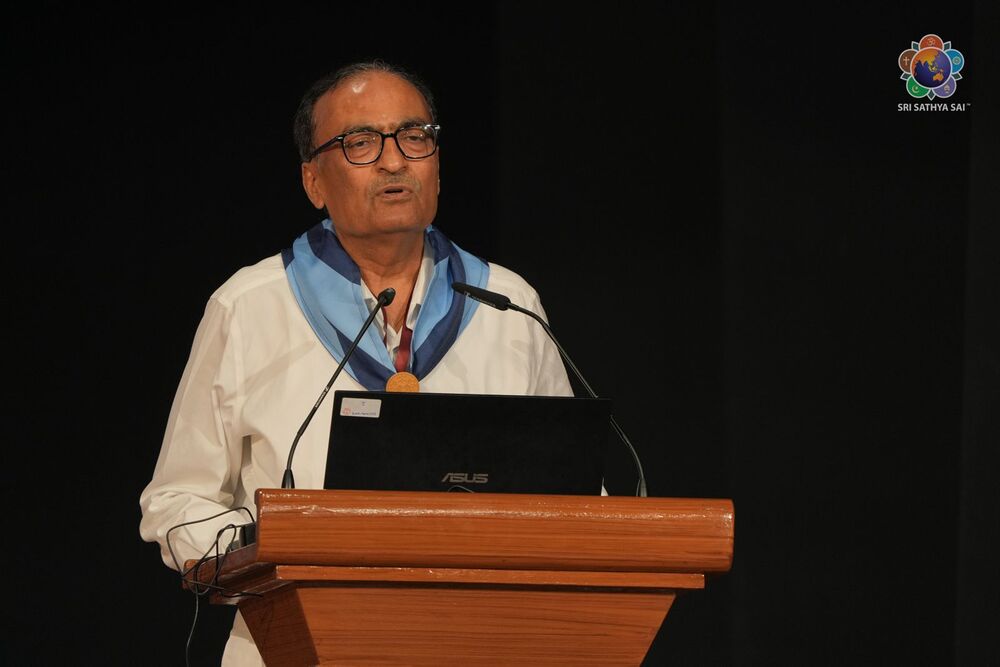
Read transcript 1,014 words
Om Sri Sai Ram. My humble pranams at the Lotus Feet of our beloved Swami, respected elders, and my dear Sai brothers and sisters.
First of all, let me thank our beloved Swami and all the organizers of this conference for giving me such a wonderful opportunity. Today, I will be speaking on the topic of mobile medical assistance and the comprehensive care program of the Sri Sathya Sai Seva Organization of India. Yesterday, we watched a video presentation on the first part, which covered the Sri Sathya Sai Mobile Hospital. Today, I will discuss the Sri Sathya Sai mobile vans—mobile clinics.
At the outset, I would like to mention that this project was very close to our beloved Swami’s heart. He used to say that food, education, and medical treatment should be the most fundamental rights of every human being, and that everyone should receive them regardless of caste, creed, religion, or socioeconomic status. Swami was very keen to establish a healthcare system that would reach the doorsteps of those in need. He further said that if a patient cannot reach treatment, it is our humble duty to bring healthcare to their doorstep and provide basic medical care.
Swami’s vision has manifested in action since 2006. We now have 87 mobile vans operating across 9 states of India. These states include Maharashtra, Gujarat, Goa, Orissa, Jharkhand, Tamil Nadu (South and North), and Telangana.
Let us consider how this program works. Our mobile vans travel to underserved areas with teams of doctors, paramedical staff, and sevadals. They conduct general medical camps on a regular basis, where they provide primary and preventive care to the needy. In addition to general medical camps, they also organize specialty camps periodically. These include ophthalmic camps, dental camps, blood pressure and diabetes checkups, cardiac checkups, cancer detection, blood donation camps, yoga and pranayama therapy, vibrionics, and more.
In the ophthalmic segment, our ophthalmologists travel with the mobile vans to provide primary eye care during these camps. Distribution of spectacles is a regular feature at every mobile ophthalmic camp, with help from local samitis. If a patient requires further surgical intervention, they are directed to the nearest Sri Sathya Sai Mega Hospital or to a local private ophthalmic facility with which we have established partnerships. The goal is to ensure that patients receive free ophthalmic surgeries when necessary. For example, in Maharashtra alone, 10,000 ophthalmic surgeries were performed last year, and the plan is to increase that number to 15,000 this year.
Similarly, dental camps are a regular feature in most mobile vans. Dentists visit sites to conduct thorough oral examinations and provide non-invasive dental treatments. Importantly, they also provide oral hygiene education to the local population using charts and demonstrations.
Most mobile vans are now equipped with basic investigative facilities such as certain blood tests, X-rays, and ECGs. If a patient requires secondary or tertiary care, our teams of doctors and volunteers help refer them to the nearest Sri Sathya Sai Mega Hospital, government hospital, or charitable institute. Every effort is made to ensure that patients receive free or highly subsidized treatment.
Mobile vans are especially valuable during festivals and at pilgrimage sites, where they provide basic medical facilities to thousands of pilgrims. Swami’s love reaches these pilgrims through the dedicated service of our volunteers. These vans are also crucial during disasters and epidemics—such as floods and earthquakes—providing primary medical care and distributing food packets and essential supplies to affected communities.
Additionally, mobile vans now serve special areas, such as Adivasi ashram schools, orphanages, old age homes, and shelters for beggars, where malnutrition is a significant issue. Here, in addition to primary healthcare, we provide high-protein supplements to help overcome malnutrition.
At many samitis where mobile van services are active, new initiatives have begun: bhajan centers, Bal Vikas classes, skill development programs, and mother-and-child care programs. Through these Sai activities, local communities are becoming aware of Swami’s love and care.
The applications of these mobile vans are truly multifaceted. If time permits, I would like to share a few miracles that have occurred through this program. Manifestations of Swami’s vibhuti from photographs and chairs are common at many camps. In a remote village, a 12-year-old child was critically ill, needing immediate medical attention. His father had no money for treatment or transport. They stood helplessly on the roadside, seeking help. At that moment, one of our mobile vans passed by, and upon seeing the child in distress, the doctors stopped to provide emergency care and arranged for his transport to a major center. The child received proper treatment free of cost. Swami sent the mobile van just in time, saving the child’s life.
Doctors and volunteers from Orissa report that their visits to remote villages occur once every 15 days, but villagers eagerly await them and do not seek other available medical facilities. The villagers treat the visiting doctors as God. The doctors also mention that their approach to patients during these camps—and even in their own private practices—has been completely transformed since joining the Sri Sathya Sai mobile vans.
Dr. Sunil from Goa shared a remarkable experience: during a medical camp, a patient presented with a rare condition that required a specific medication not stocked on the van. The team felt helpless, but miraculously, a volunteer found the needed medicine on the van out of nowhere. Dr. Sunil firmly believes that Swami himself manifested the medicine for the patient. Such miracles abound in this program.
Finally, let me conclude with some statistics. There are now 87 mobile vans operating across 9 states. A total of 7,872 medical camps have been conducted, benefiting nearly 800,000 patients. The cumulative number of doctors who have served is around 20,000, and there are also approximately 20,000 paramedical staff and volunteers. The total cost incurred in the last year alone is nearly ₹28,242,000. Many of these vans have been operating for four to five years, which gives an idea of the magnitude of work accomplished.
Thank you for your kind attention. Once again, my humble pranams at the Lotus Feet. Jai Sai Ram.
Conference Closing Remarks
Dr.Sundaresh Dabir
Read transcript 571 words
I offer myself at the Lotus Feet of Bhagawan. I would like to thank Swami for making this conference happen. To my knowledge, this is the first event of its kind. Thank you, Swami. Everything has gone according to your wishes, and I hope it has benefited everyone who attended.
Swami has stated that what truly matters is the process of any project, not merely its outcome. In that regard, I believe the process here has unfolded beautifully, with total cooperation between all the healthcare units under the Sri Sathya Sai Central Trust, the Sathya Sai organization, and all the participants present. We should give ourselves a standing ovation.
There were many sleepless nights as I thought about organizing such an event, and today I stand here with immense pleasure, seeing the level of participation. This event has truly been a success. With your support, we will strive to take the Sri Sathya Sai Healthcare Mission forward as best as we can, and I am sure that it will continue into the future.
As the managing trustee has mentioned, none of this could have happened without the help and support of each one of us. We all have a responsibility to serve society. By coming here, you have all joined this mission of Sri Sathya Sai healthcare. The only stop on this journey is where you serve your own patients.
I do want to clarify that the only place to serve is not necessarily the Sathya Sai hospitals. Service can be done wherever you are, following the same principles Swami has shared with us. That said, I would prefer that you also come here and serve with us, in addition to your work elsewhere.
During the afternoon session, we displayed the contact details of each hospital. Please feel free to contact us—by email, phone, or through your state medical service coordinators—to see how you can join us in service. Our doors are open. Whether you choose to serve full-time or on a regular schedule as a visiting consultant, your contribution is welcome. Of course, if many of you volunteered full-time, perhaps we could encourage the Central Trust to start even more hospitals.
At present, with our current infrastructure and manpower, we are operating at full capacity. If we had more people, we could certainly serve more patients. The managing trustee has always been very generous, never refusing funds for any hospital activities, and I am sure support will continue whenever it is needed.
Please take it upon yourselves to reach out and indicate your willingness to serve in these hospitals. The last two days have been a learning experience for me, and I am sure all of you have learned something new about the healthcare mission started by Swami. Many of you took notes during the sessions; I will not delve into those now but will share the proceedings with you via email for your reference and further reflection.
I sincerely thank all the speakers, guests, invitees, and most importantly, the delegates—because without you, this conference could not have taken place. I appreciate the effort all the speakers have put in, traveling from various locations to be with us, even for a short time, and for providing such valuable input for us to take forward.
Once again, I would like to thank the Sri Sathya Sai Central Trust for their continued support and thank Bhagavan as well.
Sai Ram to all.
Valedictory Address
Sri RJ Rathnakar, Managing Trustee
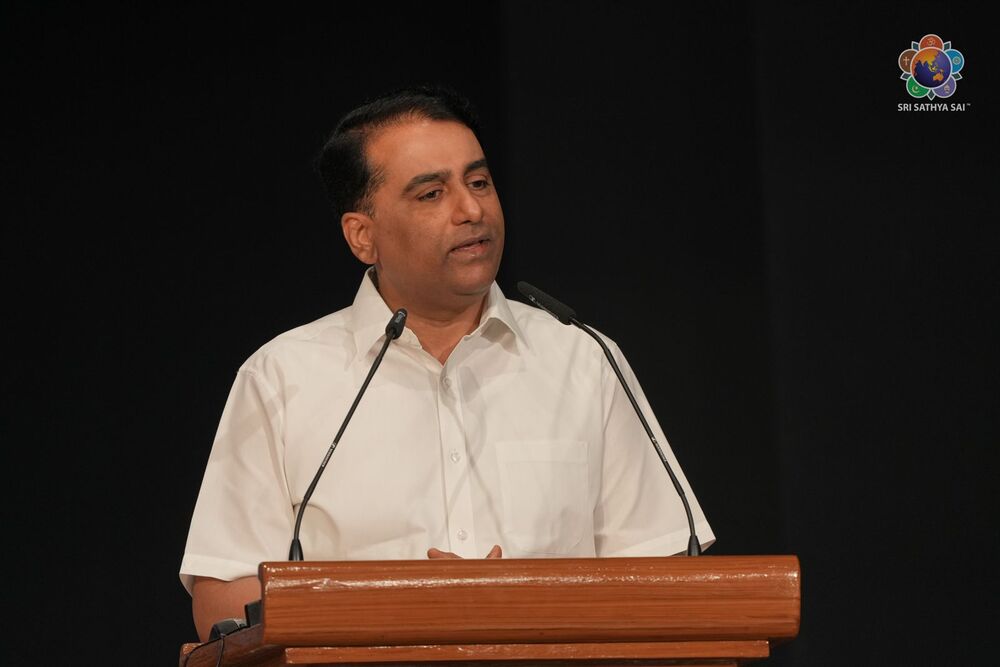
Read transcript 1,189 words
My prayerful salutations at the divine lotus feet of our beloved master, Bhagwan Sri Sathya Sai Baba.
Some of the attendees I spoke to said the conference is going well. The venue is beautiful with a very nice auditorium—cozy and well air-conditioned, which is especially pleasant after lunch. Delivering a speech at the end of a conference is always challenging. As I observed from yesterday’s inauguration, I think we are halfway there, maybe about 50%. I hope everyone is awake!
In 2011, after the Mahasamadhi, a very senior devotee and office bearer approached me. He told me, “Rathnakar, soon we may have to start charging in our hospitals. I don’t think we can continue as we are now.” This disturbed me. I went home and reflected—maybe experience tells him that changes are coming. It was unnerving to hear. I sat alone and prayed to Swami: “You have given us this responsibility. Whatever your will is, so be it.” Now, after 15 years, we are still going strong, and we don’t charge anyone. I deeply realize it is not we who run these institutions; it is Bhagwan himself, even now. That is what we all must remember.
I have no doubt, and with full faith I can say, this mission will continue forever. Sometimes it looks daunting when we review the numbers and approve budgets. For instance, in 2012 and 2013, the annual medical budget was one-third of what it is now—we are in 2025, and it has tripled. But somewhere deep inside, we are confident this work will continue, unhindered. This mission started by Swami back in 1954, when he laid the foundation for the General Hospital in Prasanthi Nilayam, will go on because it was established by the Avatar himself. Resources keep coming, often unexpectedly. Even when we feel we are up against the wall, Swami creates magic, pats our back, and reassures us: “Don’t worry, I am with you.” Things keep moving forward, as long as we have firm faith in Swami.
We have these wonderful temples of healing that Baba created. I remember back in 1991, when I was just a college student, I would stand quietly in the corners and listen in on conversations about the hospitals Swami was building. Some of those who came from England—designers of Buckingham Palace—also designed the Prashantigram hospital. Swami was involved in every detail, even insisting on lowering the ceiling height from 24 feet to make cleaning and maintenance easier in our context, saving on air conditioning and electricity costs. Swami guided every aspect, ensuring practicality and cost-effectiveness.
On Swami’s birthday in 1990, he promised that by November 22nd the following year, the first operation would be performed at the new hospital. Even the day before the inauguration, construction was still ongoing, but when the Avatar makes a promise, nature itself works to fulfill it. On November 22nd, Swami came, and as promised, four surgeries were performed in the beautiful new hospital. When Swami declares he will provide free medical care, it will happen; it will continue with that conviction.
Our institution needs support. Many patients arrive here from distant places with great hope, seeking care at no cost. We find it challenging to recruit specialists, especially in this rural area, and replacements can be hard to come by. I encourage all the directors and teams to keep dialogue open with doctors from outside and form networks of experts, both internal and external, to chip in where possible. I’m not just saying, “Come and help us”—when you join, you also receive the blessing of doing good work. Before joining MBBS, many of you aimed to become doctors to serve society, but at times, aspirations get blurred by systems and environments. Once in the profession, it can become more of a business, with profit driving the industry—half the world’s billionaires are from the pharmaceutical sector, selling medicines.
Swami created these hospitals as beacons of hope for those with no alternatives. The Sai Mission Healthcare model is crucial for this country, with nearly 300 million people unable to afford a square meal a day. If they struggle for food, how can they even consider visiting a hospital? That’s the gap our mission fills, serving those in desperate need. As the healthcare system becomes more corporatized and insurance-driven, it is essential to have an institution that successfully runs on selfless service. Swami started this mission to show that it is possible.
Unfortunately, hospitals and medical colleges are increasingly run by business people rather than doctors. Our scriptures tell us that Dhanvantari, the god of medicine, should be honored in hospitals, not jewelry shops. “Health is wealth” has been reversed to “wealth is health”—a distortion we must correct. Ancient Indian medicine knew the value of general and surgical care, as seen in stories from the Mahabharata and Ramayana, where doctors would even serve those from rival camps, emphasizing service to all.
Please use this great opportunity. I commend Dr. Sundaresh, Dr. Gurumurthy, Dr. Anil, and all their teams for organizing this important and timely conference—much needed and long awaited. Such gatherings inspire us, even if only five people leave inspired, the conference is successful.
I recall a personal moment: once, Swami had a fever but insisted on going out to see devotees, saying, “What else do I have to do, if not see my devotees?” Just as God needs devotees, doctors need patients. Patients give your profession purpose and opportunity. Always serve them with love. Swami wanted people to feel comfortable and reassured in his hospitals, believing that half a patient’s illness is cured by entering a place of peace and care, free from financial stress.
In times like COVID, people faced tremendous burdens, not only grief but huge bills. In Sai hospitals, there is hope for those who have nothing, and we must never deny that hope. To work in medicine, you must love humanity. Fill your hearts with love; smile genuinely at patients, and give them a sense of ease and comfort. Sai Mission treats those in absolute need—so reach out and support the mission, let this work continue.
Doctors often have specific requirements for equipment, and even if it costs more, we strive to provide what is needed. Our only expectation is the best possible healthcare for patients—the true stakeholders. Even our mobile hospital is doing tremendous work, with further improvements planned. Preventive healthcare begins at home: hygiene, sleep, and healthy habits. Swami always told our mobile hospital doctors to teach villagers about hygiene and wellness.
Let’s also welcome practitioners of Ayurveda and other traditional systems to collaborate, even if we don’t have full departments yet. This conference has been fruitful and will strengthen the Sai vision and medical mission. By Swami’s grace, we will go from strength to strength.
When someone asked Swami what the reward for service was, he replied: more service. That is the blessing—more opportunities to serve. Remember this always.
Thank you for your participation. Take care of yourselves, and I wish everyone a safe journey back—most of you have to return to your hospitals tomorrow. Please keep coming back and supporting Swami’s hospital. Thank you.
Also in the playlist
4 further recordings in the conference playlist that the proceedings document does not link to.