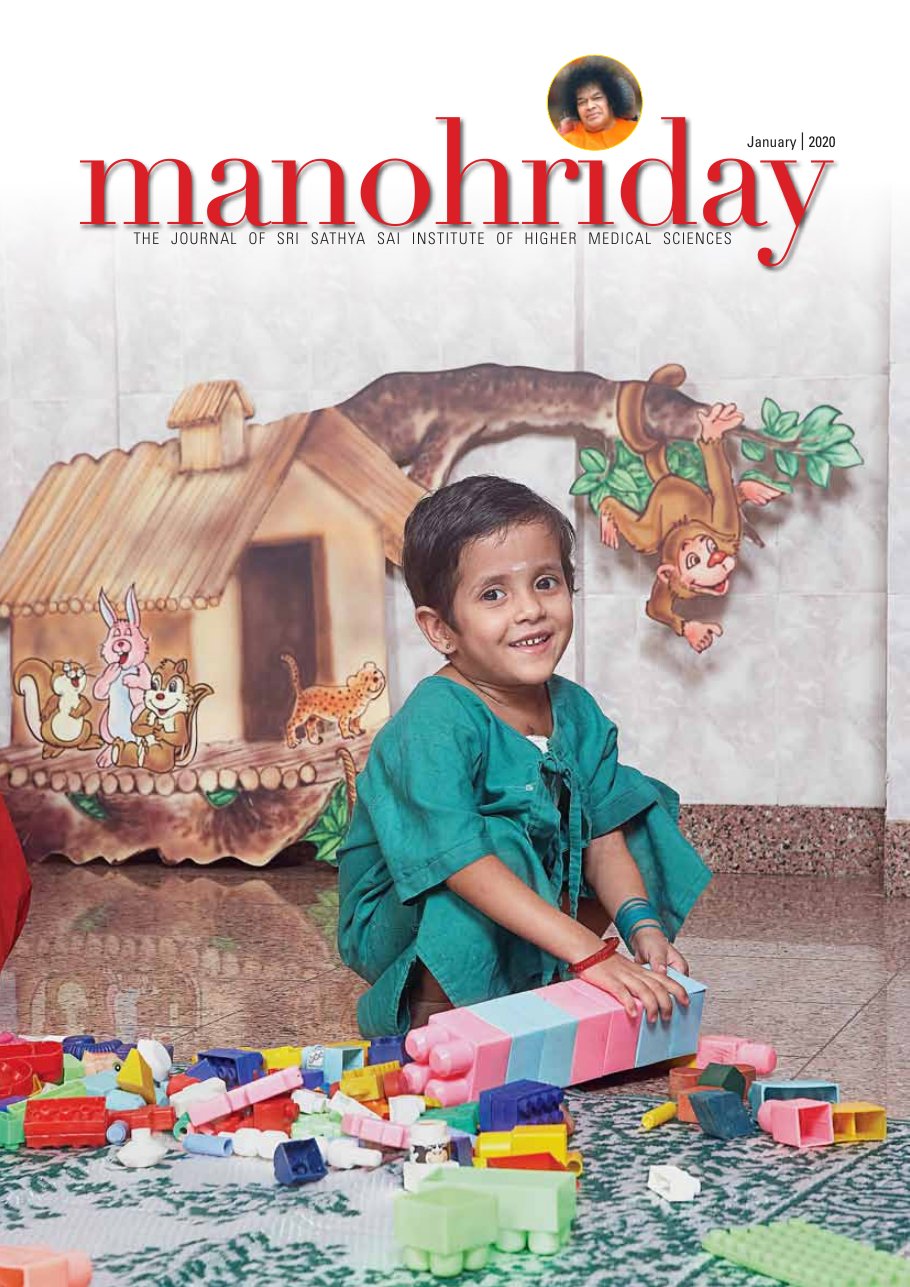
The journal of SSSIHMS · January 2020
Manohriday
the annual journal of Sri Sathya Sai Institute of Higher Medical Sciences, Whitefield.
- Issue
- January 2020
- Published by
- SSSIHMS, Whitefield
- In this issue
- 20 sections · 80 pictures
- Print edition
- 32 pages
Manohriday · page 2
Opening pages
You will certainly find the spread of patient stories inspiring. Watch the tender heart of a four-month old baby be mended by a capable surgeon. Read the testimonials of a senior citizen, who is awestruck by the treatment received at the Institute. Behold the devotee couple, who witnessed a flow of grace over them soon after an accident. Watch a driver shed tears of joy as he regains his vision under the skillful hands of an eye surgeon.
Dear Readers,
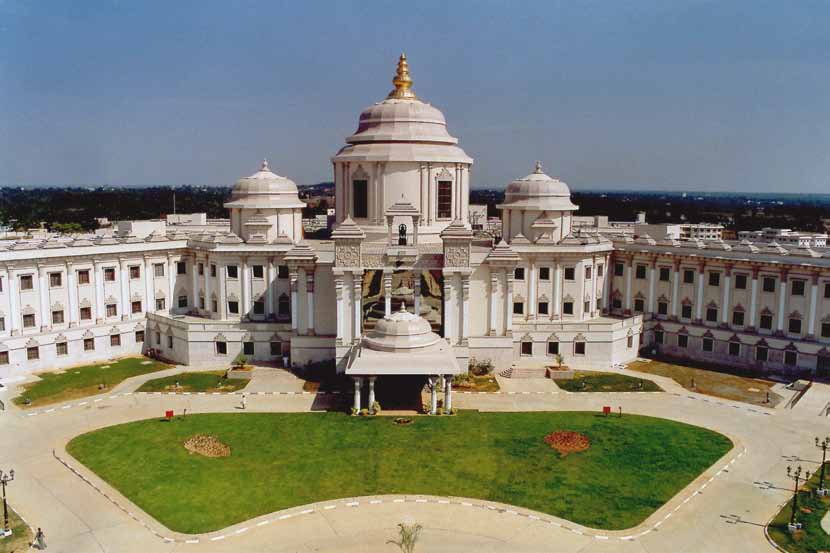
Sri Sathya Sai Institute of Higher Medical Sciences, Whitefield completes nineteen years in existence! Technically, it has now outgrown the teens and marches onward and upward with courage, confidence and a strong value system, ingrained by its Founder.
A lot has happened in the last one year, which we have tried to capture yet again through the annual newsletter, Mano Hriday. In this issue, we bring to you a conversation with the new Director, Dr. Shekhar Rao, a skillful
Manohriday · page 2
Editorial
The Institute continues to be in the forefront of physician education, as validated by two DNB gold medals its students have won in the last year. Read also about the conferences, academic sessions and collaborations with other clinicians from across the world.
As the Institute celebrates the 19th anniversary, all of us eagerly await what is due to come in the 20th year of its existence, in 2020. Join us in the journey – onwards and upwards!
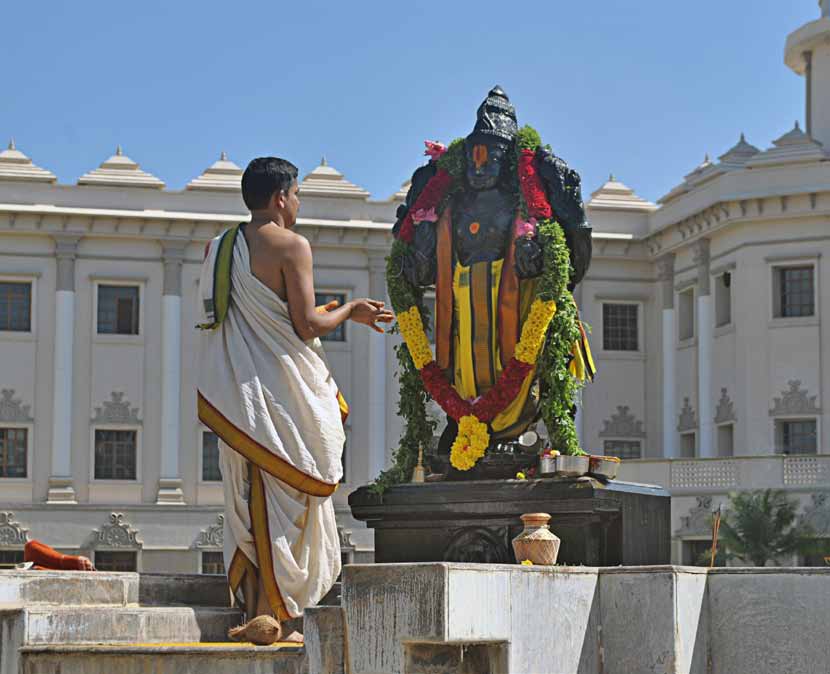
– The Editors cardiac surgeon, blessed with decades of proximity to Bhagawan.
The year also marks the 10th anniversary of the Sri Sathya Sai Seva Samithi, Whitefield. Read about the background of the Samithi in the ‘Focus’ section.
Listen to what the peers, colleagues and students of Dr. P.K. Dash have to say, as we bid farewell to him.
We are certain you would find interesting the story of the Neurologist, who was literally drawn to work at SSSIHMS, Whitefield.

Manohriday · page 4
Message from the Director
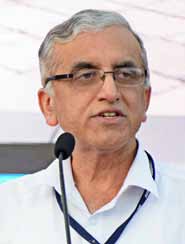
Dr. Shekhar Rao, Director, SSSIHMS, Whitefield, Bangalore
Manohriday · page 4
Excerpts from the Director’s speech delivered on the occasion of the 19th Anniversary Celebrations
Om Sai Ram
On the occasion of the 19th anniversary of our Institute, we have a reason to celebrate and express our gratitude to all those who have made the achievement of this milestone possible.
Our heartfelt gratitude to Bhagawan who has provided us this magnificent environment in which to work, live and experience His grace. Due to this, we all have a sense of working and living as a large, close-knit family.
We are extremely grateful to the Sri Sathya Sai Central Trust, which reposes confidence in us and provides us with guidance, encouragement and resources.
I wish to remember and thank all the previous Directors, Dr. A.N. Safaya, Dr. A.S. Hegde, Dr. Swarna Bhardwaj, and Dr. D.C. Sundaresh, for their initiatives and stewardship, which has brought us this far.
I would also like to acknowledge the invaluable contribution of the Sri Sathya Sai Seva Organization, which provides us Sevadal volunteers, and members of the larger Sai family including our Counsellors, who render loving and selfless service.
We wish to place on record support provided by various government agencies such as BESCOM, and Customs department; we are privileged to have with us Shri Nagendra Kumar, Principal Chief Commissioner of Customs, Bengaluru zone who kindly consented to grace this occasion.
Our sister Institutions namely Sri Sathya Sai Institute of Higher Learning, SSSIHMS-Prasanthigram and the two Sri Sathya Sai General Hospitals, always give us support and a feeling of kinship for which we remain deeply grateful.
We feel a sense of joy and gratitude for being a part of the grand medical mission envisioned by Bhagawan. Over 15 lakh patients have been seen in our hospital and close to 68,000 cardiac cathlab based interventions and diagnostics, 27,000 cardiac surgeries, 30,000 neurosurgeries have been performed and all of these, completely free of charge. Undoubtedly, the hospital has endured for two decades and proved that such a model is both necessary and viable.
The Sri Sathya Sai General Hospital, which moved here in July, 2016, has added greatly to the medical resources that we can offer to our patients under one roof.
It is not just about numbers but how, providing the most modern medical care in a spirit of love and grace, produces results, which are truly miraculous.
I share now some of the major improvements in the Institute during the last couple of years.
Major developments have been made in Ophthalmology, Radiology and Anesthesia. Many other departments like Obstetrics / Gynecology and Laboratory have received significant investments in new equipment to keep them abreast with the latest equipment, which is available in other good Institutions.
The introduction of Microsoft Navision ERP system is a new development to optimize resource utilization. Environment-friendly initiatives this year include continued investments in rain-water harvesting, in solar water heaters and planting sacred Rudraksha trees.
In academics, like in previous years we have achieved a 100% pass percentage and with two of our DNB students in Neurosurgery and Cardiology being awarded gold medals. This takes the tally of gold medals to 8 for the Institute.
Similarly, in the Nursing and Allied Health Sciences College we have a 100% pass percentage for the nursing & paramedical courses.
More than thirteen research projects are being pursued by cardiology, cardiac surgery, neurosurgery, orthopedics, radiology, anesthesiology and gynecology.
Apart from research, seven conferences were held in SSSIHMS during the year. SSSIHMS was represented at RSNA by the Radiology department, where a total of twenty-four educative presentations were made. There have been 26 publications in peer-reviewed journals, apart from 36 presentations in national and international conferences by the faculty.
In terms of staff training, a total of 621 certificates were provided from American College of Cardiology for ACLS and BLS certificate courses. Also, advanced ICU training in neuro and cardiac critical care by faculty of The Johns Hopkins Hospital, USA. All the senior nurses in the Institute have undergone this training.
In conclusion, I wish to convey that while we may have every reason to celebrate the successes we have achieved in a particular area, we have to be ever vigilant against complacency creeping in to our work and not accept any decline in the volume or quality of our work or in the attitude and manner of dealing with our patients or colleagues.
Bhagawan has always exhorted us to ask ourselves if we are giving our very best in the areas of our responsibility, and this is a daily practice we should take up.
Above all, we have to work as a team with high morale, where we understand and support each other and maintain an atmosphere that generates creative ideas and leads to constant self-improvement.
Finally, we should always be grateful to Bhagawan for the opportunity given by Him and constantly try and be worthy of His Grace. We pray to Bhagawan to give us the strength to carry forth the Mission He has graciously allowed us to be a part of.
Report · pages 5–6
19th Anniversary Celebrations
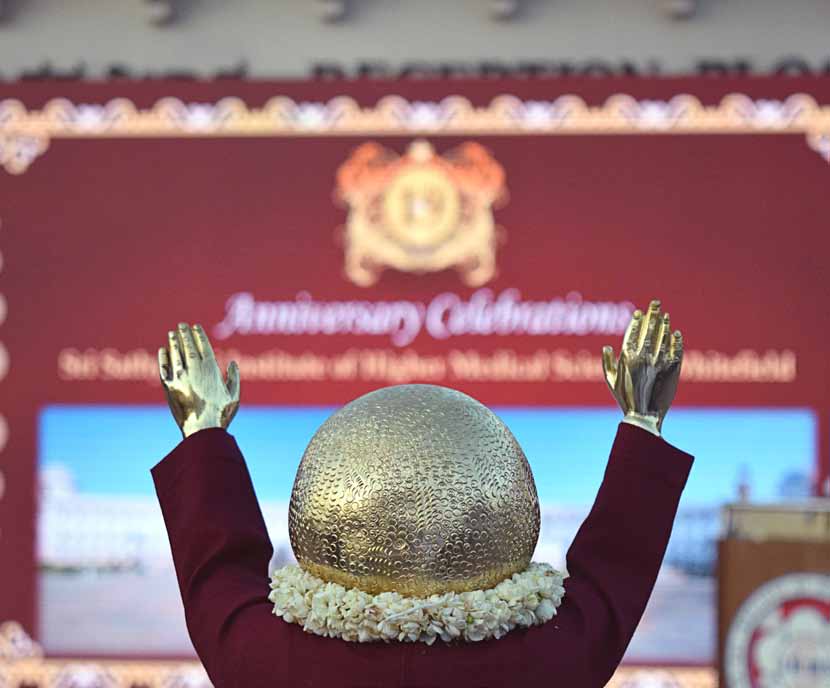
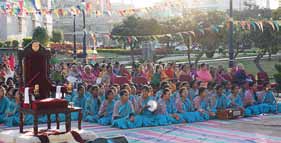
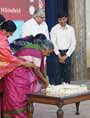
Sri Sathya Sai Institute of Higher Medical Sciences, Whitefield was all decked up for the 19th Anniversary Celebrations held at the Institute on the evening of 17-Jan-2020. The Director welcomed the gathering, including the chief guest for the event, Shri D.P. Nagendra Kumar, IRS, Principal Chief Commissioner of Customs & Central Taxes, Bengaluru Zone.
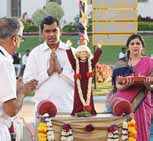
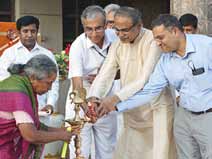
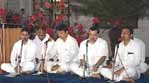
The program formally started with bhajans, lamp-lighting by the dignitaries, and an invocation. After the introduction by Sri V. Praveen, Special Assistant to the Director, the Director Dr. Shekhar Rao delivered his welcome address. This was followed by an address by the chief guest, Shri Nagendra Kumar. In his talk, he highlighted that the Mission of Bhagawan to provide high-quality tertiary healthcare totally free of cost is one of the noblest of endeavours we have witnessed in his lifetime. He said that be it in the area of education or providing healthcare, Swami’s blessings have been in abundance. He also highlighted that with the crucial role of strength in collective action to continue His Mission and applauded the contributions of all the staff in fulfilling their responsibilities to the patients with devotion.
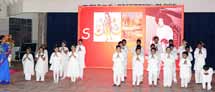
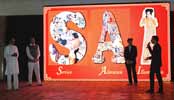
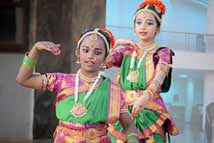
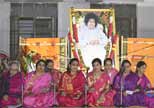
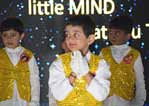
The formal speeches were succeeded by a cultural program put up by the staff and their families, bringing out the unique aspects of healthcare in Sai Institutions through a cultural presentation titled “Sai – the Way, the Truth and Life”. The takehome message was that while hospitals treat only the body, which is a small fraction of the experience of who we are, the activities prescribed by Bhagawan and integrated into the daily life of every devotee promote health of the mind and spirit too; this is an ideal and holistic model of ensuring public health, tightly integrated with our own spiritual growth.
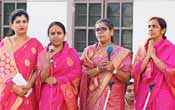
The program concluded with Mahamangalaharathi followed by prasadam dinner. Following are a few glimpses from the colourful evening.

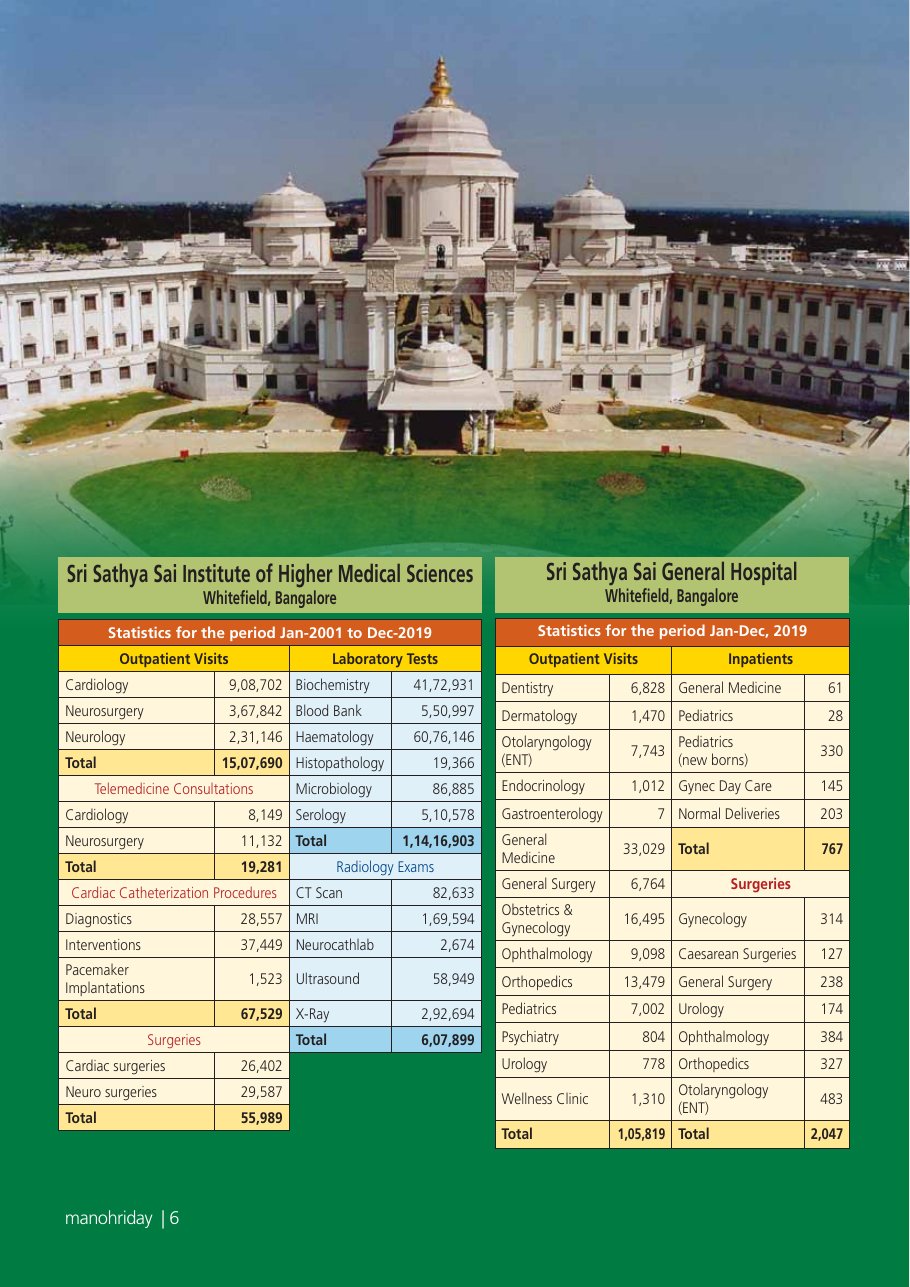
Statistics for the period Jan-2001 to Dec-2019 Outpatient Visits Laboratory Tests
Cardiology 9,08,702 Biochemistry 41,72,931
Neurosurgery 3,67,842 Blood Bank 5,50,997 Neurology 2,31,146 Haematology 60,76,146 Total 15,07,690 Histopathology 19,366
Telemedicine Consultations Microbiology 86,885
Cardiology 8,149 Serology 5,10,578 Neurosurgery 11,132 Total 1,14,16,903
Total 19,281 Radiology Exams Cardiac Catheterization Procedures CT Scan 82,633
Diagnostics 28,557 MRI 1,69,594 Interventions 37,449 Neurocathlab 2,674 Pacemaker Implantations Total 67,529 X-Ray 2,92,694 Surgeries Total 6,07,899
Cardiac surgeries 26,402
Neuro surgeries 29,587 Total 55,989 Total 1,05,819 Total 2,047
Patient Story · page 7
A Tender Heart Beats On
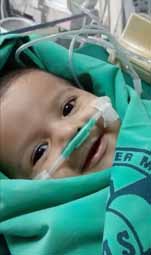
Swapnil Tambe and his wife Mohini hail from rural Pune. Swapnil is a farmer, growing crops like potatoes, jowar and bajra. Like the majority of other farmers, he relied on the annual monsoon for a good yield. Swapnil married Mohini in 2014 and for four years, they were without children. It was after earnest prayers to their God of choice that they received the news that Mohini was pregnant with their first child. Their happiness knew no bounds, but it appeared short-lived. In the seventh month of pregnancy, a routine ultrasound test revealed a problem with the child’s heart. The doctor seemed to indicate the baby’s heart was having an anomaly.
Hearing the news, a few family members advised them to abort the baby. Swapnil was adamant that if God did decide to bless them with a child, then He would also ensure the child is taken care of.
Mohini was admitted in a Government hospital in Pune and gave birth to a boy on 20 Aug 2019. It was a natural birth and the baby was a bundle of joy, albeit with what seemed like a time-bomb ticking under his tender chest. It was under monitoring in the neonate ICU for close to two weeks. The echocardiogram revealed the condition to be TGA (Transposition of the Great Arteries) with VSD (ventricular septal defect) and PAH (pulmonary hypertension).
They were referred to a higher centre and were told their days’ old child needs to undergo a surgery, without which the chances of its survival were slim. The cost of surgery was estimated at Rs.5 lakh, which was way beyond the little family’s means, but Swapnil was determined to do whatever it takes to give their first child the best treatment possible.
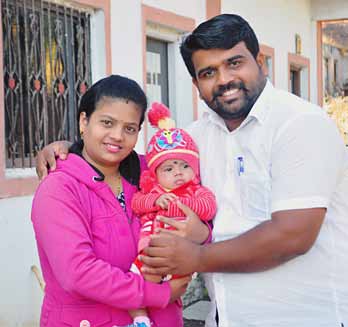
They shared their predicament with a close relative based in Bangalore, who was Baba’s devotee and used to execute some civil works at Baba’s hospital in Whitefield, Bangalore. He shared the reports with the cardiologists, who opined that the baby could be brought to the hospital after a few months.
In September the baby, not yet formally named but called Shivananda, was carried into the hospital, in the safe embrace of his mother. “Baby of Mohini” was what he was registered as. The parents were overwhelmed by the grandeur of the hospital, and felt reassured when they met the pediatric cardiac surgeon, Dr. Shekhar Rao, who assured them that the child could be safely operated in Baba’s hospital. They were requested to come back in November, when the baby put on some weight.
They reached the Hospital at the appointed time but it was not smooth sailing. The baby was diagnosed with infection, which would increase the risk of surgery. They were advised to see a pediatrician. After a few days, when the infection settled down, Mohini’s father fell ill and they had to rush back to their hometown to attend on him. Swapnil and Mohini were both in tears. They seemed so close to relief, and yet so far.
Swapnil and Mohini returned to SSSIHMS with their child towards November end after Baba’s 94th Birthday Celebrations and on Dec. 15, the child got operated.
Dr. Shekhar Rao, pediatric cardiac surgery, who operated on the child, explains the condition and what goes into the surgery. “TGA leads to problem of oxygenation and lung damage due to high pressures, heart failure and poor natural survival, if left untreated. But with surgical correction, there is a great chance of the child having a virtually normal life. It transforms the condition from no hope of survival to one with potentially a normal life, and it’s a more involved operation with higher risks.”
After a successful surgery, which took over 6 hours, the baby of Mohini was moved to the ICU under the watchful care of anaesthetists and nurses. In such cases, it is not just the skillful hands of the surgeons but also the care of the ICU staff that governs how soon the child goes back home hale and hearty. With Baba’s grace, the child continued to rapidly gain in health and recovered well enough to withstand the journey back home.
Tears were trickling down the parents’ cheeks, as they narrated their experience at the hospital, speaking eloquently about the gratitude they have towards Baba and the temple of healing, which gave their child a new lease of life.
Swapnil and Mohini are just one out of hundreds of parents, whose children are brought in blue and undergo a surgery and go home in the pink of health. However, at SSSIHMS numbers do not matter and every one savours the sense of accomplishment and gratitude we owe to be working at this unique Institute.
Patient Story · page 8
Beneficiary of Baba’s Blessings
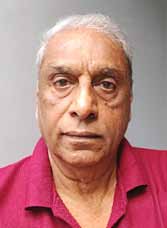
I have been ailing with heart disease since 2015, when I first underwent an angioplasty in a private hospital and had three stents implanted in my left artery. Though it provided a temporary relief, in less than a year I had severe symptoms and ended up going to the hospital again. One year, one angiogram and one more angioplasty later, I perceived myself only 30-40% efficient at work. The doctors who saw me said there were still some blocks in the vessels supplying blood to the heart but that these cannot be addressed surgically.
I was getting apprehensive as doctors in private hospitals seemed to treat patients as means of profit for their business. I could sense there was less accent on real healthcare of the patient and hence he does not get a total cure.
After some time I could not even walk for 15 minutes. Frustrated with private hospitals, I was on the lookout for another doctor. It was complete chance that a friend of mine told me about Sri Sathya Sai Institute of Higher Medical Sciences, Whitefield and I decided to visit this hospital.
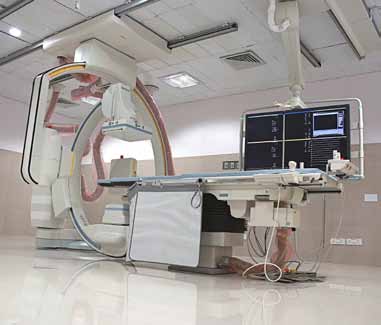
It was a totally different experience entering the hospital. There was an all pervading feeling of simplicity, love and service to humanity within the portals of the hospital. The very fact the hospital offered free treatment and that nobody talks about money was overwhelming. You don’t see such an atmosphere anywhere. Though not a rupee is charged, the hospital matches with any private hospital in terms of architecture, cleanliness, hospital facilities and equipment.
The doctors are so easily accessible and talk to you with a smile and compassion, which is a rarity in private hospitals. The diagnosis is honest and the treatment regimen is forthright and straightforward. All treatments come immediately and attended by teams of doctors and nurses, who are highly qualified with professional ethics and approach.
The patient very soon gets into a comfort zone that he is in the right place under the right hands, which itself is half the cure. The hospital staff consists of many service oriented volunteers who are always there to help you. The sisters and other support staff are also very professional and you don’t see anyone lagging in providing you good care and service.
Now I walk with the comfort that there is no serious concern about the condition of my heart and that I will
nurse myself back to fitness in a few months, thanks in full to the confidence instilled by the doctors in your hospital.
Overall, I see the hospital has the latest equipment, dedicated doctors and nurses who provide excellent care in a highly clean and well maintained atmosphere, where you see Baba’s blessings pervading all over and the people designated to manage the facility carrying forward Baba’s desire to provide yeoman service to the poor and sick persons and nurse them back to health at no cost, doing a great service to mankind.
It is an unbelievable service and a boon to the poor who cannot afford exorbitant hospitalization costs. It is a great gift to mankind by Baba who loved his disciples and blessed them to live healthily and happily.
I am blessed to be a beneficiary of Baba’s blessings.
“If disease has not discriminated between the rich and the poor, who are we to?” Baba.
Following is a testimonial from Sri S.G. Balaji, a 72-year old engineer, with vast experience in the design of on-shore and off-shore oil drilling rigs and has been a consultant to reputed companies such as Mahindra & Mahindra, Essar and
Jindal group. While he might have had the means to afford treatment at a private hospital, he shares his frustration with private hospitals and how Baba’s hospital stands out as a beacon of hope for everyone.
Sri Balaji walked into the hospital cardiology outpatient department with uneasiness
and mild chest pain. After examination and found to be having high blood pressure, he was immediately admitted to the CCU for observation, subsequent angiogram and discharge, after incorporating changes in his medication. In his own words, here is what he experienced at the Institute:
Patient Story · page 9
Doubly Blessed
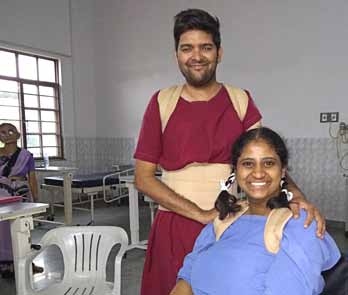
When they boarded the bus bound for Bangalore on Saturday night, little did the couple Jayantha & Deepika know what was in store for them. They were returning after attending Jayantha’s niece’s wedding in Sagar and were getting ready for the week ahead.
Both Jayantha & Deepika were Baba devotees and school teachers, with experience in counselling and hypnotherapy. Jayantha first came to Swami in 2002 and, given his inclination for music and singing, soon became part of the Brindavan Bhajan group in 2003. He was blessed to have sung in the physical presence of Bhagawan many a time.
Deepika had attended Balvikas, studied in a school run by Swami’s devotees and had visited Parthi every year during her school days for Baba’s darshan. She had been serving regularly at Baba’s super-speciality hospital even before their marriage in 2011. After marriage, they were staying close to the Brindavan ashram and were both active in the service and spiritual activities in the ashram.
Back to the bus journey. Early Sunday morning, after the bus crossed Tumkur, they were jolted awake from their sleep by a defeaning noise. The bus came to a screeching halt and both were thrown up a few inches into the air.
Deepika recalls the accident vividly: “The bus was going at a good speed, when it hit a trailer. I recall the noise of the windshield breaking. We literally flew up and I heard something crack in my back and left foot. I realized I was unable to sit up.”
Jayantha adds, “We realised we suffered a fracture in our backs. We were moved by some strangers in their own vehicles to Tumkur district hospital. Meantime, we called some Sai Youth members, who rushed to the hospital, along with members from the Brindavan bhajan group and also our school colleagues. However, due to lack of facilities there on a Sunday morning, we were moved to MS Ramaiah Hospital.”
Though they were in severe pain, Swami’s grace seemed to have softened the blows and provided them the presence of mind to deal with the situation.
“Between us, we had barely any money in our bank account and no health insurance. We both have aged mothers, who could not take care of us. Upon our request to the hospital authorities, we were moved to Swami’s super-speciality hospital in Whitefield on Sunday night. From then on, Swami’s grace completely took over,” Deepika says.
After the preliminary diagnostics, the doctors at SSSIHMS-Whitefield found identical fractures in the L1 region of the spine. Additionally, Deepika had fractured her left foot. Both their spine surgeries were performed by the Neurosurgery team, and Deepika’s left foot was operated upon by an Orthopedic surgeon.
Jayantha recalls his frame of mind after surgery, “I was having trouble sleeping and was fearful, but Swami came in my dream, and gave me a lot of strength through His presence. Through visualisation, I was able to connect with Swami at a much deeper level and I was cured of my sleeplessness and fear. Soon after this, my healing was quick and remarkable.”
Deepika adds, “After my first surgery, I had an infection in my back. I underwent a second surgery and was on a dose of antibiotics for two weeks. After a total of one month & two weeks of stay, I was discharged. I consider this experience as Swami’s gift. Swami made sure I got back on my feet and can continue to do service to others,” she adds.
“It was an amazing experience of receiving treatment, where I had previously served. Even if I were in a hightech hospital with a personalized suite, I do not think I would have received the love and care that I received at Swami’s hospital. The doctors, nurses, physios and even other patients encouraged me and gave a lot of support. I cannot forget that there were so many elderly Sevadals who had taken care of us, just like their own children,” she adds with emotion in her voice.
Now, close to one year after the accident, both Deepika and Jayantha are fit enough to ride a two-wheeler. Jayantha continues to be part of the Brindavan Bhajan group and Deepika aspires to return to the hospital to serve patients, as she used to do.
“We cherish our time at the hospital and deeply grateful to the selfless doctors, nurses, staff and Sevadal at the hospital, who nursed us back to good health,” echo Deepika and Jayantha.
Patient Story · page 10
Tears of Sorrow...To Tears of Joy
Mr. Mohammed is a 56-year old cab driver from Calicut, Kerala, with 37 years of work experience as a driver in the Gulf. He migrated there in his late 20’s, like many of his cousins, leaving his wife and young daughter behind. They were settled in a remote village on the outskirts of Calicut town.
He returned from the Gulf around 3 years ago for a vacation. His intention was to spend some time with his family and return. However, he developed some health issues, which made him postpone his return. He underwent plastic surgery on his leg, related to his 20-year old history of diabetes. Simultaneously, he developed problems with his vision. Recently diagnosed as hypertensive, Mohammed’s health was turning out to be worrisome.
All of a sudden, the vision in his right eye slowly started deteriorating and within two months, he turned practically blind in that eye. The doctors he consulted told him that he had a problem with the retina in his right eye, and that he was also likely to experience a similar problem in his left eye. As advised by local doctors, he underwent laser treatment in both eyes in a private hospital. Sadly, he completely lost vision in the right eye.
As predicted, the vision in his left eye also started deteriorating and reduced by 80%. In a lot of stress, Mr. Mohammed visited three other doctors and all of them seemed to unanimously say that he needed to undergo an urgent retinal surgery to prevent loss of vision in his only remaining eye. With no other options, Mr. Mohammed consented to the surgery.
He recalls, “The surgery was completed and the surgeon told me that I would be able to see light within 24 hours after surgery. When I opened my left eye in anticipation of sight 24 hours after surgery, imagine my shock when I realized I could not see anything. I was told to wait for one week; I waited patiently and with a lot of hope, but I had no luck. One week became one month, and one month became eight, but there was no sign of vision. Eight months passed like this where my vision in the left eye deteriorated to just 5-10% vision. It was a very frustrating and hopeless situation. With the help of my family and friends, I consulted no less than 17 private hospitals in this time period, both in Kerala and Tamil Nadu. Since without eye-sight I cannot take care of the family, I had taken loans from friends to pay for the treatment.
Through a friend, whose daughter was treated at the Sri Sathya Sai Hospital,Whitefield, Mr. Mohammed came here for the first time in September, 2019. “My wife held my hand and led me to Dr. Kavitha. She examined me and within half an hour of meeting her, she performed a laser treatment on my left eye and advised me to come again after 2-3 days for a repeat laser procedure. After the laser treatment, she advised I would need to undergo a surgery,” he recounts.
Dr. Kavitha explains that Mr. Mohammed had an advanced diabetic eye disease, affecting the retina in both eyes, with the right eye having proliferative diabetic retinopathy with neovascular glaucoma and consequent damage to the optic nerve. Left eye also had extensive retinal traction due to proliferative diabetic retinopathy and total vitreous haemorrhage.
“My left eye surgery was done on 26 October 2019 and within 4 days after surgery, I was so relieved that 50% of my vision in one eye was restored. Prior to surgery I was unable to recognise faces and was dependant. After surgery I am able to see and am independent.
“After coming to the Sri Sathya Sai Hospital, I am very happy. The doctors have taken a lot of pains to restore my vision and keep calling me to enquire about my vision.
“As a surgeon, it is a fulfilling experience that with the training we have received and with the infrastructure made available to us by Bhagawan’s immense grace we are able to turn around patients’ lives,” adds Dr. Kavitha.
“Previously, I did not have the vision to even see her, but thanks to her treatment, I am now able to see her and thank her in person. I am also able to appreciate the beauty of this magnificent hospital. I am deeply indebted to the hospital and to her for providing me a new ray of hope by giving me vision. I came in shedding tears of sorrow and am walking back with tears of joy,” says Mr. Mohammed choked with emotion.
Conversations · page 11
Dr. Parth Sarthi Deb
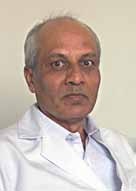
Mano Hriday: Dr. Deb, could you please share your personal background with our readers?
Dr. Deb: I was born in Calcutta to deeply spiritual parents. I was raised in Jabalpur, Madhya Pradesh, where I did my schooling and higher education (till MD) and later did my DM from CMC Vellore. I joined Apollo Hospitals, Hyderabad in 1990, and had a brief stint abroad in Saudi Arabia from 1994-95 and in Apollo Hospital Sri Lanka from 2002-07. Later, I took up a faculty position at IIIT, Hyderabad, and taught Cognitive Neuroscience. My last job was as a Director, Neurology at GNRC Medical, Guwahati till Aug., 2018.
MH: Could you share a little more about your spiritual leanings?
Dr. D: My parents, especially my mother, were very spiritual and that was a major influence in my childhood days. I was introduced to Transcendental Meditation in 1980 during my first year of MD. Soon after meditating, I lost control over my “free will”. A total surrender freed me from the burden of planning for the future. That is perhaps the beginning of what led me to join this Institute.
Going back further in time, my ancestors were sent from the Vijayanagara Empire (present Karnataka) to Bengal to prevent the declining practice of Hinduism. The first Durga Puja was celebrated in Calcutta in 1757 to mark this occasion.
MH: Have you heard of Baba earlier? Did you have His darshan?
Dr. D: I was always connected with Baba indirectly, but never had an opportunity to see him in the physical form. My wife, who is a cardiologist, had an opportunity to visit Puttaparthi in 1992, to attend a doctors’ conference at SSSIHMS-Prasanthigram and my sister had visited several times to offer seva.
While I was in Sri Lanka, I was treating late Lakshman Kadirgamar, the foreign affairs minister of Sri Lanka, who was an ardent devotee of Bhagawan, and he used to share with me many miracles from his life involving Swami.
A story of Major General Tyler told to me by one of my students is not well known to many. He turned into a devotee of Bhagawan, after his driver was raised to life after death in an accident in the Himalayas. Bhagawan guided MG Tyler in a dream to discover Patal Bhuwaneswar, a cave where Mahaavatar Baba meditated near Pithoragarh town in Uttarakhand.
There were quite a few patients who were guided in the dream by Swami to see me for treatment. Swami knew me all along but the time has come now for me to spend some time in the Institution founded by Him.
MH: What do you think drew you to this Institute? Dr. D: Modern medicine has emerged as the most effective way of treating emergencies and many untreatable diseases that were not possible to treat before. The cost of care has also gone sky-high with progressive advancement. With overburdened and poorly equipped State hospitals, private setups have mushroomed with underlying pressure to practice unethically.
After discontinuing practice in Guwahati, I was doing an online Homeopathy Diploma from Hyderabad. One day while meditating, I requested Maa Kali to send me to a noncommercial spiritual hospital. I was expecting to be sent to some ashram in the north, but I never expected to be guided to this hospital! My prayers have been more than answered.
MH: Could you narrate how you actually joined SSSIHMS-Whitefield?
Dr. D: In January 2019 I visited Bangalore to stay with my son, who is working here. My daughter in law took me to several temples and suggested I visit Sri Sathya Sai hospital which is walking distance from her home. I had not heard about this hospital before.
One fine day, I just walked down to the hospital, looked around the Neurology department and met the Director (then Dr. Sundaresh). I told him that I had taken a break from my practice in Hyderabad and enquired about positions available in the department. He told me that there is a vacancy and he wanted me to think about it.
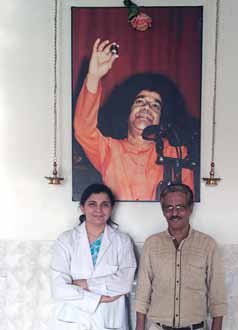
I told Dr. Sundaresh in the Director’s office that though Baba’s physical form may not be around, I firmly believed that Baba is always there to guide us. He asked me to turn back to see Baba’s photograph, which was flooded with divine vibhuti. It confirmed my belief!
On the day of the interview, I was waiting outside the Director’s office opposite Swami’s altar. There was a sudden shower of blessing that emerged from the photograph and entered my heart. I knew that the selection was over and only formalities were awaiting.
Swami has become my Guru, guiding my spiritual journey and taking care of all earthly needs. I do not feel like moving out of this divine milieu. When you totally surrender to Him, everything happens spontaneously without any planning or effort. I have very dear colleagues, who are also deeply spiritual and together, we get to serve the patients to the best of our abilities, invoking His grace.
MH: How do you find the environment here? Dr. D: This is a temple of healing where modern medicine is practiced with divine grace. All doctors, nurses, and staff are highly dedicated and treat patients with empathy, which is clearly reflected in the outcome of all types of illness, never experienced before.
Dr. Parth Sarthi Deb joined SSSIHMS in April 2019. His story is unique in that though being a neurologist with decades of experience, he was inherently dissatisfied with the commercialization of
medicine in private hospitals. His conversation goes into his spiritual background and how he finds Sri Sathya Sai Institute of Higher Medical Sciences, Bangalore an ideal blend of modern medicine with spiritual values.
Dr. Deb did his MBBS from Jabalpur University and
stood second in the University.
Conversations · pages 12–14
Dr. Shekhar Rao,
Director, SSSIHMS-Whitefield
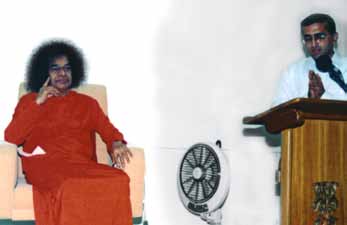
Mano Hriday: Could you please share with us when you came to Swami, and in what circumstances?
Dr. Shekhar Rao: It is Swami’s grace that I do not recollect a time in my childhood that I did not hear of Swami. My first concrete recollection of seeing Bhagawan was in 1965 in Guindy, Chennai, when my aunt and uncle took me to see Swami. I was 5 years old at the time. Although the physical proximity took many years to come, I used to be in touch with people who regularly visited Prashanthi Nilayam and would read books written by His devotees.
Growing up in Bangalore, my parents used to bring me to Brindavan for Swami’s darshan. As a schoolboy, I was fascinated by bicycles and once I recall making bold to ride from home to the ashram on my bicycle. It was so easy to just park the cycle outside the compound, go into the ashram and have Swami’s darshan.
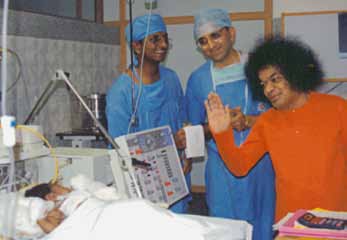
I also remember an occasion when Swami visited Lalbagh and my father took me along to have darshan. I vividly recall standing on the sidewalk when Swami’s car slowed down and the window rolled down to reveal His face. We had eye contact for a fleeting moment.
The chance to be physically close to Him happened after I completed my training in cardiac surgery. I was at Dr. HS Bhat’s home for a function, where Swami was expected to come. Dr. (Mrs.) Prema Bhat was my teacher at St.
John’s and they had invited my parents and me to attend this function. In that small gathering, Swami began asking everyone what each of us was doing. When my turn came, I said that I was completing my studies to become a cardiac surgeon. Swami said, “What is the use of only studying? You must also DO!”
I was admittedly perplexed with Swami, who posed the query knowing fully well the lack of opportunities in the country to develop as a cardiac surgeon. “Yes, I wish to do but how?” was the question I asked Him in my mind. My father believed that if Swami asked a question, He would also provide the answer. I could not grasp what he meant then, but subsequently, we heard about the announcement of the super-speciality hospital and the possible opportunities.
MH: How did you join SSSIHMS-Prasanthigram? Dr. SR: After its inception, My father and I approached SSSIHMS seeking opportunities to serve there. We were asked to meet the team of doctors managing the hospital, which included Prof. Venugopal. Somehow, the few visits we made were inconclusive.
Meanwhile, I had applied for training opportunities abroad and was selected for a fellowship in advanced cardiovascular surgery at the Mayo Clinic, Rochester, Minnesota, USA. I decided to take it up.
On Thursday 4-April-2019, Dr. Shekhar Rao, a paediatric cardiac surgeon, took over from Dr. Sundaresh as the Director of Sri Sathya Sai Institute of Higher Medical Sciences, Whitefield, Bangalore.
After his MBBS at St. John’s Hospital, Bangalore, and MS (General Surgery) at PGI, Chandigarh, Dr. Rao did his MCh (Cardio Thoracic & Vascular Surgery) at Sri Chitra Thirunal Institute, Trivandrum.
He received advanced training in cardiac surgery at the Mayo Clinic, Minnesota, USA.
Dr. Shekhar Rao is not new to the Sri Sathya Sai Health Mission. He worked in both the super specialty hospitals founded by Bhagawan for a decade between 1994-2004. He was blessed by Bhagawan to be involved in establishing the CTVS department at SSSIHMS-Whitefield during its inception in 2001.
He went on to serve at a corporate hospital from 2004 to 2019, while continuing to be associated with SSSIHMS-Whitefield to operate and train doctors in pediatric cardiac surgery. Early in 2019, he chose to return to SSSIHMS-Whitefield fulltime and serve as the Director of the Institute.
With over 10,000 cardiac surgeries under his belt, he brings with him extensive expertise and experience in this highly specialized field. We share with you a conversation between Dr. Shekhar Rao and Mano Hriday, wherein he shares his journey to and with Swami.
On my return, I made a renewed attempt to join SSSIHMS, and this time everything seemed to fall into place. I was seated on the veranda for darshan and Swami came to me and asked lovingly what I wanted. When I mentioned I wanted to join the hospital as a cardiac surgeon, He readily agreed and said, “Yes, you are most welcome. This is your home. You will like it here. All development and progress will happen here. Very happy, bangaru.” So, I joined the Institute with Swami’s blessings and joy in my heart.
MH: How did you feel about coming from a reputed Institute as the Mayo Clinic and come practise in an otherwise unknown village? Did it not need a leap of faith?
Dr. SR: One of the things which inspired me about the Mayo Clinic was its history. Rochester was a remote town and distant from major cities like Chicago and Minneapolis. It came into existence rather providentially, when a very austere order of nuns, who ran a convent there, set up a medical facility to provide relief for the survivors of a tornado that hit the town. Until that point, there were no such facilities in the area. Soon after, several motivated individuals came forward to form the now leading institution.
The knowledge about the Mayo Clinic and its founders helped me see the Parthi super-speciality hospital in the same light. The magnificence of its vision, uniqueness and its potential impact on our country were natural reasons to be drawn to serving there.
MH: We gather your father served in the Air Force. What drew you to pursue medicine as a career? And more specifically paediatric cardiac surgery? Dr. SR: While growing up, I fancied myself in different professions. In the end, I chose medicine as a result of inspiration and parental guidance. My father had a natural affinity for the medical profession and my mother was a pediatrician.
I was drawn to cardiovascular and neuro sciences, while studying the basic science and physiology of these subjects, during my initial days as a medical student. In later years, I also felt the surgeon was perhaps an even more complete doctor, because he could practice both the science and the art of the medical profession everyday. This belief led me to pursue cardiac surgery.
Also, pediatric cardiac surgery was an evolving field abroad and was greatly needed in India. I was motivated to contribute to the growth of this specialty in our country and the development of facilities on par with the best in the world. It seemed to me a very relevant area of modern medicine.
MH: As a young surgeon in a developing science, did you not feel overwhelmed at the quantum of work to be done, especially in Bhagwan’s physical presence? How was your daily schedule?
Dr. SR: It was certainly a challenging task, especially as a young surgeon. By God’s grace we had the right amount of energy and success. We saw the situation as a great opportunity and not as an overwhelming burden. We felt confident in our ability to rise and meet the challenge.
Sometimes, I used to get up in the middle of the night, look around in amazement at the work we had accomplished during the day. I would ask myself, “Is it we who have done this work?” and “Am I capable of what I see around me?” In all honesty, I would answer, “No”.
As the saying goes, “God does not call the qualified, but qualifies the called”. Bhagawan’s Grace and sankalpa (will) created the physical reality and allowed us to be a part of it, enabling us to rise to the challenge.
The routine in Puttaparthi those days made for a sublime approach to what we were doing. We had an opportunity to have Swami’s darshan early in the morning. He would ask “How many operations today?”, exchange a glance, or materialize vibhuti for us. We really felt charged up to accomplish any task and perform at our best!
In the early days, our skills were developing. We were trained and improving in our ability, but we sometimes faced difficult situations. For example, there were times when we had to take stitches at difficult depths and angles during surgery, which was not easy. It used to cross my mind to look at Bhagawan’s picture in the operating room and ask for help. I used to find that the task at hand would get accomplished as desired. The surgeries we thought were difficult to do became easier in a very short span of time because of the volume and the quality of experience we had. Also, there was a certain feeling of blessedness throughout the process.
And of course, in the end, to experience the love, gratitude and blessings of the patients was a great reward. Patients come from different walks of life, regions and socio-economic strata. To be able to deal with all of them with the same care and do the best for them improves you as an individual and makes life worthwhile. MH: How did you cope with the physical absence of Bhagawan?
Dr. SR: To some extent I think Swami deliberately prepared us in stages for that eventuality. For instance, I consider the one year after starting this hospital as the golden year of my life. I had the chance to interact with Swami virtually on a daily basis. I thought it was never going to end. However, like most devotees experience, after some time, there is a distance which creeps in.
When Swami seemed to maintain a distance from me, it led to some soul searching and seeking specific directions on how to remodel my life in the absence of that kind of physical contact. This period prepared me to cope with His physical absence.
Even when I was working outside, I had a chance to be connected with the SSSIHMS Whitefield in a visiting capacity. When I went to Parthi along with the staff, Swami spoke to me. I felt that the connection was there, all the time.
Speaking of proximity with the Lord, Swami likened it to the coal that needs to catch fire from the firewood. But once it has the fire within it, it can glow and even start a fire on its own. The years of proximity taught me what I actually needed to practice.
In an interview before He sent me to Bangalore, I told Swami in a euphoric mood, “Swami, I will follow everything that you told.” He patiently told me, “You won’t be able to follow everything, just remember any one thing and follow.”
MH: How was your experience working in a corporate hospital?
Dr. SR: Fortunately for me, I was sent to a place where there was a strong presence of Swami. In my chief’s office, there was a large picture of Swami with a stethoscope. Every year someone connected with the organisation would offer calendars with Swami’s pictures and themes at the hospital. We also had schemes offering surgeries at highly subsidised costs or free of cost. To that extent, I feel I was not completely thrown into a deep sea. It was a gentle transition.
It was also an opportunity to practice the expansive love which Swami often talked about. As someone told me, all hospitals are His hospitals and all patients are His patients. There is no geographical or physical limit to service with that bhavam (feeling). While working outside, I used to wonder about the literal meaning of Swami’s statement that this is my home. I am extremely grateful that He kept tabs on me and guided me to this role. This experience is a part of the whole. On the face of it, everything changes but at the core, nothing changes.
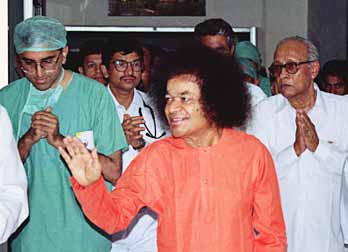
MH: When you joined Parthi as a young surgeon, did it ever cross your mind that you would become the Director of this Institute?
Dr. SR: Absolutely not! I had no inkling whatsoever.
I sometimes ask myself, “Is it me, who is the Director?” There is a certain degree of disbelief, I should say. But then, I am going entirely by the saying “He qualifies those who are called.” So, I focus on making myself a worthy instrument and being a recipient of His grace so that whatever task I am called upon to do, it will happen through me as per His will.
MH: We are happy to see that Dr. (Mrs.) Kavitha Shekhar Rao has also joined Sri Sathya Sai General Hospital full-time, and that the ophthalmology
department is also being upgraded. Dr. SR: The role played by a spouse and life partner is very crucial to our mission in life and governs where we can reach. It is Swami’s blessing that even at times when I had faltered, she stood strong. Swami has made her instrumental in nudging me in the correct direction and refining my thinking on several important aspects of life.
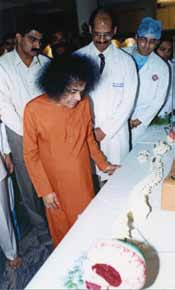
She is a blessed and inspired person; I think she transmits that element of going beyond the mundane and thinking at a much more inspired and sublime level. The fact that we are here together and have the opportunity to serve has to be Swami’s Grace.
MH: As the Director, what do you see as the vision for the Institute for the next few years? And what do you perceive as the challenges for this unique Institute?
Dr. SR: We are fortunate to have some individuals who have steadfastly kept the highest ideals in mind and stood by these hospitals for close to three decades now (both here and Parthi). As a team, I don’t think we can ask for a better “think tank” of such individuals.
Having a critical mass of human resource in all the departments is an important necessity for the future. By human resources, I mean doctors, nurses, technicians, and other staff who all lead an inspired life, are completely in tune with the wavelength of our hospital, and maintain high standards on all fronts, including technical excellence, professional competence and ideals of service to people.
MH: How are you planning to address this requirement?
Dr. SR: We are attempting to address it in two main ways. First, we must communicate about open positions to members of the Sai community around the world. This could be through the Sanathana Sarathi, through the Seva organisation or through people who come visit us.
Second, like other corporates have campus interviews, we must connect directly with good educational institutions. We could talk to the faculty and students to attract those who feel drawn towards the ideals that inspire us.
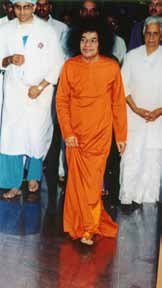
Continuous Learning · pages 15–21
Academic Activities
RESEARCH ACTIVITIES CARDIOLOGY
01. Dr. Rohit has undertaken a study to use LA volume as a predictor of improvement post PTMC. Guide: Dr. P.K. Dash, Chairman of Cardiology SSSIHMS and Dr. Reeta Varyani, I/C HoD, Cardiology.
02. Dr. Shambhavi K.R. has undertaken a study “Assessment of Left Atrial function by Echocardiography before and after Balloon Mitral Valvotomy”.Guide: Dr. P.K. Dash, Chairman of Cardiology SSSIHMS and Dr. Reeta Varyani, I/C HoD, Cardiology, Dr. Prayaag Kini, Consultant, Cardiology.
03. Dr. Sfurthi Shivaram Jadhav has undertaken a study “Study of Right Ventricular Hemodynamics changes following Transcatheter closure of Atrial septal Defect with surgical closure of Atrial Septal Defect: An Echocardiographic Prospective Observational Study”. Guide: Dr. Prayaag Kini and Dr. Reeta Varyani.
04. With the support of Department of Science and Technology, Government of India a study is being carried out using Ayurvedic Medicine for Heart Failure. The study titled “Clinical evaluation of T AYU BKV in patients of Chronic Heart Failure (CHF) with special reference to B type Natriuretic Peptide (BNP)” is being done by Dr. Savitri, Dr. Reeta Varyani, Dr. C.S. Hiremath and Dr. Venkatesh.
NEUROSURGERY
01. The Department of Neurosurgery, SSSIHMS in collaboration with Department of Biosciences SSSIHL, Prashanthigram, is conducting a study titled ‘Metabolomic signature analysis of malignant brain lesions - a prospective observational study’
02. The Department of Neurosurgery, SSSIHMS, is collaborating with the University of Akron, Ohio, USA, to conduct retrospective research in Chiari Type 1 malformation.
RADIOLOGY:
01. “MRI in human subjects for non-clinical, non-research purposes” - In collaboration with Voxelgrids Innovations Private Limited, HSR Layout, Bengaluru.
02. “Ground-truth data-generation for AI-based quantification of epicardial and para-cardiac fat in CT Coronary Angiogram (CT-CA) scans” - A project completed in collaboration with GE Healthcare.
03. “Role of epicardial fat volume as a cardiovascular risk factor in patients with CAD, and its association with their plaque-characteristics and calcium-scores assessed by CTCA.” - A study being conducted within the department
04. “Automatic identification and viability analysis of myocardium fibrosis” - in collaboration with Dayananda Sagar College of Engineering, Bangalore - 78
05. “Clinical utility of Non‐Invasive Cardiac Magnetic Resonance imaging (CMR) in the assessment of adult patients with ischemic heart disease (IHD) in the Indian population.” - A research collaboration with University of Pennsylvania, USA 06. “Genetics, metabolomics and clinical analysis of
amyloid diseases” - in collaboration with Department of Biosciences, SSSIHL, Prasanthi Nilayam, A.P., India
07. “Intelligent Automation in Medical Image Analysis” solutions are being validated in collaboration with DDH Inc., Seoul, Republic of Korea.
CONFERENCES / WORKSHOPS -Organized at SSSIHMS-Whitefield CARDIOLOGY
01. 6th edition of its Annual Clinical Cardiology CME SPEED 2019 was conducted on 9-10 Mar, 2019.
02. The department hosted the Bangalore chapter of Cardiological Society of India conference in June 2019.
03. First edition of SPACE 2019, an advanced echocardiography conference with national and international faculty was conducted on 11-Aug-2019.
ANAESTHESIA
01. 5th Annual Critical Care Medicine Update 2020: Department of Anesthesiology and Critical Care Medicine, SSSIHMS White field, Bangalore conducted 5th Annual Critical Care Medicine Update 2020 on 5-January-2020.
02. CME WORKSHOP ON CLINICAL RESEARCH METHODOLOGIES of NBE: Thesis Research & Protocol Writing for DNB Trainees was conducted at our institute on 16-17 Feb, 2019.
03. Hemodynamic Workshop: Was held as pre-conference on 25th November.
04. As on 31-Dec.-2019, the Anaesthesia Dept. has provided Basic Life Support (BLS) training to 560 individuals (including renewals) and Advanced Cardiac Life Support (ACLS) to 91 individuals.
05. Preliminary training in First Aid & CPR was conducted by Dr. Kolli S. Challam to 108 first year UG students of SSSIHL, Brindavan Campus, on 15-Mar-2019.
OBG
01. OBG -CME at SSSIHMS Whitefield, Bengaluru on 8-Dec-19.
ENT
01. Department of Otolaryngology conducted a live International surgical workshop on endoscopic ear surgery on Nov 25, 2019. Around 70 delegates attended the workshop. Surgical cases were demonstrated by Dr. S. Panetti & Dr. Marco Boneli from Italy, Dr. Mohan Reddy from Hyderabad and Dr. (Major) Shankar B.G., from the Institute.
CTVS:
01. The 4th edition of IACTS SCORE 2019 was conducted on March 2-3, 2019.
02. The 2nd edition of SAI SCORE 2019 was conducted on Sep. 8, 2019.
03. SCALPEL 2019 (Surgical Camp for Advanced Learning, Practice, Excellence and Leadership) was conducted on 3-4 Aug, 2019. It was the first initiative dedicated to fostering skills requisite for coronary surgery.
RADIOLOGY
01. UPenn-SSSIHMS Hands-on Cardiac MR Course (A collaboration between SSSIHMS and University of Pennsylvania, Philadelphia, USA) was conducted at the institution between 2-5 Mar, 2019. This course was endorsed by the Society for Cardiovascular Magnetic Resonance (SCMR) and Indian Association of Cardiac Imaging (IACI).The faculty from the University included Dr. Yuchi Han, (Associate Professor of Medicine in the Department of Medicine, University of Pennsylvania and Director of Cardiac MRI) and Dr. Ron Jacob, Director of Cardiac Magnetic Resonance Imaging at Lancaster General Hospital/PENN Medicine.
02. SACRED (Sri Sathya Sai Academy of Radiology Education) organized two CMEs viz. Advanced MR Imaging in Neuro and Oncology, and Congenital Cardiac Imaging on 27-Aug & 29-Dec respectively.
EXTERNAL CONFERENCE / WORKSHOP–PAPER / POSTER / LECTURE PRESENTATION CARDIOLOGY Dr. Dash was Faculty at:
01. Annual clinical cardiology CME organized by Madras Medical Mission, Chennai in January 2019.
02. India Live 2019 organised between February 28th-March 3rd 2019 at Mumbai.
03. Clinical cardiology CME organized by Sagar Miloy Hospital, Mangalore in June 2019.
04. Heart failure conclave organized between July 6th-7th 2019 at Bangalore
Dr. Prayaag Kini was faculty at:
01. National Interventional Council meet organized between April 5th-7th 2019 at Lucknow.
02. Heart Beat CardioLive Conference held between July 12th-14th 2019 at Bangalore and gave a talk on “Device closures for Septal defects”.
03. “Echo India” - The Annual Indian Academy of Echocardiography at Kolkata between November 7th-10th 2019 and delivered a talk on “Approach to high prosthetic valve gradient”.
Dr. Rohit Hasani, DNB trainee made
01. Oral presentation on the topic “A Prospective, Observational study for assessment of left ventricle diastolic function after transcatheter closure of atrial septal defect in different age groups.” At the Annual Cardiological Society of India meeting, New Delhi between December 5th-8th 2019.
02. Poster presentation on “A Case of Endovascular Treatment of Aortobronchial Fistula.” At the Annual Cardiological Society of India meeting between December 5th -8th 2019 at New Delhi.
03. Poster presentation on “A Cross-Sectional Study for Assessment of Accuracy of Peguero Lo-Presti Criteria for Diagnosing LVH” at the Annual Cardiological Society of India meeting between December 5th – 8th 2019, at New Delhi.
ANAESTHESIA
Dr. Kolli S. Chalam was faculty at / delivered lectures on: 01. FCCS (Fundamental Critical Care Support) - Obstetric
Course being held at Hyderabad on 9th and 10th Jan 2019 at Century Hospital, Hyderabad.
02. “NMBA’s and reversal agents” at 2nd Annual CME, ACME 2019 on 20th January 2019 (Sunday) at VIMS, Bengaluru.
03. Case discussion at P-G Excel at Raja Rajeswari Medical College & Hospital on FEB 9 & 10, 2019, Bengaluru.
04. i) Thesis protocol writing ii) Citing & Referencing (Vancouver Style) & Basics of Zotero iii) Publication of clinical research at the CME of research methodology of NBE on 16-02-2019 & 17-02-2019
05. Case discussion and viva stations at BEORATE Mock exam, conducted by ISA, Bengaluru branch, 10th March 2019.
06. National Mechanical Ventilation & Hemodynamic workshop held at Narayana Hrudayalya in August 2019
07. International Conference of Echocardiography organized at Narayana Hrudalaya in August 2019
08. Hemodynamic Workshop dated 25th November 2019 for the topics “Overview of hemodynamic monitoring”, Physics and Principles of CVP monitoring”, “CVP monitoring”, “Hypovolemic or hemorrhagic shock”
09. Sri Sathya Sai Medicare Conference held at Sundaram 3rd November 2019 and 15th December 2019 at Sri Sathya Sai International Centre New Delhi 10. Was Organizing Chairman for
– 5th Annual Critical care Medicine update on 5-Jan-2020 – Research methodology CME of NBE in Feb 2019 – Work Place Based Clinical Assessment of Formative
Assessment 2018 by NBE was conducted on 23-02-2019 at SSSIHMS, Bengaluru.
Dr. Anitha Diwakar
01. E-Poster: “Unusual presentation of left main equivalent coronary artery disease with seizures” in 67th Annual National Conference of Indian Society of Anaesthesiologists November 2019 Bengaluru.
02. Lecture on “How to choose best hemodynamic monitoring tool, “Errors and Pitfalls“ in monitoring tools” on 25th November 2019 during Hemodynamic Workshop, SSSIHMS, Whitefield as a part of ISACON 2019.
Dr. Pankaj Punetha
01. Presentation on “Resuscitation and De–resuscitation” on 25th Novemeber 2019 during Hemodynamic Workshop, SSSIHMS, Whitefield
Dr. Geetanjali T. 01. Faculty presentation on “Cardiovascular physiology & Heart
lung interactions”, “Volume Clamp“ on 25th November 2019 during Hemodynamic Workshop, SSSIHMS, Whitefield on 25th November 2019 during Hemodynamic Workshop, SSSIHMS, Whitefield
Dr. Vrushali Chowdary
01. Faculty presentation on “Physics and Principles of Arterial pressure monitoring”, “ABP Monitoring“ on 25th November 2019 during Hemodynamic Workshop, SSSIHMS, Whitefield
Dr. Anuradha Kamath
01. Faculty presentation on “PA (Swan Ganz) catheter monitoring”, “PAC Monitoring Simulation Inversion Kit on 25th November 2019 during Hemodynamic Workshop, SSSIHMS, Whitefiel
02. Publications: Kamath A., Punetha P., Doddamane A.N., Chalam K.S., Hiremath C.S. Airway anomalies in cases of anomalous pulmonary venous Connection – A single-center experience. Ann Card Anaesth 2020;23:14-9
NEUROSURGERY International Conference Presentation
01. Dr. Sumit Thakar, Additional Senior Consultant, Neurosurgery, presented a paper entitled ‘Surgical treatment of Chiari syrinx: goals and outcome assessment’ at the CSF Flow International Chiari conference from June 25th to 28th, 2019 at Buffalo, USA.
National
Dr. Vidyasagar K., 6th year resident, DNB Neurosurgery, presented papers entitled:
01. ‘The TOF-BA score: Development and validation of an artificial neural network model for predicting a brain abscess in Tetralogy of Fallot’ at the INDSPNCON 2019, the 30th annual conference of Indian society for Pediatric Neurosurgery held at AIIMS, New Delhi, in February 2019 &
02. ‘Two Decades, Two Eras of Cranio-Vertebral Junction Stabilisation techniques: An institutional experience of 239 patients’ in a Spine symposium at the AANSIM 2019-the joint meeting of the 15th Asian Australasian Congress of Neurological Surgeons, 68th Annual Conference of The Neurological Society of India, and the International Meningioma Society from December 5-8, 2019.
Dr. Aditya Arun Atal, Junior Consultant, Neurosurgery, presented a paper in the award category at the SKULLBASECON 2019, the 21st Annual Conference of the Skull Base Society of India, held at Coimbatore from Oct. 10-12, 2019. His paper was entitled ‘Outcomes and Complications of the Extended Endoscopic Trans-Sphenoidal Approach: An institutional experience.’
Dr. Sumit Thakar, Additional Senior Consultant, Neurosurgery, presented a paper entitled The Perpetual challenge of managing Cushings Disease: A retrospective review of a series of unusual post-operative complications at the AANSIM 2019-the joint meeting of the 15th Asian Australasian Congress of Neurological Surgeons, 68th Annual Conference of The Neurological Society of India, and the International Meningioma Society from Dec. 5-8, 2019.
OBG Dr. Akkamahadevi C. Hiremath
01. Talk on ‘Evaluation and management of Stress incontinence‘ by at OBG-CME at SSSIHMS Whitefield, Bengaluru on Dec 8, 2019.
Dr. Jyothi Shilawanth
01. Poster Presentation on MRKH Syndrome type 1 with ovarian dysgerminoma: an unusual condition” at 62nd Congress of Obstetrics and Gynaecology, Bengaluru, Jan 2019.
Dr. Neekita Pradhan
01. Poster Presentation on “Acute nonpueuperal uterine inversion due to huge submucosal fibroid polyp with left ovarian cyst-a rare case report” at 62nd Congress of Obstetrics and Gynaecology, Bengaluru, Jan 2019
02. Free Paper presentation on ‘Hegde’s Modification of Fothergill Surgery - our experience over 7 years’ - KSOGA September 2019 at Bellary and OBG CME at SSSIHMS on Dec 8, 2019
Dr. Sharmila N. 01. Talk on ‘Shoulder Dystocia- a nightmare’ by. at OBG - CME
at SSSIHMS, Whitefield, Bengaluru on Dec 8, 2019
CTVS
Dr. C.S. Hiremath was faculty and speaker at 01. IACTSCON 2019, Chennai. Elected Secretary of the Indian
Association of Cardiovascular and Thoracic Surgeons.
02. Rohtak Medical College in the month of May 2019. Topic-Challenges in Mitral valve repair and replacement
03. IACTS CT CME & MID TERM GB 2019 held in Bhopal on 17-18 Sep, 2019. Topic- Aortic root enlargement- Tips and tricks
04. Jammu Medical College. Topic- Management of Hydatid disease of Lung
Dr. Naveen & Dr. Anagha attended a CME on live workshop for aortic valve diseases held in the month of November at GKNM, Coimbatore.
IACTSCON 2019 - Chennai Award posters Dr. Utkarsh
01. Outcomes of Aortic Valve Replacement with Aortic Root Enlargement for small Aortic root-Mid Term outcomes at SSSIHMS
02. Congenital Giant Right Atrial Appendage Aneurysm
Dr. Dinesh
01. Surgical resection of cardiac myxomas – SSSIHMS 15 years’ experience
02. Outcomes of surgical Ebstein’s repair at SSSIHMS, whitefield.
Dr. Naveen
01. Aortic Prosthetic valve endocarditis with valve dehiscence-Our experience 02. Giant anterior mediastinal thymic cyst- A case report
03. Primary degenerated calcified tumor of the superior vena cava extending into the right atrium masquerading as right atrial myxoma
01. Dr. C.S. Hiremath and Dr. Manpreet attended the IACTS CT CME & MID TERM GB 2019 held in Bhopal on 17th and 18th of September 2019.
02. Dr. C.S. Hiremath, Dr. Manpreet and Aditya attended the 10th Cardiac Morphology course in MMM hospital in Chennai in July 2019.
Dr. C.S. Hiremath was invited as National faculty and Speaker. Topic: Right atrial anatomy and clinical applications 03. Dr. C.S. Hiremath, Dr. Anagha, Dr. Dinesh, Dr. Utkarsh,
Dr. Manpreet and Aditya attended the KACTS meet and presented five papers in the month of August 2019.
RADIOLOGY
01. Bharath Das, Prashanth Reddy, Suman Prabhakar, Puneeth K.N., BhavanaNagabhushana Reddy, JaineshDodia, Sanjaya Viswamitra - All That Restricts Is Not Malignant - Restricting Low Grade Neoplasms In Brain. - Educational Exhibits, RSNA 2019.
02. Bharath Das, Prashanth Reddy, Sankar Neelakantan, Suman Prabhakar, Puneeth K.N., Bhavana Nagabhushana Reddy, Jainesh Dodia, Sanjaya Viswamitra - All You Will See! -Clivus Imaging. - Educational Exhibits, RSNA 2019.
03. Bharath Das, Prashanth Reddy, Suman Prabhakar, Puneeth K.N., Jainesh Dodia, Bhavana Nagabhushana Reddy, Sanjaya Viswamitra - Meet The Outliers - Uncommon Lesions In Sella. Educational Exhibits, RSNA 2019.
04. Bharath Das, Prashanth Reddy, Suman Prabhakar, Puneeth K.N., Jainesh Dodia, Bhavana Nagabhushana Reddy, Sanjaya Viswamitra - Men (ninges) In Black - Hypointense Dural Lesions In T2WI - Educational Exhibits, RSNA 2019.
05. Bharath Das, Sunitha P. Kumaran, Prashanth Reddy, Suman Prabhakar, Puneeth K.N., Jainesh Dodia, Bhavana Nagabhushana Reddy, Sanjaya Viswamitra - Posterior Third Ventricle Pathologies - Look Through Surgeons’ Eye -Educational Exhibits, RSNA 2019.
06. Bharath Das, Sankar Neelakantan, Prashanth Reddy, Suman Prabhakar, Puneeth K.N., Jainesh Dodia, Bhavana Nagabhushana Reddy, Sanjaya Viswamitra - When To Wave The Red Flag? Imaging Spectrum of Heart Conditions That Can Cause Sudden Cardiac Death (SCD) - Educational Exhibits, RSNA 2019.
07. Prashanth Reddy, Bharath B. Das, Bhavana Nagabhushana Reddy, Suman T. Prabhakar, Puneeth Kumar K.N., Jainesh, Sanjaya Viswamitra - Off the Beaten Path: Imaging of Unusual Cardiac Aneurysms. Educational Exhibits, RSNA 2019.
08. Prashanth Reddy, Bharath B. Das, Bhavana Nagabhushana Reddy, Suman T. Prabhakar, Puneeth Kumar K.N., Jainesh, Sanjaya Viswamitra - “Don’t nod off!”- A Quiz Based Review of Uncommon Acquired Diseases Involving the Craniovertebral - Educational Exhibits, RSNA 2019.
09. Jainesh Dodia, Bharath Das, Prashanth Reddy, Bhavana Nagabhushana Reddy, Suman Prabhakar, Sanjaya Viswamitra - Diagnostic spectrum of orbital lesions which are always dressed in overalls and looks like work -Educational Exhibits, RSNA 2019.
10. Puneeth Kumar K.N., Suman T. Prabhakar, Bharath B. Das, Jainesh Dodia, Bhavana Nagabhushana Reddy, Sanjaya Viswamitra - Imaging of Third eye(epiphysis cerebri) : A radiological review of pathology of Pineal gland lesions -Educational Exhibits, RSNA 2019.
11. Puneeth Kumar K.N., Suman T. Prabhakar, Bharath B. Das, Prashanth Reddy, Aishwaraya Mahendrakar, Bhavana Nagabhushana Reddy, SanjayaViswamitra, Sick sea horse : Imaging review of pathologies of hippocampus Educational Exhibits, RSNA 2019.
12. Puneeth Kumar K.N., Suman T. Prabhakar, Bharath B. Das, Prashanth Reddy, Bhavana Nagabhushana Reddy, Sanjaya Viswamitra, How Good Are You at Tubes and Lines? -Educational Exhibits, RSNA 2019.
13. Puneeth Kumar K.N., Suman T. Prabhakar, Bharath B. Das, Prashanth Reddy, Sowrabha, Bhavana Nagabhushana Reddy, Sanjaya Viswamitra, Deltas in Venous Lakes Common to Uncommon Etiologies of CVT: Combined Radiological and Clinical Approach - Educational Exhibits, RSNA 2019.
14. Puneeth Kumar K.N., Suman T. Prabhakar, Bharath B. Das, Prashanth Reddy, Gayathri Y., Bhavana Nagabhushana Reddy, Sanjaya Viswamitra - Radiologists as Detectives: Demystifying the Mystery of the Primary Bone Tumor - Is It Benign or Malignant? Using Radiographs - Educational Exhibit, RSNA 2019.
15. Puneeth Kumar K.N., Suman T. Prabhakar, Bharath B. Das, Prashanth Reddy, Gayathri Y., Bhavana Nagabhushana Reddy, Sanjaya Viswamitra - Hormonal Hare: Imaging Spectrum of Adrenal Lesions, Incidentalomas, and Diagnostic Algorithm-A Radiologist’s Guide - Educational Exhibit, RSNA 2019.
16. Bhavana Nagabhushana Reddy, Srinivas Reddy, Prashanth Reddy, Bharath B. Das, Suman T. Prabhakar, Puneeth Kumar, Sanjaya Viswamitra - Art (ifact) matters: Brain and spine MRI artefacts at 1.5 Tesla with tips and tricks on how to eliminate them. Educational exhibit RSNA-2019
17. Bhavana Nagabhushana Reddy, Prashanth Reddy, Bharath B. Das, Suman T. Prabhakar, Puneeth Kumar, Jainesh Dodia, Sanjaya Viswamitra - Know your dark horse in imaging: Acquisition and physics behind dual energy CT and its application in cardiac imaging, Educational exhibit RSNA-
18. Suman T. Prabhakar, Puneeth Kumar K.N., Bharath B. Das, Prashanth Reddy, Bhavana N. Reddy, Jainesh V. Dodia, Sanjaya Viswamitra - Like A Phoenix, Form The Ashes – Post Radiotheraphy Imaging Changes In Brain, Educational Exhibit RSNA 2019
19. Suman T. Prabhakar, Sankar N., Puneeth Kumar K.N., Bharath B. Das, Prashanth Reddy, Bhavana N. Reddy, Jainesh, Sanjaya Viswamitra - “APEX PREDATORS” – Magnetic Resonance Imaging In Orbital Apex Lesions Emphasizing On Critical Imaging Findings, Educational Exhibit RSNA 2019
20. Suman T. Prabhakar, Puneeth Kumar K.N., Bharath B. Das, Prashanth Reddy, Bhavana N. Reddy, Jainesh, Sanjaya Viswamitra - Know “THE WAVES” before you surf them
- Basic ECG and Case-based quiz for cardiac radiologists, Educational Exhibit RSNA 2019
21. Suman T. Prabhakar, Puneeth Kumar K.N., Bharath B. Das, Prashanth Reddy, Bhavana N. Reddy, Jainesh, Sanjaya Viswamitra - Like phoneix from the Ashes - Post radiotherapy Imaging changes in brain, Educational Exhibit RSNA 2019.
22. Suman T. Prabhakar, Bharath B. Das, Puneeth Kumar K.N., Prashanth Reddy, Bhavana N. Reddy, Jainesh, Sanjaya Viswamitra - Land marking the Hidden Base: Cross sectional imaging findings of various skull base tumours, Educational Exhibit RSNA 2019.
23. Suman T. Prabhakar, Bharath B. Das, Puneeth Kumar K.N., Prashanth Reddy, Bhavana N. Reddy, Jainesh, Sanjaya Viswamitra - Speaking the Surgeons Lingo: Pre and Postoperative imaging in Tetralogy of Fallot, Educational Exhibit RSNA 2019.
24. Suman T. Prabhakar, Bharath B. Das, Puneeth Kumar K.N., Prashanth Reddy, Bhavana N. Reddy, Jainesh, Sanjaya Viswamitra - Make No Bones About-Quiz Base, Imaging of Vertebral body tumours, Educational Exhibit RSNA 2019.
25. Sowrabha M.C., Rahul Sharma, Gayathri, Puneeth Kumar K.N., Prashanth Reddy, Bhavana N. Reddy, Jainesh, Sanjaya Viswamitra - Go to extra Mile-Avlusion Fractures of Knee, Educational Exhibit RSNA 2019.
Radiological Society of North America (RSNA) 105th
Scientific Assembly and Annual Meeting, December 1-6, 2019, McCormick Place, Chicago, IL.
01. Bharath Das, SankarNeelakantan, Prashanth Reddy, Suman Prabhakar, Puneeth K.N., Jainesh Dodia, Bhavana Nagabhushana Reddy, Sanjaya Viswamitra Clinical Follow Up of Low Dose CT Guided Lumbar Foraminal Nerve Blocks – Differential Visual Analogue Scale Score for Pain At 3 Months Can Predict the Need for Spine Surgery
02. Bharath Das, Suman Prabhakar, Prashanth Reddy, Puneeth K.N., Jainesh Dodia, Bhavana Nagabhushana Reddy, Sanjaya Viswamitra C.T., Conventional and Advanced MR Imaging Descriptors for Differentiating Tumefactive Demyelinating Lesions from Gliomas and Lymphomas – Determining ADC Cut Off Value, Degree of Correlation and Diagnostic Performance of Descriptors
03. Aishawaraya K. Mahendrakar, Bhavana Reddy, Pankaj M. Kolhe, Prashanth Reddy, Bharath B. Das, Puneeth Kumar K.N., Sanjaya Viswamitra - Role of Apparent Diffusion Coefficient (Adc) Values In Differentiating Benign And Malignant Skull Lesions With Histopathological (Hpe) Correlation
European Society of Radiology, Vienna (Feb 27 - Mar 3, 2019)
01. S.T. Prabhakar, B.N. Reddy, P. Reddy, B.B. Das, S. Viswamitra. Masqueraders of spondylotic myelopathy
- Magnetic resonance imaging in spectrum of spinal
cord intramedullary pathologies. DOI: 10.26044/ ecr2019/C-0882
02. M.C. Sowrabha, B. Nagabhushana Reddy, P. Reddy, B.B. Das, S.T. Prabhakar, S. Viswamitra There is more to this than meets the eye- Avulsion fractures of knee. DOI: 10.26044/ecrc82019/C-3258
03. S.T. Prabhakar, B.B. Das, B.N. Reddy, S. Viswamitra, S. Sola. I can see you – Cardiac MRI demystifying left ventricular hypertrophy. DOI: 10.26044/ecr2019/C-3382
04. S.T. Prabhakar, B.N. Reddy, B.B. Das, S. Viswamitra. Clues to pontine pathologies - Clinico-radiological profile. DOI: 10.26044/ecr2019/C-0711.
05. S.T. Prabhakar, B.N. Reddy, P. Kumar, B.B. Das, S. Viswamitra; “Anything is possible if you have got the nerve” – Magnetic resonance imaging of the optic nerve pathologies. 10.26044/ecr2019/C-0324.
06. S.T. Prabhakar, B.N. Reddy, B.B. Das, P. Kumar, S. Viswamitra. All that is bright is not just blood! Intracranial hyperdense lesions on CT – Bc8ack to basics. DOI: 10.26044/ecr2019/C-0543
07. S.T. Prabhakar, B.N. Reddy, B.B. Das, P. Kumar, A. Muralidhar, S. Viswamitra. Lord of the rings: MRI with its advances in evaluation of ring enhancing lesions. DOI: 10.26044/ecr2019/C-0932
08. Bharath B. Das, P. Reddy, B. Nagabhushana Reddy, S.T. Prabhakar, S. Viswamitra. “Paediatric Epilepsy Imaging
- OUT --> IN approach” - Awarded CUM LAUDE. DOI: 10.26044/ecr2019/C-1223
09. Bharath B. Das, P. Reddy, B. Nagabhushana Reddy, S.T. Prabhakar, S. Viswamitra. “Curvaceous Cardiac: A Pictorial Review of Unusual Cardc8iac Aneurysms”. DOI: 10.26044/ ecr2019/C-1075
PUBLICATIONS ANAESTHESIA
01. Diwakar A., Patnaik S.S., Hiremath C.S., Chalam K.S., And Dash P. Rupture of sinus of valsalva – A 15 years single institutional retrospective review: Preoperative heart failure has an impact on post-operative outcome? Ann Card Anaesth [serial online] 2019 [cited 2019 Oct 3]; 22:24-9.
02. Diwakar A., Chalam K.S., Hiremath C.S., Manohar K., Dash P K. Aorto-left ventricular tunnel – A case report. Ann Card Anaesth 2020;23:98-9
NEUROSURGERY
01. Thakar S., Arun A.A., Aryan S., Mohan D., Hegde A.S.. Deep flexor sarcopenia as a predictor of poor functional outcome after anterior cervical discectomy inpatients with myelopathy. ActaNeurochir (Wien). 2019 Oct;161(10):2201-2209. doi: 10.1007/s00701-019-03972-8. Epub 2019 Jun 8. PubMed PMID: 31177335.
02. Avinash K.S., Thakar S., Aryan S., Ghosal N., Hegde A.S. Malignant Transformation of Pediatric Low-grade Gliomas: Report of Two Cases and Review of a Rare Pathological Phenomenon. Neurol India. 2019 Jul-Aug;67(4):1100-1106. doi: 10.4103/0028-3886.266259. PubMed PMID: 31512645.
03. Atal A.A., Thakar S., Ghosal N., Hegde A. Primary spinal Rosai-Dorfman disease: Report of an unusual extradural pathology. Neurol India. 2019 May-Jun;67(3):896-898. doi: 10.4103/0028-3886.263188. PubMed PMID: 31347582.
04. Mohammad A.A., Yasuhiro Y., Seng L.B., Rajagopal N., Yoko K. Outcome Analysis of Surgical Clipping for Incidental Internal Carotid Posterior Communicating and Anterior Choroidal Artery Aneurysms. Asian J Neurosurg. 2019 Apr-Jun;14(2):415-421. doi: 10.4103/ajns. AJNS_155_18. PubMed PMID: 31143255; PubMed Central PMCID: PMC6516038.
05. Arora A., Patil V., Kundu P., Kondaiah P., Hegde A.S., Arivazhagan A., Santosh V., Pal D., Somasundaram K. Serum biomarkers identification by iTRAQ and verification by MRM: S100A8/S100A9 levels predict tumor-stroma involvement and prognosis in Glioblastoma. Sci Rep. 2019 Feb 26;9(1):2749. doi: 10.1038/s41598-019-39067-8. PubMed PMID: 30808902; PubMed Central PMCID: PMC6391445.
06. Balaji A., Rajagopal N., Yamada Y., Teranishi T., Kawase T., Kato Y.A. Retrospective Study in Microsurgical Procedures of Large and Giant Intracranial Aneurysms: An Outcome Analysis. World Neurosurg X. 2019 Jan 9;2:100007. doi: 10.1016/j.wnsx.2019.100007. eCollection 2019 Apr. PubMed PMID: 31218282; PubMed Central PMCID: PMC6580892.
07. Seng L.B., Yasuhiro Y., Rajagopal N., Mohammad A.A., Takao T., Kyosuke M., Tsukasa K., Kato Y. Loss of Contralateral Upper Limb Motor Evoked Potential Due to Occlusion of the Internal Carotid Artery in Microsurgical Clipping of Basilar Tip Aneurysm. Asian J Neurosurg. 2019 Jan-Mar;14(1):295-299. doi: 10.4103/ajns.AJNS_157_18. PubMed PMID: 30937059; PubMed Central PMCID: PMC6417339.
08. Sivaraju L., Ghosal N., Mahadevan A., Uday Krishna A.S., Rao S., Hegde A.S. Aggressive Primary Pediatric Intracranial Malignant Melanoma: Sphinx of the Tissue Diagnosis. Asian J Neurosurg. 2019 Jan-Mar;14(1):275-279. doi: 10.4103/ ajns.AJNS_253_17. PubMed PMID: 30937053; PubMed Central PMCID: PMC6417341.
09. Kumaran S.P., Srinivasa R., Ghosal N. Unusual Radiological Presentation of Intracranial Dermoid Cyst: A Case Series. Asian J Neurosurg. 2019 Jan-Mar;14(1):269-271. doi: 10.4103/ajns.AJNS_304_17. PubMed PMID: 30937051; PubMed Central PMCID: PMC6417289.
10. Balaji A., Rajagopal N., Yamada Y., Teranishi T., Kawase T., Kato Y. Carotid Endarterectomy: The Need for In vivo Optical Spectroscopy in the Decision-Making on Intraoperative Shunt Usage - A Technical Note. Asian J Neurosurg. 2019 Jan-Mar;14(1):206-210. doi: 10.4103/ ajns.AJNS_223_18. PubMed PMID: 30937036; PubMed Central PMCID: PMC6417291.
11. Rajagopal N., Kawase T., Mohammad A.A., Seng L.B., Yamada Y., Kato Y. Timing of Surgery and Surgical Strategies in Symptomatic Brainstem Cavernomas: Review of the Literature. Asian J Neurosurg. 2019 Jan-Mar;14(1):15-27. doi: 10.4103/ajns.AJNS_158_18. Review. PubMed PMID: 30937003; PubMed Central PMCID: PMC6417313.
12. Rajagopal N., Yamada Y., Balaji A., Kawase T., Kato Y. Multiples of multiple: Case series of mirror aneurysms and review of literature. Int J Surg Case Rep. 2019;61:141-146. doi: 10.1016/j.ijscr.2019.07.037. Epub 2019 Jul 22. PubMed PMID: 31362238; PubMed Central PMCID: PMC6675932.
13. Sai Kiran N.A., Sivaraju L., Vidyasagar K., Raj V., Rao A.S., Mohan D., Thakar S., Aryan S., Hegde A.S. Intradural “limited drill” technique of anterior clinoidectomy and optic canal unroofing for microneurosurgical management of ophthalmic segment and PCOM aneurysms-review of surgical results. Neurosurg Rev. 2018 Nov 27. doi: 10.1007/ s10143-018-1054-x. [Epub ahead of print] PubMed PMID: 30483973.
14. Seng L.B., Yamada Y., Rajagopal N., Mohammad A.A., Teranishi T., Miyatani K., Kawase T., Kato Y. Multimodality Techniques in Microsurgical Clipping as the Gold Standard Treatment in the Management of Basilar Tip Aneurysm: A Case Series. Asian J Neurosurg. 2018 Oct-Dec;13(4):1148-1157. doi: 10.4103/ajns.AJNS_159_18. PubMed PMID: 30459884; PubMed Central PMCID: PMC6208256.
15. Sai Kiran N.A., Sivaraju L., Vidyasagar K., Aryan S., Raj V., Rajagopal N., Mohan D., Thakar S., Rao A.S., Hegde A.S. Safety and Accuracy of Anatomic and Lateral Fluoroscopic-Guided Placement of C2 Pars/Pedicle Screws and C1 Lateral Mass Screws, and Freehand Placement of C2 Laminar Screws. World Neurosurg. 2018 Oct;118:e304-e315. doi: 10.1016/j.wneu.2018.06.184. Epub 2018 Jul 2. PubMed PMID: 30213379.
16. Paul Y., Thomas S., Patil V., Kumar N., Mondal B., Hegde A.S., Arivazhagan A., Santosh V., Mahalingam K., Somasundaram K. Genetic landscape of long noncoding RNA (lncRNAs) in glioblastoma: identification of complex lncRNA regulatory networks and clinically relevant lncRNAs in glioblastoma. Oncotarget. 2018 Jul 3;9(51):29548-29564. doi: 10.18632/oncotarget.25434. eCollection 2018 Jul 3. PubMed PMID: 30038703; PubMed Central PMCID: PMC6049862.
17. Dr. Sumit Thakar, Additional Senior Consultant, Neurosurgery, is an ad-hoc reviewer for 27 national and international peer reviewed journals. In 2019, he has reviewed articles for the following journals: Current Neurovascular Research, Journal of International Medical Research, Radiology Case Reports, Journal of Neurosciences in Rural Practice, The Neuroradiology Journal and Oncotargets and Therapy.
18. Dr. Sumit Thakar, Additional Senior Consultant, Neurosurgery, is an invited Rater for the McMaster Online Rating of Evidence (MORE) System affiliated to the Health Information Research Unit of McMaster University, Canada and has rated 10 articles across variousinternational journals for the period of January to December 2019.
CTVS
01. Management of infected recurrent mediastinal bronchogenic cyst withtuberculous mediastinal lymphadenitis-Indian Journal of Thoracic & Cardiovascular Surgery-Hiremath C.S., Kumar Dinesh, Doddamane A.N., Kamath A.
02. Successful surgical management of a congenital giant right atrialappendage aneurysm: a case report on a rare cardiac anomaly-Indian Journal of Thoracic& Cardiovascular Surgery-Hiremath C.S., Amboli S., Sanghavi U., Doddamane A.N., Kamath A., Rao S.
03. A calcified amorphous tumour in a patient with coronary artery disease: an atypical entity.- Interactive CardioVascular& Thoracic Surgery-Hiremath C.S., Gandrakota S., Doddamane A.N., Diwakar A.
04. Aorto-left ventricular tunnel with a rare presentation-Annals of Cardiac Anaesthesia-DiwakarA, Hiremath C.S., Doddamane A.N., Manohar K., Chalam K., Dash P.K.
OBG:
01. ‘Cystolitholapaxy and laparoscopic sacrocolpopexy in a case of multiple urinary bladder calculi & vault prolapse’ - Dr. Akkamahadevi C. Hiremath, Dr. Shivakumar K.S., European Journal of Obstetrics and Gynaecology and Reproductive Biology -243(2019 12-15)
ACHIEVEMENTS & AWARDS:
CARDIOLOGY
01. Dr. Prayaag Kini bagged the best abstract award on the topic “Predictive model for Instent stenosis in DES in Indians” at India Live 2019 organised between 28th February – 3rd March 2019 at Mumbai. The course directors are Dr. Bahl, dr. Ashwin Mehta, Dr. Ashok Seth and Dr. Upendra Kaul.
02. Dr. Prayaag Kini has moderated a session on “Structural Heart Disease Interventions” at the Annual National Interventional Council meet between April 5th-7th 2019 at Lucknow.
03. Dr. Ravi Kacchela has been awarded Gold Medal for excellence in DNB (cardiology) in 2016-2019 by National Board of Examinations, Ministry of Health, Government of India, New Delhi at its Annual Convocation.
04. Dr. Bhushan Patil has bagged the “A.V Gandhi –SCAI Award 2018 for thesis in Cardiology” organised on November 17th 2019 in New Delhi.
05. Dr. Krrishna Kotravale Cardiology thesis has been selected as the 12th best thesis in India at th “A.V Gandhi-SCAI AWARDS 2018: organized on 17th November 2019 at New Delhi
06. Dr. Rohit Hasani has been awarded a cash prize for his CD case presentation on “TRANSHEPATIC PPI” at the Cardiological Society of India Annual Meeting (CSICON71), New Delhi between December 5th-8th 2019
07. Dr. Prayaag Kini received the award for the best abstract in the category of original research for “Predictive model for immediate and long term outcomes after primary PCI” at the annual meeting of Cardiological Society of India between December 5th-8th 2019 at New Delhi.
08. Dr. Prayaag Kini was awarded the best abstract in the category of echo CSI for “Predictive factors and long term outcomes of LV remodelling after PCI in STEMI ACS patients” at the annual meeting of Cardiological Society of India between December 5th-8th 2019 at New Delhi.
09. Dr. Prayaag Kini received the award for the best moderated poster on “Incremental use of GLS in HCM, HOCM for arrythmic risk prediction -first study from Indian subcontinent” at the Annual meeting of Cardiological Society of India between Dec 5-8, 2019 at New Delhi.
ANAESTHESIA:
01. Dr. Anuradha Kamat secured Second Prize in FTEE (Fellowship in Perioperative Transesophageal Echocardiography ) conducted by Indian Assosciation of Cardiovascular Thoracic Anaesthesiologists( IACTA) in Aug
NEUROSURGERY
01. Dr. Niranjana Rajagopal, Junior Consultant, Neurosurgery, has been awarded a Gold medal for securing the highest marks in the DNB Neurosurgery exam in the year 2015.
02. Dr. Aditya Arun Atal, Junior Consultant, Neurosurgery, is a recipient of the prestigious MPVM Maheshwari Scholar Award for the year 2019. This award recognizes extraordinary scholastic achievements of youngsters from the Maheshwari community.
03. Dr. Sumit Thakar, Additional Senior Consultant, Neurosurgery, was awarded the Tata Trusts Professional Enhancement Grant 2019 to facilitate an observership in USA in June 2019.
04. Dr. Aditya Arun Atal, Junior Consultant, Neurosurgery, won the ‘BEST PAPER AWARD’ at the SKULLBASECON 2019, the 21st Annual Conference of the Skull Base Society of India, held at Coimbatore from October 10th to 12th, 2019.
05. Dr. Sumit Thakar, Additional Senior Consultant, Neurosurgery, was an invited faculty and speaker at an international Chiari, Syringomyelia and Ehlers Danlos Syndrome CSF Flow conference held at Buffalo, USA, from June 25th to 28th, 2019. This conference had invited speakers from all the 5 continents, and Dr. Sumit Thakar was the only invited representative from India.
06. Dr. Sumit Thakar, Additional Senior Consultant, Neurosurgery, was an invited faculty and chairperson for a session at the AANSIM 2019- the joint meeting of the 15th Asian Australasian Congress of Neurological Surgeons, 68th Annual Conference of The Neurological Society of India, and the International Meningioma Society from Dec 5-8, 2019.
OBG
01. Dr. Akkamahadevi C. Hiremath-FOGSI-Karan Gupta Memorial Prize ‘for best poster presentation in the miscellaneous group on ‘Cystolitholapaxy and laparoscopic sacrocolpopexy in a case of multiple urinary bladder calculi & vault prolapse’ - at 62nd All India Congress of Obstetrics and Gynaecology - Bengaluru, Jan 2019.
CTVS
01. Dr. Utkarsh won first prize in Quiz in IACTSCON-2019 - at National level.
Awards · page 22
Gold Medal in DNB Neurosurgery
Dr. Niranjana Rajagopal hails from Bangalore. She was schooled in Bangalore and completed her MBBS program from MS Ramaiah in 2009. She enrolled in the 6-year DNB Neurosurgery program in 2011 and completed the same in Aug, 2017 and has been working as faculty in the Department of
Neurosurgery since 2017.
Mano Hriday: Congratulations Dr. Niranjana on your gold medal. When and how did you come to know that you won the newly instituted gold medal?
Dr. Niranjana: I came to know about it officially in Nov., 2019.
MH: What do you think were the factors which led to your getting this prized possession?
Dr. N: I consider myself extremely lucky to have been in this Institute and for having received the exposure we received during our formative years as a young surgeon.
I attribute my learning to the of efforts put in by all my teachers since the beginning of the 6-year DNB program. One of the highlights of my residency is the time I got to spend with Dr. A.S. Hegde during my first year. He is truly a born teacher and the best inspiration that one can have. Also, in spite of his failing health, during exams, he used to take one-on-one classes with the aspiring students. But the majority of my teaching was from my teachers here in Sathya Sai Institute who have taught me every single day till date.
MH: Could you share to the readers the format of the DNB examination? And what is the usual pass percentage?
Dr. N: The DNB Neurosurgery is a 6-year program and in the second year, we have two papers (Gen. Surgery & Neurosurgery) and two practicals (General surgery & Neurosurgery). In the final year, we have two written exams in Neurosurgery and two practicals.
The pass percentage was as low as 10 percent prior to my joining Neurosurgery; it has, of course, improved over the course of the years.
MH: What would you advise other DNB students aspiring for a gold medal?
Dr. N: I believe developing a consistent habit of studying, revising academics and enjoying the process goes a long way in getting good grades. I enjoyed every bit of the 6-years’ worth of learning, apart from gaining experience in handling the workload. Learning to make time for studying, along with managing the workload is a skill I developed during the program. And if I can do it, I am sure that everyone else can do it.
MH: Where do you see yourself 5 years from now? What is your current area of focus? Are you looking to specialise in any particular area?
Dr. N: I do see myself in this Institute for some time to come. While my first love has always been cerebrovascular surgery, I have done a good number of spine surgeries and I find my focus slowly shifting to more of spine surgeries.
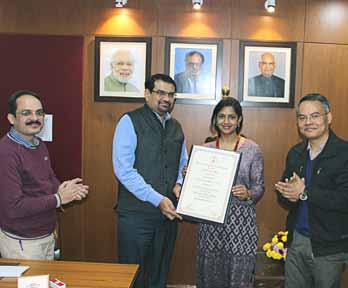
Gold medals have a way of finding their way to Sri Sathya Sai Institute of Higher Medical Sciences. So far, the Institute has received six gold medals (two in CTVS and four in Cardiology), and this year we are proud to announce that the Institute have received two gold medals in the specialties of Cardiology and Neurosurgery.
Dr. Niranjana Rajagopal, Jr. Consultant, Neurosurgery bagged the President’s Gold Medal in Neurosurgery
and Dr. Ravi Premchand Kachhela has won the HS Wazir Gold Medal in Cardiology, taking the SSSIHMS gold medal tally to eight.
Find below excerpts of conversations with both Dr. Niranjana and Dr. Ravi Kachhela.
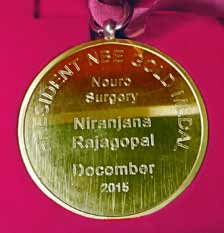
Awards · page 23
Gold Medal in DNB Cardiology
MH: When did you come to know about your gold medal?
Dr. R: It was officially communicated in Aug, 2019 and the convocation happened on Dec 24, 2019. One of my senior friends from AFMC first noticed it on the DNB website and messaged me about it.
MH: What do you attribute your gold medal to? Dr. R: I attribute it primarily to the Institute, secondly to Dr. P.K. Dash and thirdly to the group study we did, where we discussed in detail sixteen questions Dr. Dash used to give us every week. We used to distribute these questions amongst ourselves and scour the available literature and write out a comprehensive answer for each question and share it with the others. Over a span of 15 weeks, we had a repository of 240 questions and answers, and with this detailed study, I felt I did the theory paper well. The process was tedious, but the results spoke for themselves.
MH: What would you advise other students aspiring for a gold medal?
Dr. R: The students should consider the goal of a gold medal should be right from day one and not just the last 6 months before the exam. They should focus on building a habit of daily practice. Whatever they do daily, only that they will remember in the exam.
MH: Did you actually aspire for a gold medal? Dr. R: I was only expecting to pass in the first attempt. Given the effort put in during the group study, I felt I had a good chance. I got 73% in the theory paper, which is considered high (average topper % is around 70-71%), which led me to consider I may have a good chance at getting the gold medal.
MH: What are your plans for the future? Dr. R: I am currently working in a private hospital in Ranchi, Jharkhand. I would like to specialize further in electrophysiology (EP) as there is a dire need for this in the country. For example, in Jharkhand, we do not have an single EP facility in the whole of the State.
My long-term vision is to build an Institute dedicated wholly to cardiology, and making the treatment as affordable as possible.
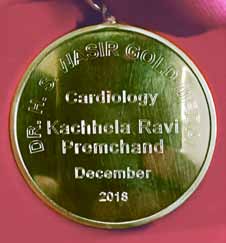
I also wish to volunteer at SSSIHMS during the EP camps, when extra hands are needed and it would be an opportunity for me to learn and meet some great personalities.
Dr. Ravi Premchand Kachhela hails from Pakur district of Jharkhand. He is the first doctor from this village, where he studied till 10th. After completing his Intermediate in Nagpur and encouragement from his grandfather to become a doctor and serve the nation, he did medicine from Armed Forces Medical College (AFMC), Pune. He topped his class in the MBBS program and served in the Navy for seven years. He retired in 2012 as a Surgeon Lieutenant Commander. During 2012-15, he did MD Medicine from Army Hospital (R&R). He appeared for DNB Cardiology in Dec, 2015 and got All India 3rd rank. It
was then that he came to know about SSSIHMS.
Mano Hriday: When did Swami enter your life? Dr. Ravi: I came to know about Swami only after I gave my entrance exam in DNB Cardiology in Feb, 2016 and was ranked 3rd in the country. I started getting calls from my friends and well-wishers that I should do my DNB program only in the Sathya Sai Institute because it is the best in the country.
There were 65 Institutes all over India offering DNB Cardiology and Sri Sathya Sai Institute became my obvious choice. In my experience it is the greatest Institute.
MH: How was your experience at the Institute? Dr. R: It was beyond imagination. Apart from the training in Cardiology, I realized all the people working in the Institute were highly qualified and imbued with the intention to serve.
In the department, everyone was supportive in their own unique way. Dr. Dash would question every action we took and every drug we prescribed, solely with the intention of bringing the best out of you and developing the foundation of our knowledge and the practice of medicine.
He knew the answers to every question but he would leave us with the feeling that we need to study in order to not displease him. His motto was: “You have to educate yourself”.
I am deeply grateful to Dr. Srikanth Sola and Dr. Barooah sirs too for providing a constant motivation to study and develop oneself. I have a high regard for Drs. Reeta and Prayaag also for pointing out areas of improvement.
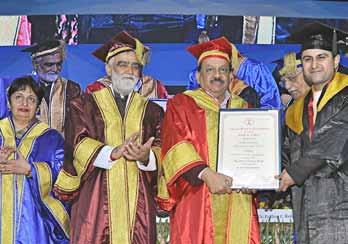
Focus · pages 24–25
Sri Sathya Sai Samithi - Bhagawan’s Gift
The world was awestruck with Bhagawan Sri Sathya Sai Baba’s super-human achievement when, on 22-Nov-1991, He gifted a grand “Medical marvel” to mankind in a remote village of Puttaparthi in the state of Andhra Pradesh. It was a “Temple of healing” where medicare would be gifted free to one and all, without any manmade distinctions of caste, creed, race, religion or nationality. Those who had a chance to see and witness its form and function were convinced beyond doubt that it was one of its kind without a second!
However, it was not to be true! He surpassed His own distinction, when, at the dawn of the new millennium, on 19-Jan-2001, He gifted a second “Temple of healing” to mankind, and this time, He chose a suburb of the city of Bangalore, Whitefield to manifest His labour of love. This grand edifice, a beautiful poem written in brick and mortar, was yet another ‘concrete’ manifestation of Bhagawan’s selfless love to provide relief to the poor and distressed. It is not only the sole hope for the poor and needy patients, but also a sanctuary for medical professionals to practice medicine in its pristine purity.
A day before the inauguration of the hospital, i.e on 18-Jan-2001, in a quiet and informal function, Bhagawan inaugurated a community hall named “Sai Nagarjuna” in the residential campus, attached to the main hospital campus.
In comparison to the grand architectural edifice that hosted the ‘Higher’ medical sciences, this hall seemed too insignificant in the scheme of things to warrant inauguration by the divine. Little could anyone guess at that time that the divine architect had a master plan, an even ‘Higher’ purpose for sanctifying this particular place with His lotus feet. Though the commemorative plaque for this hall was unveiled on 18-Jan-2001 by Bhagawan, His purpose of inaugurating this hall was unveiled on 22-Jan-2010, when, on His divine command, Sri Nagesh G. Dhakappa, State President, Sri Sathya Sai Seva Organization, Karnataka and Sri. U. Gangadhara Shetty, Convener, Sri Sathya Sai Trust, Karnataka, in the presence of Dr. Hegde A.S., Director, SSSIHMS, Whitefield formally inaugurated a Sri Sathya Sai Seva Samithi in this very hall. The preceding week, on 17-Jan-2010, the staff of the hospital celebrated the 9th Anniversary of the hospital in Bhagawan’s physical presence in Sai Kulwant Hall and Bhagawan was evidently moved by the rendition of group devotional songs by the staff. A few days later, Bhagawan directed the senior functionaries of the Sri Sathya Sai Central Trust to inform the Director of the hospital, Dr. Hegde A.S, to start a Samithi in the hospital premises on the sacred day of ”Ratha Sapthami” viz. Jan 22nd, 2010. The state president of Karnataka, Sri. Dhakappa announced the office bearers nominated for the new Samithi.
Convener: Late Sri. Vishwanath G. Gents Spiritual Coordinator: Dr. Kolli. S. Challam Mahila Spiritual Coordinator: Smt. Poornima Shirale Mahila Youth Coordinator: Smt. Vidyullatha Gents Service Coordinator: Sri Saikiran J.
Gents Youth Coordinator: Sri Chandrasekhar D.V.
Perhaps, this was the last Samithi personally started by Bhagawan during His earthly sojourn. Four days later, on 26-Jan-2010, a public holiday on account of Republic Day of India, the nominated office bearers prayerfully embarked on a journey to Puttaparthi to seek Bhagawan’s blessings and guidance for the Samithi.
In those days, since Bhagawan was physically unwell, public darshan sessions in Sai Kulwant hall were unpredictable. We hoped and prayed for an opportunity to seek Bhagawan’s darshan, sparshan and sambhashan. Midway through our journey to Parthi, we received a message that Bhagawan was enquiring on when we would arrive. We were overjoyed. A little later, we received another message that Bhagawan wants to see us at His residence, the Yajur mandir. All of us were ecstatic in anticipation of this interaction with the divine.
We reached Yajur mandir by about 2:45 PM and were waiting patiently at the entrance for Bhagawan’s arrival. In those days, Bhagawan used to come out for darshan very late in the evening, usually after 6:30 PM and hence we were mentally prepared for a long wait. All our eyes were glued to the intricately carved wooden doors of the Yajur mandir. Within a few minutes, the doors flung open and Bhagawan appeared, seated on an ordinary wheelchair. It was evident that He was so eager to meet us that He did not wait to “prepare” Himself for being “darshan-ready”. We were so overwhelmed by the suddenness and spontaneity of Bhagawan’s Love and wondered what we had done to deserve such an unusual gesture of grace. Bhagawan seemed physically weak and spoke faintly. He lovingly enquired with a few members about their family members, granted pada namaskar and gave vibhuthi prasadam to all. He asked if we were ready with a program to be presented that evening and we timidly replied that since the Samithi was just started, we did not have the time to come prepared with a program. We committed that we would definitely come prepared. Bhagawan always exhorts His devotees to be “ever-ready” as one can never predict when the divine photographer clicks. Since Bhagawan tells us to “Love His uncertainity”, we need to be ever-ready and always be prepared to do His bidding. This time, we were not. Since then, every year, as part of the hospital anniversary in January, the balvikas children and the Samithi members participate in the celebrations in Prasanthi Nilayam in the divine presence.
When asked what His message is for our Samithi, He said, “Nenu cheppindi cheppu” - “Whatever I have told, tell everyone”. On the Republic Day, a one-line “constitution” was given to us, that became the mission of the Samithi. Bhagawan wishes that we use the platform of Samithi as a means to spread His divine message of universal love and brotherhood to all. The Seva Samithi provides a conducive ambience for the staff and families to charge their spiritual batteries so that they can effectively discharge their duties in serving in Bhagawan’s healthcare mission.
The first meeting of all the members was on the occasion of the culmination day of the sports meet celebrations in the campus in February, 2010.
As part of the 10th anniversary celebrations of the hospital, a mega grama seva was undertaken by the Samithi. When the plans were shown to Bhagawan, He gave His blessings.
On 28-Nov-2010, Bhagawan being shown the map of locations around the hospital where Gramaseva was being planned. While examining the map, Swami pointed to “Kalkunte” in the map where he had inaugurated a school several years ago.
While the staff participate and facilitate the healing of patients in the hospital, the Samithi nourishes the staff spirit and keeps the flame of missionary zeal to “Love all, Serve all” alive.
Our Samithi has a unique privilege of being an integral part of the hospital which in-turn is a unit of Sri Sathya Sai Central Trust. It stands as a symbol of “Triveni Sangamam” of service represented by the hospital, sadhana represented by the seva organization with Bhagawan’s love as the under-current. The hospital provides opportunity for service and the Samithi provides opportunities for personal and community sadhana to cater to the spiritual well-being of the staff and their families.
The campus itself is a gift of Bhagawan to all the staff and their families. In 2002, in one of the interviews in to students whom He personally hand-picked to serve in the hospital, they prayerfully pleaded with Bhagawan that they be allowed to stay in the ashram itself. He commanded them to stay in the hospital residential campus and take care of the campus. In response to their prayers, He assured them that He would visit the campus daily. The campus reverberates with Bhagawan’s name and glory and His divine presence is perceptible and palpable every moment.
Since hospitals are designed for 24x7 operations, many staff, owing to their call of duty are not able to physically travel to Puttaparthi on festive occasions. The Samithi celebrates all festivals and the staff and families have an opportunity to experience the joy of celebrating them similar to the way Bhagawan used to celebrate them in Prasanthi Nilayam with spiritual zeal and fervour. In addition, sevadals come from various districts of Karnataka by rotation for a week for seva to the hospital. During their stay in the campus, they have an opportunity to participate in all the festivities organized by the Samithi in the campus. The children of the staff have the opportunity to be part of balvikas and grow in a spiritual ambience suffused with higher ideals enunciated by Bhagawan.
In a city like Bangalore plagued with woeful traffic congestion, there can be no great blessing for the families of the staff than having a Samithi located within their residential campus.
By Bhagawan’s sankalpa, and with the approval of the Sri Sathya Sai Central Trust, on July 21, 2019, the Samithi hall was renovated. The Samithi was relocated to the very place where Bhagawan inaugurated it in 2001 and the altar placed exactly at the place Bhagawan sat when He inaugurated the hall. The idols of Shirdi baba, the ‘previous’ body of Bhagawan, a manifestation of ‘Shiva’ aspect is on the left side of the altar. The centre portion of the altar, resembling the altar at Prasanthi Nilayam, has a beautiful portrait of Bhagawan, a manifestation of Shiva and Shakthi. On the right of the altar is a beautiful idol of mother Bhuvaneswari Devi, the Shakthi aspect representing the to-be manifestation of Prema Sai.
SSSIHMS stands as an oasis in the midst of a barren, materialistic, urban world. It is not only a sanctuary for noble medical professionals but also for spiritual aspirants. Bhagawan created a perfect setting to quench the spiritual thirst of every soul that enters its sacred precincts This is a place where each lives for the other and all live for God.
This Samithi is Bhagawan’s loving gift to all those who are and who, in the years to come, will be part of the SSSIHMS residential campus. To use this platform for our spiritual growth and participate in His mission of “Transforming the world through transforming one self” will be the best tribute that we can pay for His abundant grace.
Written by Chandrasekhar D.V., who served as the
Convenor of the Samithi between 2014 - 2019.
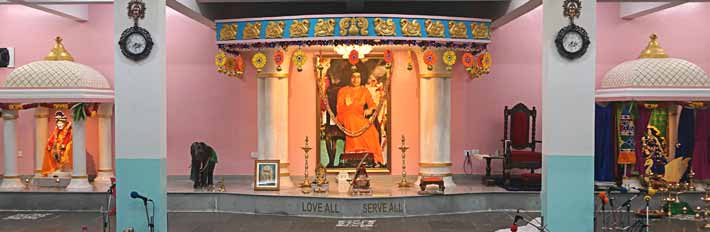
Infrastructure · page 26
Equipment
Ophthalmology Department gets a boost
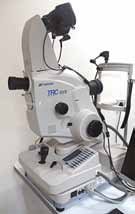
The ophthalmology department has been seeing an increasing number of patients with retinal conditions, both medical and surgical, and also patients needing glaucoma evaluation. For fulfilling the diagnostic needs, the department has been equipped with an OCT and fundus camera with fundus fluorescein angiography, autorefractometer / auto-keratometer in the out-patient department, and a green laser filter for microscope and a surgical viewing system in the operation theatre. These equipment have been provided by United Care Development Services, Hyderabad. A non-contact tonometer has been donated by Medicare Instruments, Bangalore for use in the out-patient department.
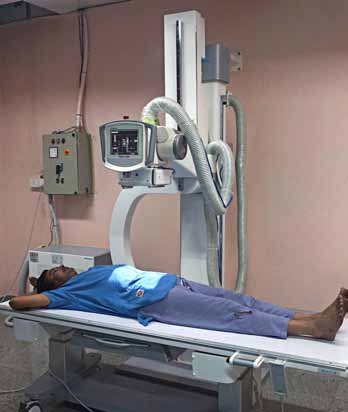
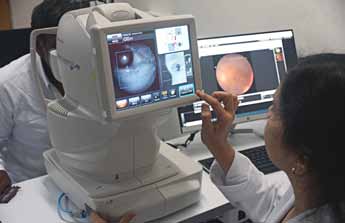
New anaesthesia Workstations for Cardiac surgery
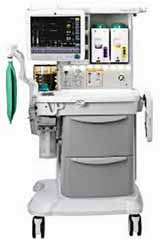
The CTVS Department has acquired 2 nos. GE-make Avance CS2 anaesthesia workstations, to replace the older workstations. With this, all the workstations in the Institute have been upgraded to the latest platform.
Operative Hysteroscope for Obstetrics / Gynecology With the intention to provide better and more complete patient care, the Institute has invested in the procurement of Borze Haeger make operative hysteroscope. With this addition, the department is equipped to offer the same standard of care offered in private hospitals.
“U-Arm replaces conventional X-ray & CR system in Radiology”
The 19-year old X-ray unit and 13-year old computed radiography (CR) unit have been replaced with an Allengersmake Digital Radiography (DR) system, evaluated to be having advantages over CR with superior image quality, higher productivity and lower patient exposure.
Erba 5-part hematology analyzer installed in Laboratory:
A 5-part hematology analyzer has been received as a donation, which would eventually replace the existing 3-part analyzer.
Upgrade of conventional Electrophysiology Equipment in Cardiology
The cardiology department has acquired the Workmate Claris and Ampere RF Generator conventional electrophysiology equipment from Abbott Healthcare. These are the top-on-the-line products, which replace the older generation of EP equipment. During this year, the available 3D mapping system has been upgraded with the latest software.
The department has a strong EP program and the new equipment helps maintain the quality of care being offered to the patients.
The cardiology out-patient department has been provided with a Mortara-make digital ECG machine The machine is capable of worklist process and enables viewing of ECG in the PACS system gives cardiologists to view all imaging in one screen.
Solar Water Heaters & Rainwater Harvesting The Institute has recently invested in the replacement of the old solar water heaters with new solar water heaters serving the patient bathrooms and the patient attendant blocks.
During 2019, rain-water harvesting has been carried out in two borewells, supplying water to the hospital and the residential quarters.
Farewell · page 27
Dr. P.K. Dash
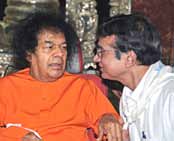
Dr. Pravat Kumar Dash, one of the pillars of the Bhagawan’s Medical Mission, retired from service on 31-Oct-2019. In a Farewell function organized on 26-Oct-19, we went down memory lane, with his colleagues sharing their experiences working with Dr. Dash over a career spanning two and a half decades in the Sri Sathya Sai Healthcare Mission.
After completing MBBS and pursuing his Cardiology specialization (MD and DM) in his home state, Odisha, Dr. P.K. Dash joined SSSIHMS Prasanthigram in Aug, 1996 as a young cardiologist. Having served there as the Head of Department, Cardiology, at Bhagawan’s direction he moved to SSSIHMS Whitefield in 2001, after its inception. Deeply inspired by Swami’s teachings, he dedicated his entire working career to serving in Baba’s Healthcare mission. Known to be a virtuoso with the catheters in the Cathlab, he has performed more than 60,000 procedures in his career spanning two and a half decades.
Under his leadership, the DNB program (Cardiology) blossomed in both the Institutions with close to 60 students passing the DNB Cardiology program during the period 1996-2019 and 5 candidates being awarded Gold Medals in the national-level DNB examination from SSSIHMS-Whitefield itself. He has trained over 200 DNB students from other Institutions who come to SSSIHMS-Whitefield as observers, to become cardiologists. A highly passionate individual, Dr. Dash is known to be knowledgeable in all areas of cardio-vascular medicine, which include coronary angioplasties, vascular & valvular interventions, device implantations to address congenital heart defects and arrhythmias. The angioplasties include bifurcations, chronic total occlusions in coronaries and other vasculature (from neck to ankle). Apart from these, he performed ICD, CRT, pacemaker implantations, electrophysiology studies, ablations and other miscellaneous interventions. He keeps himself abreast with up & coming structural interventions.
Dr. Dash is known to be the first to reach the department and the last to leave. He used to teach by example and spend hours in the library after work updating his knowledge to be able to serve the patients and his students well. He is known to have remarked, “The patients should not be denied treatment due to my incapabilities in lack of knowledge or skill.” Above all, he was the chosen physician to attend on the physical frame of Bhagawan. As a highly compassionate individual too, he is well known to take personal leaves to attend medical camps in Odisha, his home state, where on occasions he has seen over 200 patients in a single day, starting at 7 am and going on till 10 pm, without a break in between. He is reported to have been stopped by patients en route medical camps seeking his guidance, and was seen advising patients even at the airport before departure. Widely respected by his peers, and his students as someone who exemplified Swami’s teachings, we place on record our deepest sense of gratitude to Dr. Dash for his exemplary contribution to the Sai Institutions.
Though he will be in Odisha, Dr. Dash or “Dash sir” as he is affectionately called by everyone in the department, will continue to be associated with both the Institutions in an honorary capacity as a mentor.
On 26-Oct-19, a week before he left for Odisha to spend time with his family, a farewell program was organized by the Cardiology Dept. Following are excerpts of the some thoughts his colleagues and students shared about Dr. Dash.
“We joined SSSIHMS Prasanthigram as young professionals in the mid-90’s…Under Swami’s watchful and benevolent care… we were both privileged to grow our respective departments. Everything got done through us beyond our abilities and our expectations. There was a lot of progress in both adult and pediatric cardiology and cardiac surgery…it was largely possible due to the presence of people like Dr. Dash.
Dr. Shekhar Rao, Director, SSSIHMS-Whitefield
I had joined this hospital only because of you; in the process of taking on you as my guru in Cardiology, I also got connected to the highest Guru – Swami. So for me, it is a double bonus…I have always felt that you are family to me…I am what I am because of you…
Dr. Reeta Varyani, I/C Cardiology, SSSIHMS-Whitefield
It’s been a decade of learning from Dr. Dash; every single thing in interventional cardiology I have learnt from him. He is perfection personified. I have learnt what bed-side teaching means. His energy and commitment has been total.
Dr. Prayaag Kini, Consultant, SSSIHMS-Whitefield
“A leader par excellence in the department of Cardiology and also Cardio-vascular surgery; he was the chosen one by Bhagawan himself. There were such challenging cases wherein he takes the initiative and the confidence in him that we are capable of doing such cases was what pushed us forward to stand out amongst others.”
Dr. Hiremath, HOD-CTVS, SSSIHMS-Whitefield
You were warm, you were gracious, you were very generous with your welcome; you made me part of the Sai family there and for that I am most grateful. Your tremendous dedication, your exemplary hardwork and your superb skills in and out of the lab and your encyclopedic knowledge have inspired and shaped the residents and staff and the faculty...
Dr. Sivaraman Yegya-Raman, visiting cardiologist from USA
It has been my great pleasure to work with Dr. Dash…he has been more like an elder brother to me, rather than a colleague. I was so happy and grateful to Swami to have allowed me to work alongside with him. It is one of the best gifts I received from Swami. Dr.Dash’s energy and enthusiasm has helped me become a better person… Dr. Ashok Garg, visiting cardiologist from USA
Dr. Dash is the personification of many sayings of Swami…having worked with Dr. Dash for the last 19 years and watching him closely, I have to say he always did his duty with devotion and there is a synchrony of head, heart and hand with the intention of Manava seva is Madhava Seva (serving man is serving God).
N. Srinivas, Sr. Manager-Cardiology, SSSIHMS-Whitefield
Manohriday · pages 28–29
Nursing College News
XI Batch Lamp Lighting Ceremony
3rd January
The Nursing & Allied Health Sciences Sports & Cultural Meet
11th January
National Immunization Day Program
18th January
70th Republic Day
26th January
World Kidney Day
14th March Theme: Kidney Health for Everyone, Everywhere
National Stress Awareness Day
16th April Theme: Keep Calm and be Stress Aware
World Malaria Day
25th April Theme: Zero Malaria Starts With Me
Sri Sathya Sai Education in Human Values Program
27th April
World Environment Day
5th June Theme: Air Pollution
World Day Against Child Labor Program
12th June
In-Service Education Programme
20th June Topic: Workshop on Emergency Management of critically ill cardiac patients
National Post Traumatic Stress Disorder Awareness Day
27th June
World Population Day
11th July
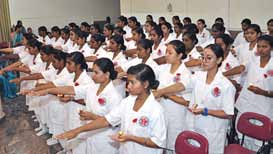
World Breast Feeding Week
1-7 August Theme: Empower Parents. Enable Breast Feeding.
Gratitude Program
15th July
Graduation Ceremony
23rd August Chief Guest: Dr. Linge Gowda K.B., Registrar (Evaluation), Rajiv Gandhi University of Health Sciences, Bangalore
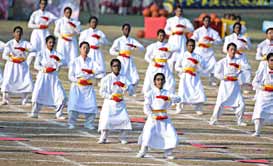
Farewell Program
24th August
Sai Samskruthi Vaibhavam, (The Glory of Sai Culture) 4-5 September
XII batch Fresher’s Day 22nd October Theme: Cheerful Butterflies
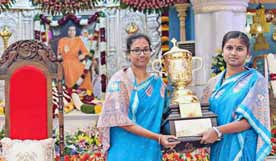
Student Nursing Association (SNA) Carnival
30th November Theme: JAMBOREE
World AIDS Day
1st December Theme: Ending the HIV/AIDS Epidemic: Community by Community
XII Batch Lamp Lighting Ceremony
2nd December
National Level Conference
7th December Theme: Global Perspectives In Emergency & Critical Care Nursing
Gita Jayanthi
9th December Chief Guest: Dr. Shekhar Rao The Nursing College completed 11 years since its inception in 2008. 8 batches of 255 nursing students passed out of its portals with 100% pass percentage and 43 students securing distinction.
7 batches of 116 students passed out from the Allied Health Sciences with 100% pass percentage and majority of students being toppers at the University level.
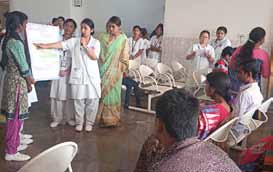
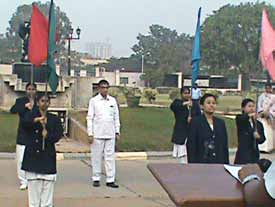
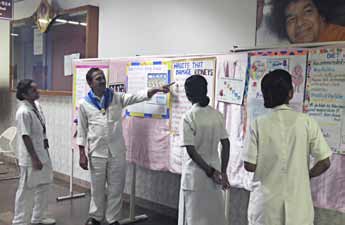
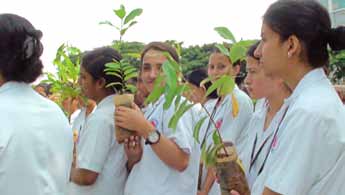
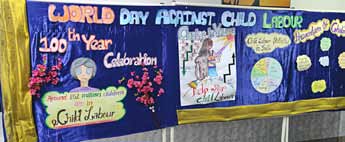
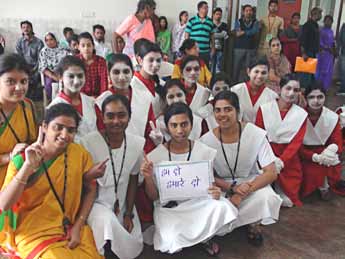
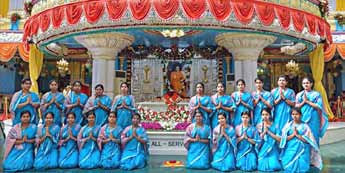
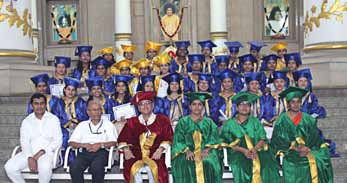
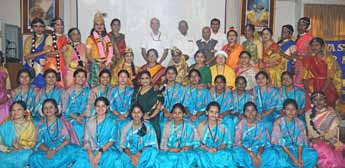
Collaborations · page 30
Doctors visiting SSSIHMS
Teams from Healing Little Hearts visit SSSIHMS
Building on the rapport developed between Healing Little Hearts (HLH), a UK-based charity and SSSIHMS-Whitefield over the years, two teams visited us in November, 2019.
The first team, led by surgeon Dr. Simone from Guy’s hospital, London, was here between Nov 10-16, 2019. A total of 15 surgeries were carried out, which included a mix of both simple and complex congenital cases. All patients did well and were discharged with no complications. Teaching programs were conducted by the visiting team, which helped the in-house team manage the cases better.
The second team, led by two surgeons Dr. Roman and Dr. Petr, was from the Czech Republic was here from Nov 17-23, 2019. Their team consisted of one anaesthetist, one perfusionist and staff nurses. The intensivists were from Great Ormond Street Hospital, London. A total of 9 surgeries were performed. Complex cases and smaller babies were given priority. For the first time at our Institute, we used ECMO on two patients and weaned them efficiently. It was a great learning and gave the whole team tremendous experience in managing ECMO.
implanted. The device donations were supported by Medtronic Inc., USA.
2. Dr. Moeen Abedin visited with colleagues from his alma mater viz. Dr. Roger Freedman, Dr. Scott Wall, Dr. Kelly Aries and Dr. Nischala Nannapaneni during Feb 18-22, 2019. During their visit more than 25 complex arrhythmia ablations and 34 pacemakers, ICD and CRT’s were implanted. The device donations were provided by Medtronic Inc., USA, Boston Scientific, USA and Biotronik Inc., USA.
3. Dr. Uma Srivatsa led a team comprising of 9 medical and 5 non-medical personnel between August 1-9, 2019. The non medical personnel performed service in dietary, biomedical, HR etc. The medical personnel supported in performing 65 ablations and implantation of 37 devices. The devices were donated by Medtronic Inc., USA, Boston Scientific, USA and Biotronik Inc., USA.
4. Dr. Keshav Naik and David Adams led a team of interventional cardiologists and cardiac sonographers from Aug 9-14, 2019 and supported in performance of more than 100 device closures and complex angioplasties. A CME was also organized during their stay on Aug 11, 2019.
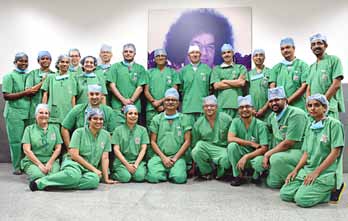
5. Dr. Sivaraman Yegyaraman and Dr. Ashok Garg visited again between Nov 4-8, 2019 and supported in ablation of 20 complex electrophysiology cases and implantation of 10 devices (CRT/ICD). These devices were donated by Medtronic Inc., USA.
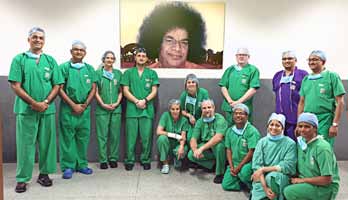
Cardiology Device & EP camps go on in full swing
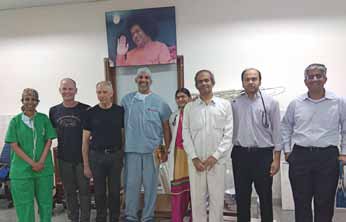
The Cathlabs were kept busy with the following camps, apart from the regular workload of the after department
1. Dr. Sivaraman Yegyaraman, Dr. Ashok Garg and Dr. S. Srivathsan were here between Feb 11-15, 2019 and provided voluntary service. During their visit more than 20 complex ablations and around 10 CRT/ICD’s were
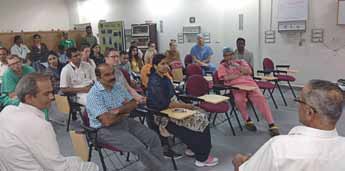
Manohriday · page 31
Festivals & Campus Activities
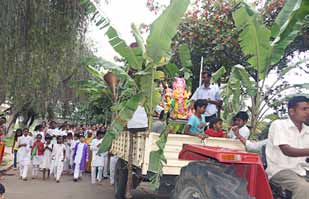
Glimpses from the festivals celebrated and Balvikas events conducted by SSSIHMS Whitefield Samithi during the calender year 2019
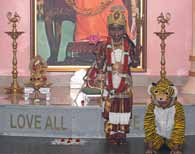
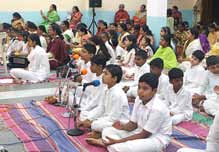
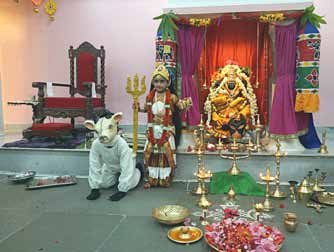
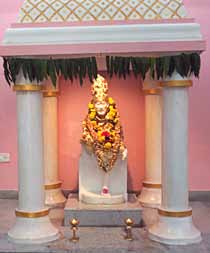
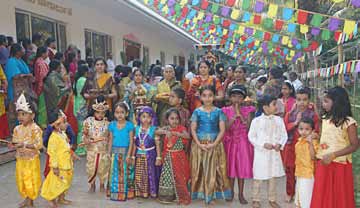
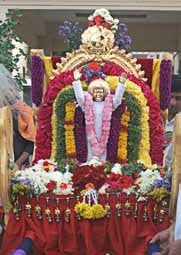
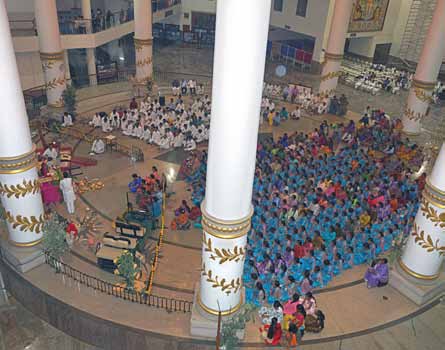
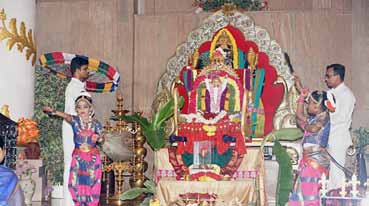
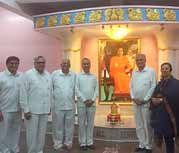
Covers · pages 1 and 32
Cover pictures
Pictures used on the covers and contents page