
Waste Management Today
Almost all waste generated on campus is scientifically processed, treated or recycled through authorised facilities.
Wet waste, composted on campus
About 200 – 250 kg of wet waste a day is processed entirely on campus in an Organic Waste Converter. The compost is used for gardening and landscaping.
Bio-medical waste
Handed over only to the authorised Common Bio-Medical Waste Treatment Facility, Maridi Bio Waste Pvt. Ltd., in compliance with the Bio-Medical Waste Management Rules and KSPCB guidelines.
Dry waste, recycled
Paper, plastic, cardboard, metal, glass and other recyclables are segregated at source and handed over only to authorised recyclers.
Mixed waste, minimised
Only about 20 – 25 kg of mixed municipal waste a day remains, for collection by the agency nominated by BSWML.
Residential campus
With Bintix, 140+ staff households use QR-coded bags for their dry waste: 9,895 kg diverted from landfill at 96.5% segregation compliance (Apr 2024 – May 2026).
Sewage
Treated in our own Sewage Treatment Plant and reused on campus. See Water Use Maximization.
Segregation Pays
Segregating at source means recyclable waste is sold rather than burned, and far fewer bio-medical garbage covers are needed. The sale of scrap helps offset the rising cost of running a charitable hospital.
| January – December 2024 | Quantity | Amount |
|---|---|---|
| Dry recyclable waste sold | 18.7 tonnes | ₹2.52 lakh |
| Garbage covers purchased | 3.6 tonnes | ₹3.72 lakh |
- Paper cups replaced with steel glasses at snack counters and in the Dental department.
- Cloth bags made from textile waste in place of plastic wrappers for scrubs.
- Milk and hand sanitiser bought in larger pack sizes; caps separated from ETO canisters for better recovery.
- Old mattresses turned into mulch mats and coir pots; patients encouraged to use reusable water bottles.
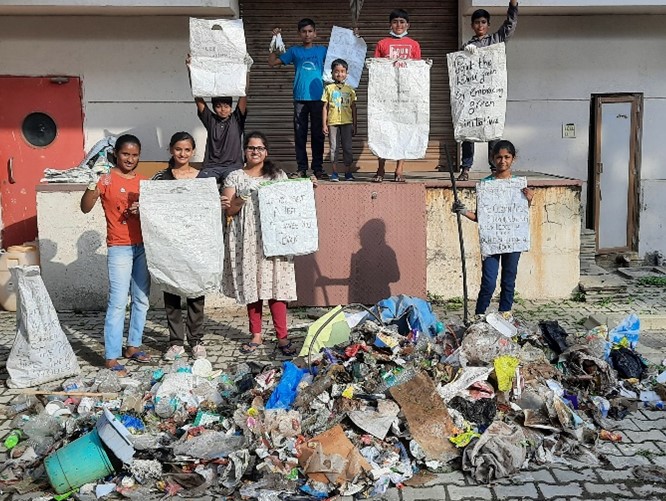
- Nursing students and Bal Vikas children have gone plogging on the last Sunday of every month for over four years.
Our work helped prompt the Sri Sathya Sai Central Trust to launch a “Zero-waste to Landfill” programme across all Sai institutions. Partners include Vedan (capacity building and signage), Reverse (glass recycling) and Bintix.
Awards and Recognition
- H.E.L.P. Sustainability Excellence Award 2026 — Waste Reduction & Recycling. Conferred at the H.E.L.P. Conference hosted by Yashoda Hospitals, Hyderabad. H.E.L.P. (Healthcare Environment Leadership Platform) is an initiative of the Public Health Foundation of India and Health Care Without Harm.
- Our “Zero-Waste Culture” initiative was selected among the top ten case studies of sustainable healthcare practice in India.
- Recognition of Best Practice in the Sustainability category at CAHOCON, April 2025.
- Appreciation from the Centre for Science & Environment as a Changemaker in building a sustainable environment, January 2024.
- First Prize to the SSSIHMS College of Nursing for leadership in Zero Waste & Circularity, February 2026.
- Nominated for the H.E.L.P. Sustainability Excellence Awards 2026, Best Sustainable Water & Wastewater Management, for “Conserving Every Drop”.
Read the Published Article
Case Study — Dry Waste Segregation — GGHH — Nov 22
The complete case study as published by Global Green and Healthy Hospitals.
Open PDF →Sri Sathya Sai Institute of Higher Medical Sciences, Bangalore, India
Region: Bangalore, Karnataka. Country: India. Number of staff: 400. Number of beds: 333. Type of institution: Tertiary healthcare Institute (100% charitable).
The Institute is a unit of the Medical Care Division of Sri Sathya Sai Central Trust, a public-charitable Trust set up in 1972. SSSIHMS, Bangalore was set up in January 2001, with the mission of providing high-quality medical care free of charge to all, irrespective of caste, creed, race or religion. The campus is spread over 52.23 acres and consists of the main hospital building, residential quarters, canteens, dormitories for volunteers, attendants etc.
GGHH agenda goals: Waste.
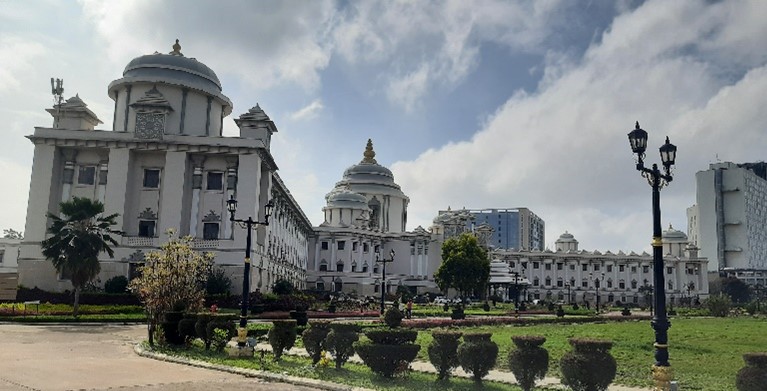
Segregation at Source
The case study highlights the efforts of SSSIHMS in solid waste management, and the importance of waste segregation at source, which helps in recycling resources through authorized recyclers.
The issue. The Institute was faced with the challenge of disposing of packaging waste, especially single-use plastic wrappers and paper wrappers, which do not have any economic value. The dry, recyclable waste, sometimes mixed along with organic waste, was being disposed of in black covers as per local waste management norms through the municipality, on payment basis.
Due to lack of awareness amongst the patients and attendants, waste was not being segregated at the outpatient department (OPD) and inpatient department (IPD) levels and there was not adequate infrastructure/awareness regarding the impact of mixing up of waste. This led to inadequate waste recovery and disposing of waste in landfills.
Hospital goal. Reduce waste generation as much as possible and minimize unsegregated waste. Improve resource recovery from waste as applicable.
The Stepwise Implementation Process
Considering long-term sustainability, and rising costs of waste disposal, efforts were initiated by the Institute in 2021 to reduce waste generation, implement waste segregation at source and recycle/monetize the waste generated as much as possible. The relevant Solid Waste Management Rules also mandate bulk generators of waste to manage in-house the waste they generate.
1. Visiting downstream recipients of the waste being generated, viz. pig farm for food waste, municipal contractor for mixed waste, biomedical and e-waste handlers to understand the waste handling process.
2. Sensitization of key stakeholders and hospital staff to the challenges in waste management practices and highlight the need for process improvement through presentations.
3. Constitution of Waste Management Committee, as a sub-committee of the Hospital Infection Committee, to oversee the waste handling, storage and disposal process.
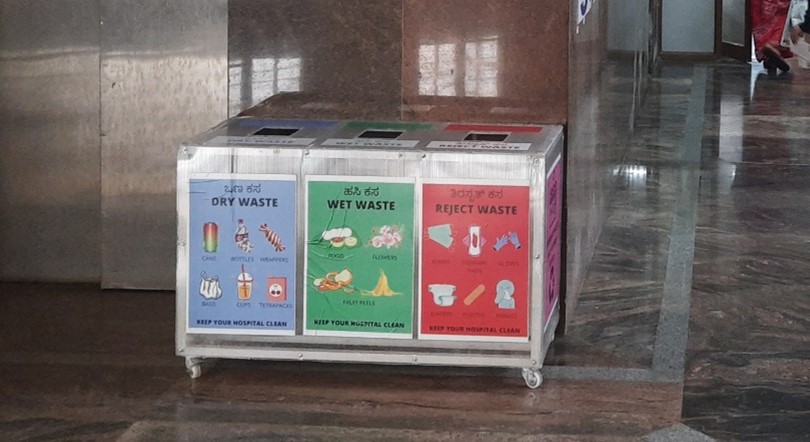
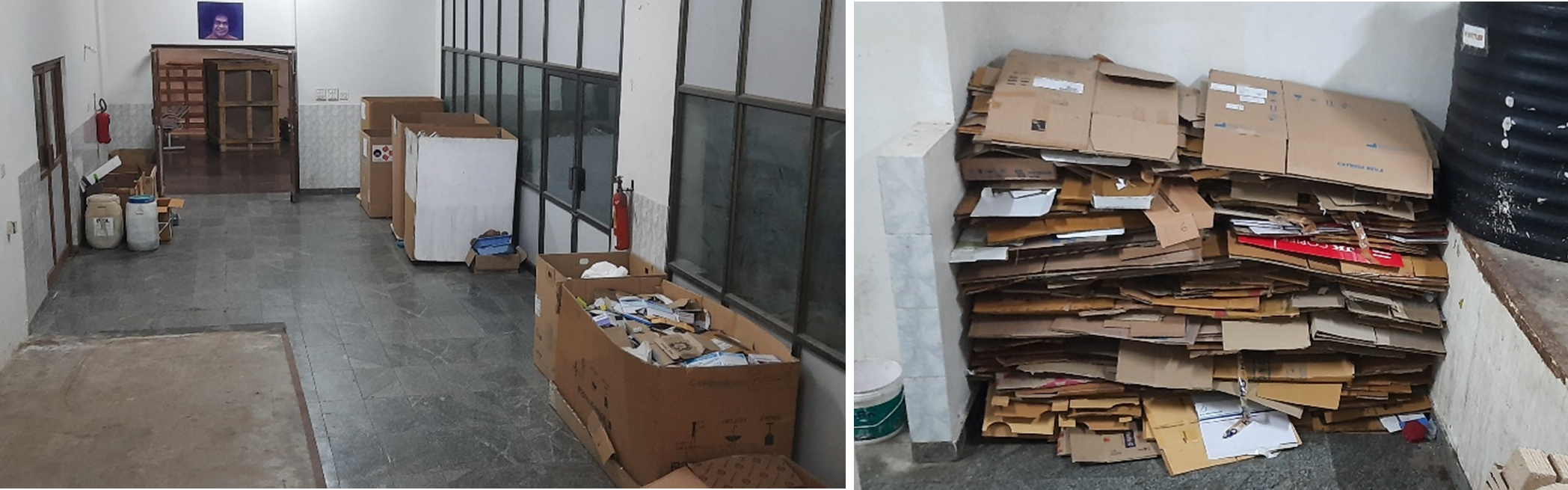
4. Setting up of bins for dry waste collection in wards & OPDs and consolidating their storage in the Central Stores.
Dry Waste Bins Set Up in the Central Location
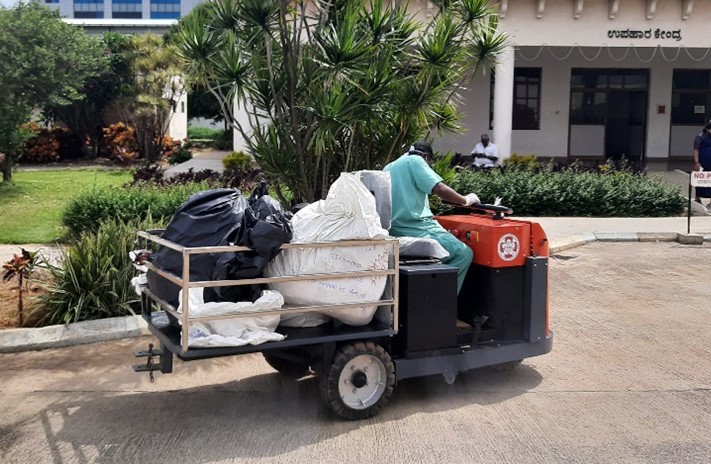
Bins, Collection Centres and Transport
Weighed, Reported, Recycled
The Institute entered MoUs with authorized recyclers for dry waste (handling multiple categories of dry waste) and e-waste. The dry waste recycler collects the waste once every month and the e-waste vendor collects the waste, as per need (min 500 kg).
At the end of each month, the authorized recycler collects all the waste accumulated over the month, weighs it and transports it in their vehicle to the yard for further segregation/sale. The success was measured in terms of the weight of items picked up by the recycler in each category. The recycler provides the Institute with a periodic Environmental Impact Report, which is part of the Hospital’s annual newsletter.
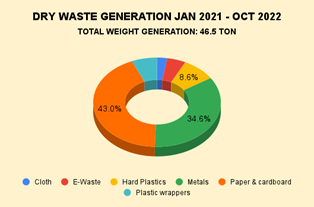
Progress achieved. Prior to entering an MoU with the authorized recyclers, the unsegregated wastes as well as recyclables were given to a vendor who charged a fee. The vendor would retrieve whatever they found valuable and send rest of the waste to landfill/incinerators. In the 24 months since signing MoUs with the authorized recyclers, 46.5 tons of dry, recyclable waste has been sent for recycling to various vendors. While there are economic benefits from the sale of scrap (approx. Rs. 9.5 lakh or USD 12,000 during Jan 21-Oct 22), the environmental benefits are perceived to be far greater.
Behaviour Change Was the Major Challenge
The exercise brought to the fore the enormity of the problem of waste management and the day-to-day challenges being faced by the downstream vendors. The visits to down-stream vendors helped develop empathy towards waste handlers and helped in formulating the “why” of improving waste management practices within campus.
Behaviour change is the major challenge experienced during the journey. The leadership of the Institute including the Director and the Secretary-Infection Control Committee along with work put in by the housekeeping staff on the ground, contributed to the success so far. Getting people on board through awareness building about the need for waste segregation and proper disposal helped change the narrative around waste.
There were significant contributions from volunteers, who participated in monthly litter collection activities on campus and other waste-handling initiatives, which played a vital role in the success of the project.
Where the Work Goes From Here
1. Study biomedical waste generation for possibilities of resource recovery, through proper segregation.
2. Management of organic waste, including food and garden waste. A pilot aerobic composting unit has been set up to compost the food waste from the residential campus. A couple of leaf composters have also been set up to handle the leaf litter.
3. Reduction of mixed, unsegregated waste in the residential campus of SSSIHMS, and the public and volunteer canteens.
4. Ensuring future conferences and events are zero-waste events which do not generate any mixed waste.
The concepts of circularity will continue to be explored to avoid waste of all types across the Institute. There is also an aspiration that this program will expand to other institutions, run by Sri Sathya Sai Central Trust, and serve as a model for other healthcare institutions.
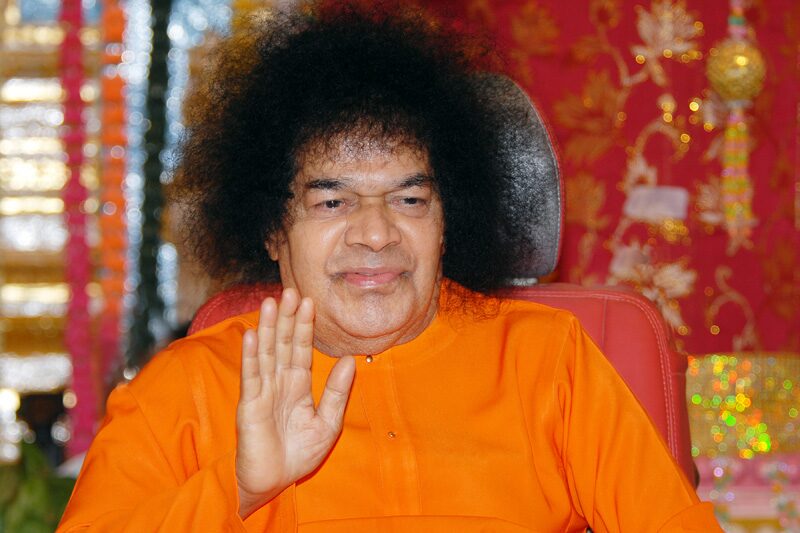
The Universe is the "University" for Man. Man should treat nature with reverence.
From the Institute
“As followers of Bhagawan’s message and example, we are making efforts to reduce our waste generation and become an ideal healthcare institution, not just in the healthcare delivery but also in how we handle waste in the day-to-day running of the Institute.” — Dr. D.C. Sundaresh, Director, SSSIHMS-Whitefield.
“Hospitals are places, where the ailing come to find succor. Through scientific waste management practices, we can ensure an infection-free stay for the patient, and successful outcomes.” — Dr. Renuka Neravi, Microbiologist and Secretary, Waste Management Committee.
“Through this exercise I learnt that waste management skills showcases our discipline towards the environment and that we are indebted to other fellow beings around us to ‘Live and let Live’.” — S.K. Rangarajan, Technical Consultant, CSSD & Laundry & Member, Waste Management Committee.
“Through this exercise, I learnt that taking responsibility for one’s waste is the key to developing good waste management practices.” — B. Satish Chandra, Sr. Manager-Central Stores & Member, Waste Management Committee.
Waste Management in Detail
Link to PDF article Case Study – Dry Waste Segregation – GGHH – Nov 22
Sri Sathya Sai Institute of Higher Medical Sciences (SSSIHMS), Bangalore, India.
A total of 8 categories of dry waste bins were set up in the central location as follows:
After making progress in the disposal of dry, recyclable waste in the Institute, focus is now on the following:
https://www.sssbpt.info/ssspeaks/volume29/d960718.pdf Link to Bhagwan’s discourse urging not to waste natural resources.